Notice: تابع WP_Block_Type_Registry::register به طورنادرست فراخوانی شد. نامهای نوع بلوک نباید حروف بزرگ داشته باشند. لطفاً برای اطلاعات بیشتر، اشکال زدایی در وردپرس را مشاهده کنید. (این پیام در نگارش 5.0.0 افزوده شده است.) in /home/ethicsho/public_html/wp-includes/functions.php on line 5313
Warning: Use of undefined constant TDC_PATH_LEGACY - assumed 'TDC_PATH_LEGACY' (this will throw an Error in a future version of PHP) in /home/ethicsho/public_html/wp-content/plugins/td-composer/td-composer.php on line 109
Warning: Use of undefined constant TDSP_THEME_PATH - assumed 'TDSP_THEME_PATH' (this will throw an Error in a future version of PHP) in /home/ethicsho/public_html/wp-content/plugins/td-composer/td-composer.php on line 113 بایگانیهای American Psychological Association (APA) - خانه اخلاق پژوهان جوان Notice: Trying to access array offset on value of type bool in /home/ethicsho/public_html/wp-content/plugins/wp-ulike/inc/general-functions.php on line 807
The demand to be beautiful is increasingly important in today’s visual and virtual culture. Rightly or wrongly, being perfect has become an ethical ideal to live by, and according to which we judge ourselves good or bad, a success or a failure. Perfect Me explores the changing nature of the beauty ideal, showing how it is more dominant, more demanding, and more global than ever before. Heather Widdows argues that our perception of the self is changing. More and more, we locate the self in the body–not just our actual, flawed bodies but our transforming and imagined ones. As this happens, we further embrace the beauty ideal. Nobody is firm enough, thin enough, smooth enough, or buff enough-not without significant effort and cosmetic intervention. And as more demanding practices become the norm, more will be required of us, and the beauty ideal will be harder and harder to resist. If you have ever felt the urge to “make the best of yourself” or worried that you were “letting yourself go,” this book explains why. Perfect Me examines how the beauty ideal has come to define how we see ourselves and others and how we structure our daily practices-and how it enthralls us with promises of the good life that are dubious at best. Perfect Me demonstrates that we must first recognize the ethical nature of the beauty ideal if we are ever to address its harms.
Philippa Foot is one of the most original and widely respected philosophers of our time; her work has exerted a lasting influence on the development of moral philosophy. In tribute to her, twelve leading philosophers from both sides of the Atlantic have contributed essays exploring the various topics in moral philosophy to which she has made a distinctive contribution–virtue ethics, naturalism, non-cognitivism, relativism, categorical requirements, and the role of rationality in morality.
How do our feelings for others shape our attitudes and conduct towards them? Is morality primarily a matter of rational choice, or instinctual feeling? Joseph Duke Filonowicz takes the reader on an engaging, informative tour of some of the main issues in philosophical ethics, explaining and defending the ideas of the early-modern British sentimentalists. These philosophers – Shaftesbury, Hutcheson, Hume, and Smith – argued that it is our feelings, and not our ‘reason’, which ultimately determine how we judge what is good or bad, right or wrong, and how we choose to act towards our fellow human beings. Filonowicz draws on contemporary sociology and evolutionary biology as well as present-day moral theory to examine and defend the sentimentalist view and to challenge the rationalistic character of contemporary ethics. His book will appeal to readers interested in both history of philosophy and current ethical debates.
The Groundwork of the Metaphysics of Morals is Kant’s central contribution to moral philosophy, and has inspired controversy ever since it was first published in 1785. Kant champions the insights of ‘common human understanding’ against what he sees as the dangerous perversions of ethical theory. Morality is revealed to be a matter of human autonomy: Kant locates the source of the ‘categorical imperative’ within each and every human will. However, he also portrays everyday morality in a way that many readers find difficult to accept. The Groundwork is a short book, but its argument is dense, intricate and at times treacherous. This commentary explains Kant’s arguments paragraph by paragraph, and also contains an introduction, a synopsis of the argument, six short interpretative essays on key topics of the Groundwork, and a glossary of key terms. It will be an indispensable tool for anyone wishing to study the Groundwork in detail.
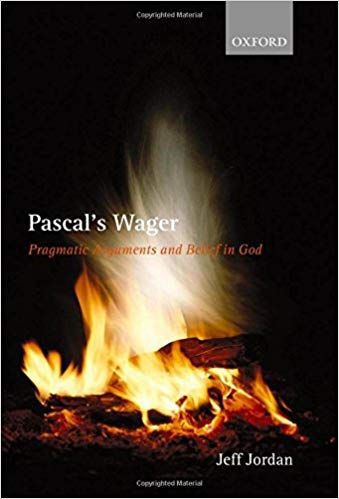
Is it reasonable to believe in God even in the absence of strong evidence that God exists? Pragmatic arguments for theism are designed to support belief even if one lacks evidence that theism is more likely than not. Jeff Jordan proposes that there is a sound version of the most well-known argument of this kind, Pascal’s Wager, and explores the issues involved – in epistemology, the ethics of belief, decision theory, and theology.
ما از اخلاق چه انتظاری داریم؟ این سوال شاید تاحدودی برای عموم مردم و یا متخصصان این رشته قابل پاسخ باشد؛ اینکه خوب بودن را به ما بیاموزد و در تنظیم روابط فردی م...

جشن کتاب تهران به ایستگاه سی و یکم رسیده است. حال و احوال نشر کتاب خوب نیست و باید فرهنگدوستان را به خرید و هدیه دادن کتاب ترغیب نمود. خانه اخلاقپژوهان جوان ب...

بنیاد کتابهای اخلاق اسلامی عمدتا پالایش جان از آلودگیها و آراستن آن به زیباییها است. اندیشه محوری این قبیل کتابها آن است که انسان فعلی آنی نیست که باید باشد...

-
0 Comments