



Notice: تابع WP_Block_Type_Registry::register به طورنادرست فراخوانی شد. نامهای نوع بلوک نباید حروف بزرگ داشته باشند. لطفاً برای اطلاعات بیشتر، اشکال زدایی در وردپرس را مشاهده کنید. (این پیام در نگارش 5.0.0 افزوده شده است.) in /home/ethicsho/public_html/wp-includes/functions.php on line 5313
Warning: Use of undefined constant TDC_PATH_LEGACY - assumed 'TDC_PATH_LEGACY' (this will throw an Error in a future version of PHP) in /home/ethicsho/public_html/wp-content/plugins/td-composer/td-composer.php on line 109
Warning: Use of undefined constant TDSP_THEME_PATH - assumed 'TDSP_THEME_PATH' (this will throw an Error in a future version of PHP) in /home/ethicsho/public_html/wp-content/plugins/td-composer/td-composer.php on line 113 بایگانیهای 2013 - صفحه 3 از 4 - خانه اخلاق پژوهان جوان Notice: Trying to access array offset on value of type bool in /home/ethicsho/public_html/wp-content/plugins/wp-ulike/inc/general-functions.php on line 807
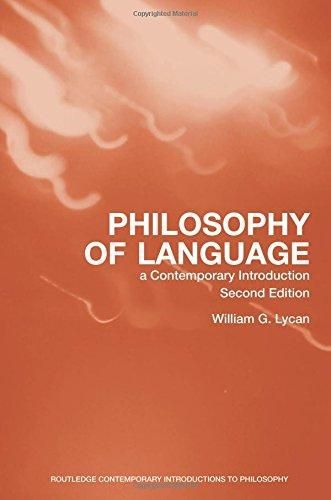
Philosophy of Language: a Contemporary Introduction introduces the student to the main issues and theories in twentieth-century philosophy of language, focusing specifically on linguistic phenomena. Topics are structured in three parts in the book. Part I, Reference and Referring Expressions, includes topics such as Russell’s Theory of Desciptions, Donnellan’s distinction, problems of anaphora, the description theory of proper names, Searle’s cluster theory, and the causal-historical theory. Part II, Theories of Meaning, surveys the competing theories of linguistic meaning and compares their various advantages and liabilities. Part III, Pragmatics and Speech Acts, introduces the basic concepts of linguistic pragmatics, includes a detailed discussion of the problem of indirect force and surveys approaches to metaphor. Part IV, new to this edition, examines the four theories of metaphor. Features of Philosophy of Language include: New chapters on Frege and puzzles, inferentialism, illocutionary theories ofmeaning and relevance theory chapter overviews and summaries clear supportive examples study questions annotated further reading glossary
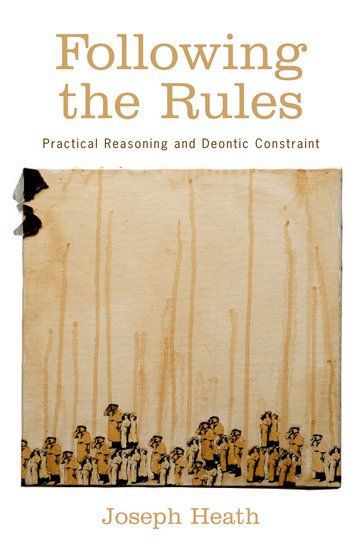
For centuries, philosophers have been puzzled by the fact that people often respect moral obligations as a matter of principle, setting aside considerations of self-interest. In more recent years, social scientists have been puzzled by the more general phenomenon of rule-following, the fact that people often abide by social norms even when doing so produces undesirable consequences. Experimental game theorists have demonstrated conclusively that the old-fashioned picture of “economic man,” constantly reoptimizing in order to maximize utility in all circumstances, cannot provide adequate foundations for a general theory of rational action. The dominant response, however, has been a slide toward irrationalism. If people are ignoring the consequences of their actions, it is claimed, it must be because they are making some sort of a mistake. In Following the Rules, Joseph Heath attempts to reverse this trend, by showing how rule-following can be understood as an essential element of rational action. The first step involves showing how rational choice theory can be modified to incorporate deontic constraint as a feature of rational deliberation. The second involves disarming the suspicion that there is something mysterious or irrational about the psychological states underlying rule-following. According to Heath, human rationality is a by-product of the so-called “language upgrade” that we receive as a consequence of the development of specific social practices. As a result, certain constitutive features of our social environment-such as the rule-governed structure of social life-migrate inwards, and become constitutive features of our psychological faculties. This in turn explains why there is an indissoluble bond between practical rationality and deontic constraint. In the end, what Heath offers is a naturalistic, evolutionary argument in favor of the traditional Kantian view that there is an internal connection between being a rational agent and feeling the force of one’s moral obligations.
This textbook looks at the main ethical questions that confront the criminal justice system – legislature, law enforcement, courts, and corrections – and those who work within that system, especially police officers, prosecutors, defence lawyers, judges, juries, and prison officers. John Kleinig sets the issues in the context of a liberal democratic society and its ethical and legislative underpinnings, and illustrates them with a wide and international range of real-life case studies. Topics covered include discretion, capital punishment, terrorism, restorative justice, and re-entry. Kleinig’s discussion is both philosophically acute and grounded in institutional realities, and will enable students to engage productively with the ethical questions which they encounter both now and in the future – whether as criminal justice professionals or as reflective citizens.
This book reflects philosophically about the socio-political dimension of economics.Part I provides normative reflections on the economy: Section I reflects on the interconnections between the multiple discourses on the economy, section II presents Hegel’s claim that the economic order is an ethical institution and defends his ontological view of the economy against the one of Adam Smith. Section III dialogues with economists about their concepts of public and merit goods. This section defends a Hegelian ontology of the economy through an analysis of technical concepts used by economists. Part II provides applications derived from the normative analysis: Section I presents the views of authors in different academic disciplines pointing to failures in late capitalism, in particular failures of American capitalism and section II asks the question: ” What must one pay attention to in a transition from a command economy to a free market?”Section III draws attention to an overlap of ideas found in Catholic Social Thought and in the publications of some recent Nobel prize winners in economics (Buchanan, Sen, Stiglitz).
From the ferment of recent debates about the intellectual virtues, Roberts and Wood develop an approach they call ‘regulative epistemology’, exploring the connection between knowledge and intellectual virtue. In the course of their argument they analyse particular virtues of intellectual life – such as courage, generosity, and humility – in detail.
ما از اخلاق چه انتظاری داریم؟ این سوال شاید تاحدودی برای عموم مردم و یا متخصصان این رشته قابل پاسخ باشد؛ اینکه خوب بودن را به ما بیاموزد و در تنظیم روابط فردی م...

جشن کتاب تهران به ایستگاه سی و یکم رسیده است. حال و احوال نشر کتاب خوب نیست و باید فرهنگدوستان را به خرید و هدیه دادن کتاب ترغیب نمود. خانه اخلاقپژوهان جوان ب...

بنیاد کتابهای اخلاق اسلامی عمدتا پالایش جان از آلودگیها و آراستن آن به زیباییها است. اندیشه محوری این قبیل کتابها آن است که انسان فعلی آنی نیست که باید باشد...

-
0 Comments