


Notice: تابع WP_Block_Type_Registry::register به طورنادرست فراخوانی شد. نامهای نوع بلوک نباید حروف بزرگ داشته باشند. لطفاً برای اطلاعات بیشتر، اشکال زدایی در وردپرس را مشاهده کنید. (این پیام در نگارش 5.0.0 افزوده شده است.) in /home/ethicsho/public_html/wp-includes/functions.php on line 5313
Warning: Use of undefined constant TDC_PATH_LEGACY - assumed 'TDC_PATH_LEGACY' (this will throw an Error in a future version of PHP) in /home/ethicsho/public_html/wp-content/plugins/td-composer/td-composer.php on line 109
Warning: Use of undefined constant TDSP_THEME_PATH - assumed 'TDSP_THEME_PATH' (this will throw an Error in a future version of PHP) in /home/ethicsho/public_html/wp-content/plugins/td-composer/td-composer.php on line 113 بایگانیهای 2007 - صفحه 3 از 26 - خانه اخلاق پژوهان جوان Notice: Trying to access array offset on value of type bool in /home/ethicsho/public_html/wp-content/plugins/wp-ulike/inc/general-functions.php on line 807
This important new study offers a powerful exposition of the ethical theory underlying Hegel’s philosophy of society, politics, and history. Professor Wood shows how Hegel applies his theory to such topics as human rights, the justification of legal punishment, criteria of moral responsibility, and the authority of individual conscience. The book includes a critical discussion of Hegel’s treatment of other moral philosophers (especially Kant, Fichte and Fries), provides an account of the controversial concept of “ethical life,” and shows the relation between the theory and Hegel’s critical assessment of modern social institutions. The book is nontechnical and should interest anyone concerned with Hegel’s ethical and political thought, including philosophers, political scientists, intellectual historians and students of German culture.
The Edge of Life: Human Dignity and Contemporary Bioethics treats a number of distinct moral questions and ?nds their answer in the dignity of the person, both as an agent and as a patient (in the sense of the recipient of action). Characteristically one’s view of the human being ultimately shapes one’s outlook on these matters. This book addresses questions that divide a culture of life from a culture of death as well as a number of questions debated within the Catholic tradition itself. The Edge of Life offers a critique of the new bio-ethic, represented by such notable authors as Peter Singer; it also attempts to shore up some of the dif?culties leveled by critics against the traditional ethic as well as to answer some questions disputed by those within the tradition. This book does not treat the basic principles of morality but rather many of their applications and suppositions. (For an account of contemporary debates within the Catholic tradition on these matters, see Kaczor 2002). Rather, The Edge of Life seeks to address a number of disputed contemporary questions touching upon human dignity at what has been called “the margins of life. ” The ?rst section of the book treats the dignity of the human person as recipient of action and as agent. Chapter two examines various accounts of when a human being becomes a person.
Why is debate over the free will problem so intractable? In this broad and stimulating look at the philosophical enterprise, Richard Double uses the free will controversy to build on the subjectivist conclusion he developed in The Non-Reality of Free Will (OUP 1991). Double argues that various views about free will–e.g., compatibilism, incompatibilism, and even subjectivism–are compelling if, and only if, we adopt supporting metaphilosophical views. Because metaphilosophical considerations are not provable, we cannot show any free will theory to be most reasonable. Metaphilosophy and Free Will deconstructs the free will problem and, by example, challenges philosophers in other areas to show how their philosophical argumentation can succeed.
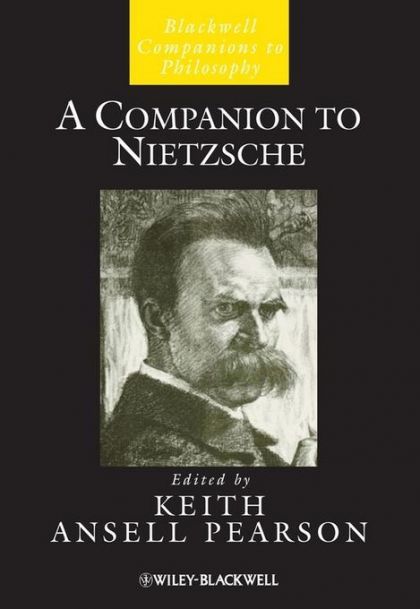
A Companion to Nietzsche provides a comprehensive guide to all the main aspects of Nietzsche’s philosophy, profiling the most recent research and trends in scholarship. Brings together an international roster of both rising stars and established scholars, including many of the leading commentators and interpreters of Nietzsche. Showcases the latest trends in Nietzsche scholarship, such as the renewed focus on Nietzsche’s philosophy of time, of nature, and of life. Includes clearly organized sections on Art, Nature, and Individuation; Nietzsche’s New Philosophy of the Future; Eternal Recurrence, the Overhuman, and Nihilism; Philosophy of Mind; Philosophy and Genealogy; Ethics; Politics; Aesthetics; Evolution and Life. Features fresh treatments of Nietzsche’s core and enigmatic doctrines.
The essays collected in this volume all explore the problem of the relation between moral philosophy and modernity. The book argues against recent attempts to return to the virtue-centered perspective of ancient Greek ethics. As well as exploring the differences between ancient and modern ethics, the author treats such topics as the roles of reason and history in our moral understanding, the inadequacy of philosophical naturalism, and the foundations of modern liberalism. These essays will be of interest both to professional scholars and to general readers concerned with ethics and politics.
ما از اخلاق چه انتظاری داریم؟ این سوال شاید تاحدودی برای عموم مردم و یا متخصصان این رشته قابل پاسخ باشد؛ اینکه خوب بودن را به ما بیاموزد و در تنظیم روابط فردی م...

جشن کتاب تهران به ایستگاه سی و یکم رسیده است. حال و احوال نشر کتاب خوب نیست و باید فرهنگدوستان را به خرید و هدیه دادن کتاب ترغیب نمود. خانه اخلاقپژوهان جوان ب...

بنیاد کتابهای اخلاق اسلامی عمدتا پالایش جان از آلودگیها و آراستن آن به زیباییها است. اندیشه محوری این قبیل کتابها آن است که انسان فعلی آنی نیست که باید باشد...

-
0 Comments