
Notice: تابع WP_Block_Type_Registry::register به طورنادرست فراخوانی شد. نامهای نوع بلوک نباید حروف بزرگ داشته باشند. لطفاً برای اطلاعات بیشتر، اشکال زدایی در وردپرس را مشاهده کنید. (این پیام در نگارش 5.0.0 افزوده شده است.) in /home/ethicsho/public_html/wp-includes/functions.php on line 5313
Warning: Use of undefined constant TDC_PATH_LEGACY - assumed 'TDC_PATH_LEGACY' (this will throw an Error in a future version of PHP) in /home/ethicsho/public_html/wp-content/plugins/td-composer/td-composer.php on line 109
Warning: Use of undefined constant TDSP_THEME_PATH - assumed 'TDSP_THEME_PATH' (this will throw an Error in a future version of PHP) in /home/ethicsho/public_html/wp-content/plugins/td-composer/td-composer.php on line 113 بایگانیهای 1976 - خانه اخلاق پژوهان جوان Notice: Trying to access array offset on value of type bool in /home/ethicsho/public_html/wp-content/plugins/wp-ulike/inc/general-functions.php on line 807
This new edition of A Companion to Contemporary Political Philosophy has been extended significantly to include 55 chapters across two volumes written by some of today’s most distinguished scholars.New contributors include some of today’s most distinguished scholars, among them Thomas Pogge, Charles Beitz, and Michael Doyle Provides in-depth coverage of contemporary philosophical debate in all major related disciplines, such as economics, history, law, political science, international relations and sociology Presents analysis of key political ideologies, including new chapters on Cosmopolitanism and FundamentalismIncludes detailed discussions of major concepts in political philosophy, including virtue, power, human rights, and just war
What does it mean to forgive? Using topical examples Anthony Bash explores practical questions such as how and when it is right to forgive. The conclusions he reaches are surprising and will promote debate on and discussion about this important and complex subject.
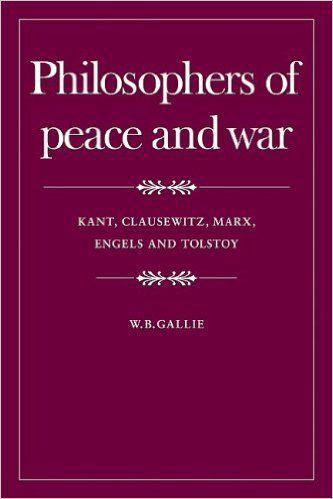
Intellectual eminence apart, what did Kant, Clausewitz, Marx and Engels, and Tolstoy have in common? Professor Gallic argues that they made contributions to ‘international theory’ – to the understanding of the character and causes of war and of the possibility of peace between nations – which were of unrivalled originality in their own times and remain of undiminished importance in ours. But these contributions have been either ignored or much misunderstood ; chiefly because, as with all intellectual efforts in unexplored fields, they were often imperfectly expressed, and were also overshadowed by their author’s more striking achievements. Professor Gallic has sorted out, compared and contrasted, criticised and re-phrased the teachings of his chosen authors on peace and war.
Antirealist views about morality claim that moral facts or truths do not exist. Does this imply that other types of normative facts, such as epistemic facts, do not exist? The Normative Web develops a positive answer to this question. Terence Cuneo argues that moral and epistemic facts are sufficiently similar so that, if moral facts do not exist, then epistemic facts do not exist. But epistemic facts do exist: to deny their existence would commit us to an extreme version of epistemological scepticism. Therefore, Cuneo concludes, moral facts do exist. And if moral facts exist, then moral realism is true. It is sometimes said that moral realists rarely offer arguments for their position, settling instead for mere defenses of a view they find intuitively plausible. By contrast, The Normative Web provides not merely a defense of robust realism in ethics, but a positive argument for this position. In so doing, it engages with a range of antirealist positions in epistemology such as error theories, expressivist views, and reductionist views of epistemic reasons. These positions, Cuneo claims, come at a prohibitively high theoretical cost. Given this cost, it follows that realism about both epistemic and moral facts is a position that we should find highly attractive.
ما از اخلاق چه انتظاری داریم؟ این سوال شاید تاحدودی برای عموم مردم و یا متخصصان این رشته قابل پاسخ باشد؛ اینکه خوب بودن را به ما بیاموزد و در تنظیم روابط فردی م...

جشن کتاب تهران به ایستگاه سی و یکم رسیده است. حال و احوال نشر کتاب خوب نیست و باید فرهنگدوستان را به خرید و هدیه دادن کتاب ترغیب نمود. خانه اخلاقپژوهان جوان ب...

بنیاد کتابهای اخلاق اسلامی عمدتا پالایش جان از آلودگیها و آراستن آن به زیباییها است. اندیشه محوری این قبیل کتابها آن است که انسان فعلی آنی نیست که باید باشد...

-
0 Comments