
Notice: تابع WP_Block_Type_Registry::register به طورنادرست فراخوانی شد. نامهای نوع بلوک نباید حروف بزرگ داشته باشند. لطفاً برای اطلاعات بیشتر، اشکال زدایی در وردپرس را مشاهده کنید. (این پیام در نگارش 5.0.0 افزوده شده است.) in /home/ethicsho/public_html/wp-includes/functions.php on line 5313
Warning: Use of undefined constant TDC_PATH_LEGACY - assumed 'TDC_PATH_LEGACY' (this will throw an Error in a future version of PHP) in /home/ethicsho/public_html/wp-content/plugins/td-composer/td-composer.php on line 109
Warning: Use of undefined constant TDSP_THEME_PATH - assumed 'TDSP_THEME_PATH' (this will throw an Error in a future version of PHP) in /home/ethicsho/public_html/wp-content/plugins/td-composer/td-composer.php on line 113 بایگانیهای 1972 - خانه اخلاق پژوهان جوان Notice: Trying to access array offset on value of type bool in /home/ethicsho/public_html/wp-content/plugins/wp-ulike/inc/general-functions.php on line 807
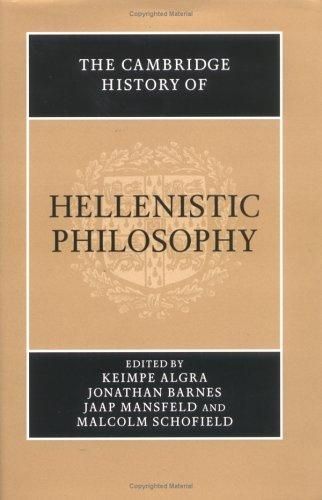
A full account of the philosophy of the Greek and Roman worlds from the last days of Aristotle (c. 320 BC) until 100 BC. Hellenistic philosophy, for long relatively neglected and unappreciated, has over the last decade been the object of a considerable amount of scholarly attention. The time has come for a general reference work which pulls the subject together and presents an overview. The History is organised by subject, rather than chronologically or by philosophical school, with sections on logic, epistemology, physics and metaphysics, ethics and politics. It has been written by specialists but is intended to be a source of reference for any student of ancient philosophy, for students of classical antiquity and for students of the philosophy of later periods. Greek and Latin are used sparingly and always translated in the main text.
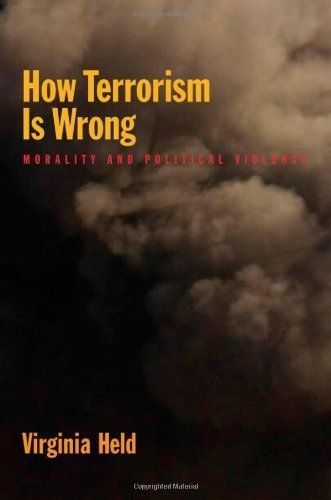
What is terrorism? How is it different from other kinds of political violence? Why exactly is it wrong? Why is war often thought capable of being justified? On what grounds should we judge when the use of violence is morally acceptable? It is often thought that using violence to uphold and enforce the rule of law can be justified, that violence used in self-defense is acceptable, and that some liberation movements can be excused for using violence–but that terrorism is always wrong. How persuasive are these arguments, and on what bases should we judge them? How Terrorism is Wrong collects articles by Virginia Held along with much new material. It offers a moral assessment of various forms of political violence, with terrorism the focus of much of the discussion. Here and throughout, Held examines possible causes discussed, including the connection between terrorism and humiliation. Held also considers military intervention, conventional war, intervention to protect human rights, violence to prevent political change, and the status and requirements of international law. She looks at the cases of Rwanda, Kosovo, Iraq, and the Israeli/Palestinian conflict. Finally, she explores questions of who has legitimate authority to engage in justifiable uses of violence, whether groups can be responsible for ethnic violence, and how the media should cover terrorism. Held discusses appropriate ways of engaging in moral evaluation and improving our moral recommendations concerning the uses of violence. Just war theory has been developed for violence between the military forces of conflicting states, but much contemporary political violence is not of this kind. Held considers the guidance offered by such traditional moral theories as Kantian ethics and utilitarianism, and also examines what the newer approach of the ethics of care can contribute to our evaluations of violence. Care is obviously antithetical to violence since violence destroys what care takes pains to build; but the ethics of care recognizes that violence is not likely to disappear from human affairs, and can offer realistic understandings of how best to reduce it.
Book Summary of Classical Moralists: Selections Illustrating EthicsThis book is a history of ethics based upon selections from the original sources and upon translations of the authors themselves. The evolution of ethical thought is thereby revealed from Socrates to Martineau. Contents: Socrates; Plato; Aristotle; Zeno; Epicurus; Titus Lucretius Carus; Epictetus; Marcus Aurelius Antoninus; Plotinus; Saint Augustine; Peter Abelard; Thomas Abelard; Thomas Aquinas; Hugo Grotius; Thomas Hobbes; Ralph Cudworth; Henry More; Richard Cumberland; Baruch De Spinoza; Nicolas Malebranche; John Locke; Samuel Clarke; Third Earl of Shaftesbury; Benard De Mandeville; William Wollaston; Joseph Butler; Francis Hutcheson; David Hartley; David Hume; Adam Smith; Claude Adrien Helvetius; William Paley; Jeremy Bentham; Richard Price; Thomas Reid; Immanuel Kant; Johann Gottlieb; Georg Wilhelm Friedrich; Arthur Schopnehauer; Friedrich Eduard Beneke; John Stuart Mill; Herbert Spencer; Henry Sidgwick..
Truth — Meaning — Reality presents a fresh approach to philosophy: a broad and unified deflationism that encompasses language, thought, knowledge, reality, and the relations between them. Horwich’s story begins with a minimalist view of truth according to which this extraordinary concept is far less profound and substantial than has usually been assumed, since it stems entirely from our regarding “It is true that dogs bark” as equivalent to “Dogs bark,” and similarly in the case of all other statements. There’s nothing more to truth than that! This view turns out to be of fundamental importance throughout the subject. In the first instance it paves the way to an account of meaning as use, whereby the sense of each word-type is given by its basic patterns of deployment rather than by its association with a feature of the non-linguistic world. And the combination of deflated truth and ‘meaning as use’ then yields a perspective from which the long-standing debates between forms of “realism” and “anti-realism” must be preconceived. We are able to see that the positions typically adopted in these debates are all defective — contrived products of the mistaken assumption that reality, together with our representation of it, must exhibit a rigid uniformity and that deviations from the norm would be intolerably “weird.” The fourteen essays collected here constitute a coherent and complete expression of this three-pronged philosophy. Each of them is self-standing. But they have been revised and arranged so as to reveal the power and plausibility of Horwich’s overall approach. is three-pronged philosophy.
ما از اخلاق چه انتظاری داریم؟ این سوال شاید تاحدودی برای عموم مردم و یا متخصصان این رشته قابل پاسخ باشد؛ اینکه خوب بودن را به ما بیاموزد و در تنظیم روابط فردی م...

جشن کتاب تهران به ایستگاه سی و یکم رسیده است. حال و احوال نشر کتاب خوب نیست و باید فرهنگدوستان را به خرید و هدیه دادن کتاب ترغیب نمود. خانه اخلاقپژوهان جوان ب...

بنیاد کتابهای اخلاق اسلامی عمدتا پالایش جان از آلودگیها و آراستن آن به زیباییها است. اندیشه محوری این قبیل کتابها آن است که انسان فعلی آنی نیست که باید باشد...

-
0 Comments