Notice: تابع WP_Block_Type_Registry::register به طورنادرست فراخوانی شد. نامهای نوع بلوک نباید حروف بزرگ داشته باشند. لطفاً برای اطلاعات بیشتر، اشکال زدایی در وردپرس را مشاهده کنید. (این پیام در نگارش 5.0.0 افزوده شده است.) in /home/ethicsho/public_html/wp-includes/functions.php on line 5313
Warning: Use of undefined constant TDC_PATH_LEGACY - assumed 'TDC_PATH_LEGACY' (this will throw an Error in a future version of PHP) in /home/ethicsho/public_html/wp-content/plugins/td-composer/td-composer.php on line 109
Warning: Use of undefined constant TDSP_THEME_PATH - assumed 'TDSP_THEME_PATH' (this will throw an Error in a future version of PHP) in /home/ethicsho/public_html/wp-content/plugins/td-composer/td-composer.php on line 113 بایگانیهای 1908 - خانه اخلاق پژوهان جوان Notice: Trying to access array offset on value of type bool in /home/ethicsho/public_html/wp-content/plugins/wp-ulike/inc/general-functions.php on line 807
“This compact book is intended as a practical guide for students involved in research, and it fulfils that goal well. …The chapter on ‘The funding and sponsorship of research’ is an excellent example of the author’s willingness and ability to include relevant, sensitive and practical content that is often left out of texts on ethics. …This is an easy book to read, it is concise and keeps to relevant content. …It would make an excellent text for a course in research ethics and/or research methods, and it will also provide an excellent planning and self-review guide for a practising researcher.” Higher Education Review”The book is aimed primarily at higher education students in education and the social sciences who are conducting a (typically small scale) research project. That is not to say that the publication is of little value to the supervisors of such projects or to experienced researchers as a resource. …the successful integration of a wide range of theoretical perspectives on ethics in the text is… one of the main accomplishments of this publication” RTI Resource CentreThis essential guide examines the ethical issues and questions which occur in university and professional research. The book helps both beginning and experienced researchers to identify ethical issues when they are conducting research, and attempt to resolve those issues.* Examines ethical issues which arise throughout research, from the design stage through to data collection and analysis * Investigates topical issues including consent, confidentiality, ethical questions in the dissemination of research* Discusses ethical theories and how these may be applied towards resolving ethical problems* Provides examples of ethical dilemmas and case studies throughout the textInsightful, wide-ranging and accessible, this guide is an invaluable tool for both undergraduate and postgraduate students and professionals who research as part of their jobs.
Normative reasons are reasons to do and believe things. Intellectual inquiry seems to presuppose their existence, for we cannot justifiably conclude that we exist; that there is an external world; and that there are better and worse ways of investigating it and behaving in it, unless there are reasons to do and believe such things. But just what in the world are normative reasons? In this book a case will be made for believing normative reasons are favouring relations that have a single, external source, filling this significant gap in the literature in an area within contemporary philosophy that has quickly grown in prominence. Providing a divine command metanormative analysis of normative reasons on entirely non-religious grounds, its arguments will be relevant to both secular and non-secular audiences alike and will address key issues in meta-ethics, evolutionary theory – especially evolutionary debunking threats to moral reasons and the normative more generally – and epistemology. .
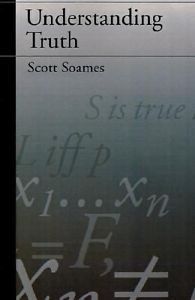
In this book, Scott Soames illuminates the notion of truth and the role it plays in our ordinary thought as well as in our logical, philosophical, and scientific theories. Soames aims to integrate and deepen the most significant insights on truth from a variety of sources. He powerfully brings together the best technical work and the most important philosophical reflection on truth and shows how each can illuminate the other. Investigating such questions as whether we need a truth predicate at all, what theoretical tasks it allows us to accomplish, and how we are to understand the content of any predicate capable of accomplishing these tasks, Soames organizes his discussion into three parts. Part I addresses crucial foundational issues as it identifies the bearers of truth, provides a basis for distinguishing truth from other notions (like certainty, with which it is often confused), and formulates positive responses to well-known forms of truth-skepticism. Part II explicates the formal theories of Alfred Tarski and Saul Kripke and evaluates the philosophical significance of their work. It discusses their treatments of the Liar paradox, the relationship between truth and proof, the notion of a partially defined predicate, the concepts of logical truth and logical consequence, and the connection between truth and meaning. Part III extends important lessons drawn from Tarski and Kripke into new domains: vague predicates, the Sorites paradox, and the development of a larger, deflationary perspective on truth. Throughout the book, Soames examines a wide range of deflationary theories of truth, and attempts to separate what is correct and worth preserving in them from what is not. In doing so, he seeks to clear up many of the most significant philosophical doubts about truth. Written for a general audience while offering engaging material to the specialist, this rich study will be profitably read by both.
An original study of the philosophical problems associated with inductive reasoning. Like most of the main questions in epistemology, the classical problem of induction arises from doubts about a mode of inference used to justify some of our most familiar and pervasive beliefs. The experience of each individual is limited and fragmentary, yet the scope of our beliefs is much wider; and it is the relation between belief and experience, in particular the belief that the future will in some respects resemble the past and the unobserved the observed, which forms the subject of this book. Dr Blackburn’s first aim is to state the problem of induction properly, to show that there does exist a genuine problem immune to the solutions in vogue at present, yet no tin principle insoluble. He gives an extended and original account of the concept of a reason and goes on to discuss prediction. In the end Dr Blackburn produces a rationale for belief in certain short-term predictions based on his reinterpretation of the classical principle of indifference. He claims that a justification for induction can be found along the lines he has suggested and must indeed be found there if anywhere.
ما از اخلاق چه انتظاری داریم؟ این سوال شاید تاحدودی برای عموم مردم و یا متخصصان این رشته قابل پاسخ باشد؛ اینکه خوب بودن را به ما بیاموزد و در تنظیم روابط فردی م...

جشن کتاب تهران به ایستگاه سی و یکم رسیده است. حال و احوال نشر کتاب خوب نیست و باید فرهنگدوستان را به خرید و هدیه دادن کتاب ترغیب نمود. خانه اخلاقپژوهان جوان ب...

بنیاد کتابهای اخلاق اسلامی عمدتا پالایش جان از آلودگیها و آراستن آن به زیباییها است. اندیشه محوری این قبیل کتابها آن است که انسان فعلی آنی نیست که باید باشد...

-
0 Comments