Notice: تابع WP_Block_Type_Registry::register به طورنادرست فراخوانی شد. نامهای نوع بلوک نباید حروف بزرگ داشته باشند. لطفاً برای اطلاعات بیشتر، اشکال زدایی در وردپرس را مشاهده کنید. (این پیام در نگارش 5.0.0 افزوده شده است.) in /home/ethicsho/public_html/wp-includes/functions.php on line 5313
Warning: Use of undefined constant TDC_PATH_LEGACY - assumed 'TDC_PATH_LEGACY' (this will throw an Error in a future version of PHP) in /home/ethicsho/public_html/wp-content/plugins/td-composer/td-composer.php on line 109
Warning: Use of undefined constant TDSP_THEME_PATH - assumed 'TDSP_THEME_PATH' (this will throw an Error in a future version of PHP) in /home/ethicsho/public_html/wp-content/plugins/td-composer/td-composer.php on line 113 بایگانیهای U22 .R45 2007 - خانه اخلاق پژوهان جوان Notice: Trying to access array offset on value of type bool in /home/ethicsho/public_html/wp-content/plugins/wp-ulike/inc/general-functions.php on line 807
Critical Reasoning in Ethics is an accessible introduction that will enable students, through practical exercises, to develop their own skills in reasoning about ethical issues such as:* analysing and evaluating arguments used in discussions of ethical issues* analysing and evaluating ethical concepts, such as utilitarianism* making decisions on ethical issues* learning how to approach ethical issues in a fair minded wayEthical issues discussed include the arguments about abortion, euthanasia, capital punishment, animal rights, the environment and war.The book will be essential reading for philosophy, health, social work and nursing courses.
Is it rational to be moral? Can moral disputes be settled rationally? Which criteria determine what we have a good reason to do? In this innovative book, Logi Gunnarsson takes issue with the assumption made by many philosophers faced with the problem of reconciling moral norms with a scientific world view, namely that morality must be offered a non-moral justification based on a formal concept of rationality. He argues that the criteria for the rationality of an action are irreducibly substantive, rather than purely formal, and that assuming that morality must be given a non-moral justification amounts to a distortion of both rationality and morality. His discussion includes substantial critical engagement with major thinkers from two very different philosophical traditions, and is notable for its clear and succinct account of Habermas’ discourse ethics. It will appeal to anyone interested in practical reason and the rational credentials of morality.
This evocative and broad-ranging book traces the history of moral regulation in Britain and the US from the late seventeenth century to the present day. Specific coverage is given to movements such as the Society for the Reformation of Manners and the Vice Society, the sexual abuse and anti-pornography movements, and contemporary self-help movements. Hunt argues that the main impetus for moral regulations often stems from the middle classes, rather than those with institutional power, but most significantly they provide classic instances of the intimate link between the ‘governance of others’ and the ‘governance of the self’. Using the work of Foucault, this book analyses how projects of self-regulation can manifest themselves into the regulation of others. Concurrent with this is the rise of health discourses, which play a central role in contemporary discussions of moral governance.
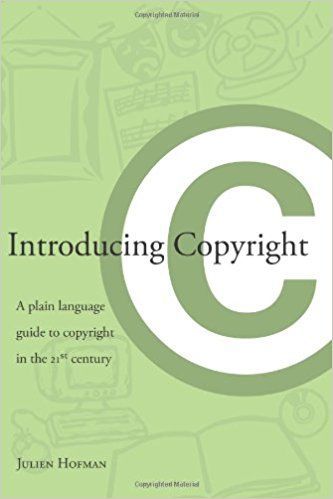
Works that copyright protects ā such as books, magazines, websites, computer programs, music and videos ā are an important part of modern life. Yet many who use these works, and even some who produce them, do not understand copyright. I wrote this introduction to copyright for those in business, the entertainment industry and education, and for those who use and create copyright works in all their different forms. The book explains what copyright protection means for copyright holders and for copyright users. It also introduces readers to contemporary copyright topics: digital rights management, open licences, software patents and protection for works of traditional knowledge. A final chapter tries to predict how technology will change the publishing and entertainment industries that depend on copyright. The book assumes no special knowledge and avoids technical language as much as possible.
ما از اخلاق چه انتظاری داریم؟ این سوال شاید تاحدودی برای عموم مردم و یا متخصصان این رشته قابل پاسخ باشد؛ اینکه خوب بودن را به ما بیاموزد و در تنظیم روابط فردی م...

جشن کتاب تهران به ایستگاه سی و یکم رسیده است. حال و احوال نشر کتاب خوب نیست و باید فرهنگدوستان را به خرید و هدیه دادن کتاب ترغیب نمود. خانه اخلاقپژوهان جوان ب...

بنیاد کتابهای اخلاق اسلامی عمدتا پالایش جان از آلودگیها و آراستن آن به زیباییها است. اندیشه محوری این قبیل کتابها آن است که انسان فعلی آنی نیست که باید باشد...

-
0 Comments