Notice: تابع WP_Block_Type_Registry::register به طورنادرست فراخوانی شد. نامهای نوع بلوک نباید حروف بزرگ داشته باشند. لطفاً برای اطلاعات بیشتر، اشکال زدایی در وردپرس را مشاهده کنید. (این پیام در نگارش 5.0.0 افزوده شده است.) in /home/ethicsho/public_html/wp-includes/functions.php on line 5313
Warning: Use of undefined constant TDC_PATH_LEGACY - assumed 'TDC_PATH_LEGACY' (this will throw an Error in a future version of PHP) in /home/ethicsho/public_html/wp-content/plugins/td-composer/td-composer.php on line 109
Warning: Use of undefined constant TDSP_THEME_PATH - assumed 'TDSP_THEME_PATH' (this will throw an Error in a future version of PHP) in /home/ethicsho/public_html/wp-content/plugins/td-composer/td-composer.php on line 113 بایگانیهای TP248.2 .S64 2007 - خانه اخلاق پژوهان جوان Notice: Trying to access array offset on value of type bool in /home/ethicsho/public_html/wp-content/plugins/wp-ulike/inc/general-functions.php on line 807
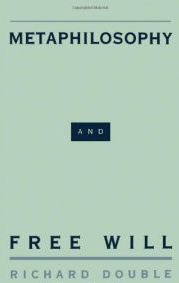
Why is debate over the free will problem so intractable? In this broad and stimulating look at the philosophical enterprise, Richard Double uses the free will controversy to build on the subjectivist conclusion he developed in The Non-Reality of Free Will (OUP 1991). Double argues that various views about free will–e.g., compatibilism, incompatibilism, and even subjectivism–are compelling if, and only if, we adopt supporting metaphilosophical views. Because metaphilosophical considerations are not provable, we cannot show any free will theory to be most reasonable. Metaphilosophy and Free Will deconstructs the free will problem and, by example, challenges philosophers in other areas to show how their philosophical argumentation can succeed.
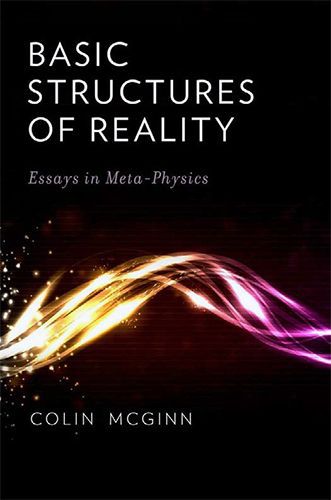
In Basic Structures of Reality, Colin McGinn deals with questions of metaphysics, epistemology, and philosophy of mind from the vantage point of physics. Combining general philosophy with physics, he covers such topics as the definition of matter, the nature of space, motion, gravity, electromagnetic fields, the character of physical knowledge, and consciousness and meaning. Throughout, McGinn maintains an historical perspective and seeks to determine how much we really know of the world described by physics. He defends a version of “structuralism”: the thesis that our knowledge is partial and merely abstract, leaving a large epistemological gap at the center of physics.
McGinn then connects this element of mystery to parallel mysteries in relation to the mind. Consciousness emerges as just one more mystery of physics. A theory of matter and space is developed, according to which the impenetrability of matter is explained as the deletion of volumes of space. McGinn proposes a philosophy of science that distinguishes physics from both psychology and biology, explores the ontology of energy, and considers the relevance of physics to seemingly remote fields such as the theory of meaning. In the form of a series of aphorisms, the author presents a metaphysical system that takes laws of nature as fundamental. With its broad scope and deep study of the fundamental questions at the heart of philosophy of physics, this book is not intended primarily for specialists, but for the general philosophical reader interested in how physics and philosophy intersect.
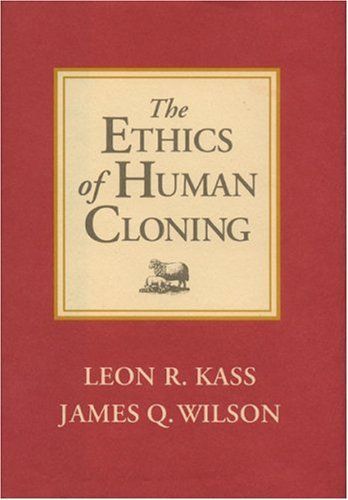
In this engaging book, Leon R. Kass, the noted teacher, scientist, and humanist, and James Q. Wilson, the preeminent political scientist to whom four U.S. presidents have turned for advice on crime, drug abuse, education, and other crises in American life, explore the ethics of human cloning, reproductive technology, and the teleology of human sexuality. Although in their lively dialogue both authors share a fundamental distrust of the notion of human cloning, they base their reticence on different views of the role of sexual reproduction and the role of the family. Professor Kass contends that in vitro fertilization and other assisted reproduction technologies that place the origin of human life in human hands have eroded the respect for the mystery of sexuality and human renewal. Professor Wilson, on the other hand, asserts that whether a human life is created naturally or artificially is immaterial as long as the child is raised by loving parents in a two-parent family and is not harmed by the means of its conception. This accessible volume promises to inform the public policy debate over the permissible conduct of genetic research and the permissible uses of its discoveries.
ما از اخلاق چه انتظاری داریم؟ این سوال شاید تاحدودی برای عموم مردم و یا متخصصان این رشته قابل پاسخ باشد؛ اینکه خوب بودن را به ما بیاموزد و در تنظیم روابط فردی م...

جشن کتاب تهران به ایستگاه سی و یکم رسیده است. حال و احوال نشر کتاب خوب نیست و باید فرهنگدوستان را به خرید و هدیه دادن کتاب ترغیب نمود. خانه اخلاقپژوهان جوان ب...

بنیاد کتابهای اخلاق اسلامی عمدتا پالایش جان از آلودگیها و آراستن آن به زیباییها است. اندیشه محوری این قبیل کتابها آن است که انسان فعلی آنی نیست که باید باشد...

-
0 Comments