Notice: تابع WP_Block_Type_Registry::register به طورنادرست فراخوانی شد. نامهای نوع بلوک نباید حروف بزرگ داشته باشند. لطفاً برای اطلاعات بیشتر، اشکال زدایی در وردپرس را مشاهده کنید. (این پیام در نگارش 5.0.0 افزوده شده است.) in /home/ethicsho/public_html/wp-includes/functions.php on line 5313
Warning: Use of undefined constant TDC_PATH_LEGACY - assumed 'TDC_PATH_LEGACY' (this will throw an Error in a future version of PHP) in /home/ethicsho/public_html/wp-content/plugins/td-composer/td-composer.php on line 109
Warning: Use of undefined constant TDSP_THEME_PATH - assumed 'TDSP_THEME_PATH' (this will throw an Error in a future version of PHP) in /home/ethicsho/public_html/wp-content/plugins/td-composer/td-composer.php on line 113 بایگانیهای TK5105.884 .W55 2007 - خانه اخلاق پژوهان جوان Notice: Trying to access array offset on value of type bool in /home/ethicsho/public_html/wp-content/plugins/wp-ulike/inc/general-functions.php on line 807
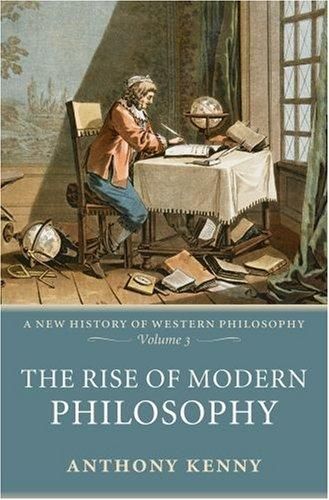
Sir Anthony Kenny’s engaging new multi-volume history of Western philosophy now advances into the modern era. The Rise of Modern Philosophy captures the fascinating story of the emergence, from the early sixteenth to the early nineteenth century, of the great ideas and intellectual systems that shaped modern thought. Kenny introduces us to some of the world’s most original and influential thinkers and helps us gain an understanding of their famous works. The great minds we meet include Rene Descartes, traditionally seen as the founder of modern philosophy; the great British philosophers Hobbes, Locke, and Hume; continental thinkers such as Spinoza, Liebniz, and Hegel; and the towering figure of Immanuel Kant, who perhaps more than any other made philosophy what it is today. Kenny first tells the story of modern philosophy chronologically: his lively, accessible narrative brings the philosophers to life and fills in the historical and intellectual background to their work. It is ideal as the first thing to read for someone new to this wonderfully creative period. Kenny then backtracks to look closely at each of the main areas of philosophical exploration in this period: knowledge and understanding; the nature of the physical universe; metaphysics (the most fundamental questions there are about existence); mind and soul; the nature and content of morality; political philosophy; and God. The book also features many intriguing and beautiful illustrations which evoke the human and social side of philosophy. Anyone who is interested in the evolution of modern thought will find this a book a treasure.
Ayn Rand is well known for advocating egoism, but the substance of that egoisms instruction is rarely understood. Far from representing the rejection of morality, selfishness, in Rands view, actually demands the practice of a systematic code of ethics. This book explains the fundamental virtues that Rand considers vital for a person to achieve his objective well-being: rationality, honesty, independence, justice, integrity, productiveness, and pride. Tara Smith examines what each of these virtues consists in, why it is a virtue, and what it demands of a person in practice.
This updated edition addresses a variety of ethical issues that arise in the care of oncology patients. Many volumes have been written on medical ethics in the past 30 years. However, few have focused on ethical issues specific to cancer care. This book brings together such a focused examination. The contributors include clinicians, ethicists, medical humanists and medical educators. The issues raised have direct relevance to the care of oncology patients in treatment, as well as research settings. The chapters address issues that are central to contemporary medical practice and medical ethics inquiry.”Ethical Issues in Cancer Patient Care, Second Edition” will have direct importance for clinicians, nurses, and others caring for cancer patients. In addition, medical students, medical educators and ethicists will find this book of interest.
This book argues that moral theology has yet to embrace the recommendations of the Second Vatican Council concerning the ways in which moral theology is to be renewed. There is little or no consensus between theologians regarding the nature, content and uniqueness of Christian morality. After highlighting the strengths and weaknesses of the so-called autonomy and faith ethic schools of thought, Mealey argues that there is little dividing them and that, in some instances, both schools are simply defending one aspect of a hermeneutical dialectic.In an attempt to move away from the divisions between proponents of the faith-ethic and autonomy positions, Mealey enlists the help of the hermeneutical theory of Paul Ricoeur, arguing that the debate on the uniqueness of Christian morality can be mediated if scholars look to the possibilities opened up by Ricoeur’s hermeneutics of interpretation. Mealey also argues that the uniqueness of Christian morality is more adequately explained in terms of a specific identity (self) that is constantly subject to change and revision in light of many, often conflicting, moral sources. She advocates a move away from attempts to explain the uniqueness of Christian morality in terms of one specific, unchanging context, motivation, norm or divine command or value. By embracing the possibilities opened up by Ricoeurian hermeneutics, Mealey explains how concepts such as revelation, tradition, orthodoxy and moral conscience may be understood in a hermeneutical way without being deemed sectarian or unorthodox.
ما از اخلاق چه انتظاری داریم؟ این سوال شاید تاحدودی برای عموم مردم و یا متخصصان این رشته قابل پاسخ باشد؛ اینکه خوب بودن را به ما بیاموزد و در تنظیم روابط فردی م...

جشن کتاب تهران به ایستگاه سی و یکم رسیده است. حال و احوال نشر کتاب خوب نیست و باید فرهنگدوستان را به خرید و هدیه دادن کتاب ترغیب نمود. خانه اخلاقپژوهان جوان ب...

بنیاد کتابهای اخلاق اسلامی عمدتا پالایش جان از آلودگیها و آراستن آن به زیباییها است. اندیشه محوری این قبیل کتابها آن است که انسان فعلی آنی نیست که باید باشد...

-
0 Comments