Notice: تابع WP_Block_Type_Registry::register به طورنادرست فراخوانی شد. نامهای نوع بلوک نباید حروف بزرگ داشته باشند. لطفاً برای اطلاعات بیشتر، اشکال زدایی در وردپرس را مشاهده کنید. (این پیام در نگارش 5.0.0 افزوده شده است.) in /home/ethicsho/public_html/wp-includes/functions.php on line 5313
Warning: Use of undefined constant TDC_PATH_LEGACY - assumed 'TDC_PATH_LEGACY' (this will throw an Error in a future version of PHP) in /home/ethicsho/public_html/wp-content/plugins/td-composer/td-composer.php on line 109
Warning: Use of undefined constant TDSP_THEME_PATH - assumed 'TDSP_THEME_PATH' (this will throw an Error in a future version of PHP) in /home/ethicsho/public_html/wp-content/plugins/td-composer/td-composer.php on line 113 بایگانیهای TD793.9 .K46 2007 - خانه اخلاق پژوهان جوان Notice: Trying to access array offset on value of type bool in /home/ethicsho/public_html/wp-content/plugins/wp-ulike/inc/general-functions.php on line 807
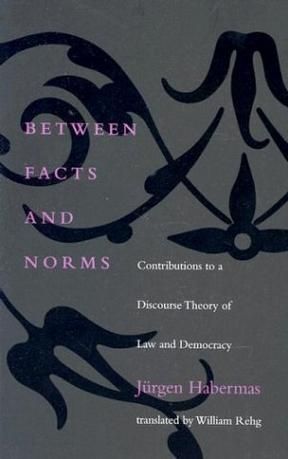
In Between Facts and Norms Jurgen Habermas works out the legal and political implications of his Theory of Communicative Action (1981), bringing to fruition the project announced with his publication of The Structural Transformation of the Public Sphere in 1962. This new work is a major contribution to recent debates on the rule of law and the possibilities of democracy in postindustrial societies, but it is much more.The introduction by William Rehg succinctly captures the special nature of the work, noting that it offers a sweeping, sociologically informed conceptualization of law and basic rights, a normative account of the rule of law and the constitutional state, an attempt to bridge normative and empirical approaches to democracy, and an account of the social context required for democracy. Finally, the work frames and caps these arguments with a bold proposal for a new paradigm of law that goes beyond the dichotomies that have afflicted modern political theory from its inception and that still underlie current controversies between so- called liberals and civic republicans.The book includes a postscript written in 1994, which restates the argument in light of its initial reception, and two appendixes, which cover key developments that preceded the book.Habermas himself was actively involved in the translation, adapting the text as necessary to make it more accessible to English-speaking readers.
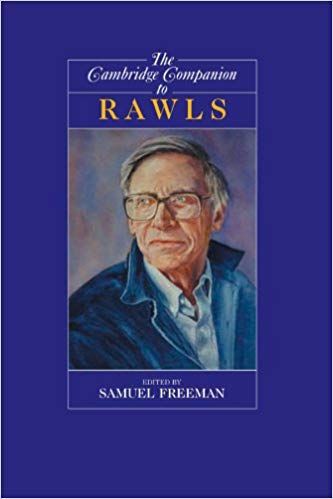
Each volume of this series of companions to major philosophers contains specially commissioned essays by an international team of scholars and will serve as a reference work for students and nonspecialists. John Rawls is the most significant and influential philosopher and moral philosopher of the twentieth century. His work has profoundly shaped contemporary discussions of social, political and economic justice in philosophy, law, political science, economics and other social disciplines. In this exciting collection of new essays, many of the world’s leading political and moral theorists discuss the full range of Rawls’s contribution to the concepts of political and economic justice, democracy, liberalism, constitutionalism, and international justice. There are also assessments of Rawls’s controversial relationships with feminism, utilitarianism and communitarianism. New readers will find this the most accessible guide to Rawls currently available. Advanced students and specialists will find a conspectus of recent developments in the interpretation of Rawls.
The first to use Judith Butler?s work as a reading of how the legal subject is formed, this book traces how Butler comes to the themes of ethics, law and politics analyzing their interrelation and explaining how they relate to Butler?s question of how people can have more liveable and viable lives. Acknowledging the potency and influence of Butler?s ?concept? of gender as process, which occupies a well developed and well discussed position in current literature, Elena Loizidou argues that the possibility of people having more liveable and viable lives is articulated by Butler within the parameters of a sustained agonistic relationship between the three spheres of ethics, law and politics. Suggesting that Butler?s rounded understanding of the interrelationship of these three spheres will enable critical legal scholarship, as well as critical theory more generally, to consider how the question of life?s unsustainable conditions can be rethought and redressed, this book is a key readfor all students of legal ethics, political philosophy and social theory.
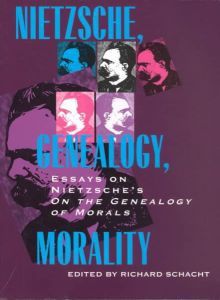
Written at the height of the philosopher’s intellectual powers, Friedrich Nietzsche’s On the Genealogy of Morals has become one of the key texts of recent Western philosophy. Its essayistic style affords a unique opportunity to observe many of Nietzsche’s persisting concerns coming together in an illuminating constellation. A profound influence on psychoanalysis, antihistoricism, and poststructuralism and an abiding challenge to ethical theory, Nietzsche’s book addresses many of the major philosophical problems and possibilities of modernity.In this unique collection focusing on the Genealogy, twenty-five notable philosophers offer diverse discussions of the book’s central themes and concepts. They explore such notions as ressentiment, asceticism, “slave” and “master” moralities, and what Nietzsche calls “genealogy” and its relation to other forms of inquiry in his work. The book presents a cross section of contemporary Nietzsche scholarship and philosophical investigation that is certain to interest philosophers, intellectual and cultural historians, and anyone concerned with one of the master thinkers of the modern age. Written at the height of the philosopher’s intellectual powers, Friedrich Nietzsche’s On the Genealogy of Morals has become one of the key texts of recent Western philosophy. Its essayistic style affords a unique opportunity to observe many of Nietzsche’s persisting concerns coming together in an illuminating constellation. A profound influence on psychoanalysis, antihistoricism, and poststructuralism and an abiding challenge to ethical theory, Nietzsche’s book addresses many of the major philosophical problems and possibilities of modernity.In this unique collection focusing on the Genealogy, twenty-five notable philosophers offer diverse discussions of the book’s central themes and concepts. They explore such notions as ressentiment, asceticism, “slave” and “master” moralities, and what Nietzsche calls “genealogy” and its relation to other forms of inquiry in his work. The book presents a cross section of contemporary Nietzsche scholarship and philosophical investigation that is certain to interest philosophers, intellectual and cultural historians, and anyone concerned with one of the master thinkers of the modern age.
ما از اخلاق چه انتظاری داریم؟ این سوال شاید تاحدودی برای عموم مردم و یا متخصصان این رشته قابل پاسخ باشد؛ اینکه خوب بودن را به ما بیاموزد و در تنظیم روابط فردی م...

جشن کتاب تهران به ایستگاه سی و یکم رسیده است. حال و احوال نشر کتاب خوب نیست و باید فرهنگدوستان را به خرید و هدیه دادن کتاب ترغیب نمود. خانه اخلاقپژوهان جوان ب...

بنیاد کتابهای اخلاق اسلامی عمدتا پالایش جان از آلودگیها و آراستن آن به زیباییها است. اندیشه محوری این قبیل کتابها آن است که انسان فعلی آنی نیست که باید باشد...

-
0 Comments