Notice: تابع WP_Block_Type_Registry::register به طورنادرست فراخوانی شد. نامهای نوع بلوک نباید حروف بزرگ داشته باشند. لطفاً برای اطلاعات بیشتر، اشکال زدایی در وردپرس را مشاهده کنید. (این پیام در نگارش 5.0.0 افزوده شده است.) in /home/ethicsho/public_html/wp-includes/functions.php on line 5313
Warning: Use of undefined constant TDC_PATH_LEGACY - assumed 'TDC_PATH_LEGACY' (this will throw an Error in a future version of PHP) in /home/ethicsho/public_html/wp-content/plugins/td-composer/td-composer.php on line 109
Warning: Use of undefined constant TDSP_THEME_PATH - assumed 'TDSP_THEME_PATH' (this will throw an Error in a future version of PHP) in /home/ethicsho/public_html/wp-content/plugins/td-composer/td-composer.php on line 113 بایگانیهای RM236 .M37 2001 - خانه اخلاق پژوهان جوان Notice: Trying to access array offset on value of type bool in /home/ethicsho/public_html/wp-content/plugins/wp-ulike/inc/general-functions.php on line 807
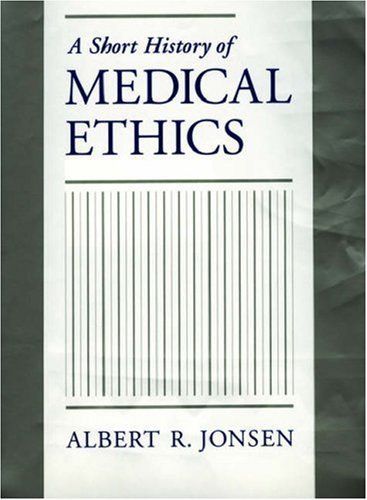
A physician says, “I have an ethical obligation never to cause the death of a patient,” another responds, “My ethical obligation is to relieve pain even if the patient dies.” The current argument over the role of physicians in assisting patients to die constantly refers to the ethical duties of the profession. References to the Hippocratic Oath are often heard. Many modern problems, from assisted suicide to accessible health care, raise questions about the traditional ethics of medicine and the medical profession. However, few know what the traditional ethics are and how they came into being. This book provides a brief tour of the complex story of medical ethics evolved over centuries in both Western and Eastern culture. It sets this story in the social and cultural contexts in which the work of healing was practiced and suggests that, behind the many different perceptions about the ethical duties of physicians, certain themes appear constantly, and may be relevant to modern debates. The book begins with the Hippocratic medicine of ancient Greece, moves through the Middle Ages, Renaissance and Enlightenment in Europe, and the long history of Indian 7nd Chinese medicine, ending as the problems raised modern medical science and technology challenge the settled ethics of the long tradition.
Don Browning’s important work critically appropriates the distinctive insights of religious ethics and contemporary psychology to inform and reform both. Here he elaborates the moral context for pastoral care by formulating five levels of practical moral thinking, illustrates them in two case studies involving homosexuality, and integrates the levels into a method of theological practice. It is a helpful but not dominating ethical framework for pastoral care and counseling useful to students, pastors, and congregations alike. “Browning, in this book, continues efforts to teach religious ethics to those working as counselors…. It presents a clear argument and method for laying practical and workable foundations of religious ethics in pastoral work.” -Clergy Journal “[Browning] points out that much of our pastoral care is undergirded by unexamined or only partially examined moral and ethical thinking…. In our efforts to avoid moralism, we have moved more and more toward a stance of ethical neutrality which has done a disservice to the people who look to us for help. Pastoral care and counseling need to be grounded in a practical moral theology or theological ethics.” -Christian Century “Browning provides ample resources for pastors to begin a discipline of critical moral reflection, especially in their role as counselors…. His borrowings from moral philosophers and theological ethics are explicated in the context of case studies and should prove helpful for anyone engaged in the practice of ministry.” -Religious Studies Review Don S. Browning is Alexander Campbell Professor Emeritus of Ethics and the Social Sciences, Divinity School, University of Chicago. His work at the intersection of theological ethics and social sciences has led to such pioneering and influential works as Religious Thought and the Modern Psychologies and A Fundamental Practical Theology.
Two essays on utilitarianism, written from opposite points of view, by J. J. C. Smart and Bernard Williams. In the first part of the book Professor Smart advocates a modern and sophisticated version of classical utilitarianism; he tries to formulate a consistent and persuasive elaboration of the doctrine that the rightness and wrongness of actions is determined solely by their consequences, and in particular their consequences for the sum total of human happiness. This is a revised version of Professor Smart’s famous essay ‘an outline of a system of utilitarian ethics’, first published in 1961 but long unobtainable. In Part II Bernard Williams offers a sustained and vigorous critique of utilitarian assumptions, arguments and ideals. He finds inadequate the theory of action implied by utilitarianism, and he argues that utilitarianism fails to engage at a serious level with the real problems of moral and political philosophy, and fails to make sense of notions such as integrity, or even human happiness itself. Both authors are agreed on utilitarianism’s importance: it cuts across a number of different philosophical disputes and combines a systematic account of mata-ethical problems with a distinctive and substantive moral stand. It thus is, or involves, philosophy in both the traditional and the narrower, professional sense of the word, and is a key topic (often the first topic) in introductory philosophy courses. This book should also be of interest to welfare economists, political scientists and decision-theorists.
This scarce antiquarian book is included in our special Legacy Reprint Series. In the interest of creating a more extensive selection of rare historical book reprints, we have chosen to reproduce this title even though it may possibly have occasional imperfections such as missing and blurred pages, missing text, poor pictures, markings, dark backgrounds and other reproduction issues beyond our control. Because this work is culturally important, we have made it available as a part of our commitment to protecting, preserving and promoting the world’s literature.
ما از اخلاق چه انتظاری داریم؟ این سوال شاید تاحدودی برای عموم مردم و یا متخصصان این رشته قابل پاسخ باشد؛ اینکه خوب بودن را به ما بیاموزد و در تنظیم روابط فردی م...

جشن کتاب تهران به ایستگاه سی و یکم رسیده است. حال و احوال نشر کتاب خوب نیست و باید فرهنگدوستان را به خرید و هدیه دادن کتاب ترغیب نمود. خانه اخلاقپژوهان جوان ب...

بنیاد کتابهای اخلاق اسلامی عمدتا پالایش جان از آلودگیها و آراستن آن به زیباییها است. اندیشه محوری این قبیل کتابها آن است که انسان فعلی آنی نیست که باید باشد...

-
0 Comments