Notice: تابع WP_Block_Type_Registry::register به طورنادرست فراخوانی شد. نامهای نوع بلوک نباید حروف بزرگ داشته باشند. لطفاً برای اطلاعات بیشتر، اشکال زدایی در وردپرس را مشاهده کنید. (این پیام در نگارش 5.0.0 افزوده شده است.) in /home/ethicsho/public_html/wp-includes/functions.php on line 5313
Warning: Use of undefined constant TDC_PATH_LEGACY - assumed 'TDC_PATH_LEGACY' (this will throw an Error in a future version of PHP) in /home/ethicsho/public_html/wp-content/plugins/td-composer/td-composer.php on line 109
Warning: Use of undefined constant TDSP_THEME_PATH - assumed 'TDSP_THEME_PATH' (this will throw an Error in a future version of PHP) in /home/ethicsho/public_html/wp-content/plugins/td-composer/td-composer.php on line 113 بایگانیهای RC533 .T89 1997 - خانه اخلاق پژوهان جوان Notice: Trying to access array offset on value of type bool in /home/ethicsho/public_html/wp-content/plugins/wp-ulike/inc/general-functions.php on line 807
This work offers a new understanding of Kant on the freedom of the will. Voeller looks in detail at theGroundwork of the Metaphysics of Moralsand theCritique of Practical Reasonagainst the background of Kant’s critical philosophy as a whole. Voeller’s book is essential reading for those interested in moral philosophy, Kant, philosophy of religion, philosophy of action and freedom of the will.
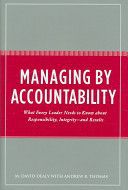
At its core, accountability is the responsibility to act. It is the commitment to do the right thing and stand by your decisions. Perhaps most importantly, it is a quality that must come from within; dishearteningly, even as legislators, shareholders, customers, and community activists are demanding greater accountability from corporate leaders, too many are waiting for some third party to take action. Whatever the endeavor, it is ultimately the individual who must hold himself to the highest standard first. Those who manage by accountability viscerally know that external rules cannot substitute for character. And they know that accountability is a quality that can be developed, honed through practice, and encouraged in others. Using stories drawn from David Dealy’s experiences on the front lines, as well as examples from other successful leaders, “Managing by Accountability” demonstrates how leaders who embark on a management philosophy of personal accountability imbue their organizations with the qualities of integrity and responsibility. In their down-to-earth style, the authors identify the five great accountability mistakes and offer a wealth of practical suggestions for overcoming them to achieve outstanding results throughout the organization. In some cases it may be Congress (e.g., Sarbanes-Oxley legislation), the media, the company’s legal or communications department, Wall Street, disgruntled customers, or angry community activists. This is not to say that formal accountability programs are useless; they do play an important role. Nevertheless, it is ultimately the individual who must hold himself to the highest standard first-without waiting to be told, pushed, or prodded. Those who manage by accountability viscerally know that external rules cannot substitute for character. And they also know that accountability can be developed, honed through practice, and encouraged in others. “Managing by Accountability” demonstrates how leaders who embark on a management philosophy of personal accountability imbue their organizations with the qualities of integrity and responsibility. Using stories drawn from David Dealy’s experiences on the front lines, as well as examples from other successful leaders, the book provides concrete examples of accountability in action. In their down-to-earth style, Dealy and Thomas identify the five great accountability mistakes and offer a wealth of practical suggestions for overcoming them to achieve outstanding results throughout the organization.
Leading political theologian Oliver ODonovan here takes a fresh look at some traditional moral arguments about war. Modern Christians differ widely on this issue. A few hold that absolute pacifism is the only viable Christian position, others subscribe in various ways to concepts of ‘just war developed out of a Western tradition that arose from the legacies of Augustine and Aquinas, while others still adopt more pragmatically realist postures. Professor ODonovan re-examines questions of contemporary urgency including the use of biological and nuclear weapons, military intervention, economic sanctions, war crimes trials and the roles of the Geneva Convention, international conventions and the UN. His enquiry opens with a challenging dedication to the new Archbishop of Canterbury and proceeds to shed new light on vital topics with which the Archbishop and others will be very directly engaged. It should be read by anyone concerned with the ethics of warfare.
ما از اخلاق چه انتظاری داریم؟ این سوال شاید تاحدودی برای عموم مردم و یا متخصصان این رشته قابل پاسخ باشد؛ اینکه خوب بودن را به ما بیاموزد و در تنظیم روابط فردی م...

جشن کتاب تهران به ایستگاه سی و یکم رسیده است. حال و احوال نشر کتاب خوب نیست و باید فرهنگدوستان را به خرید و هدیه دادن کتاب ترغیب نمود. خانه اخلاقپژوهان جوان ب...

بنیاد کتابهای اخلاق اسلامی عمدتا پالایش جان از آلودگیها و آراستن آن به زیباییها است. اندیشه محوری این قبیل کتابها آن است که انسان فعلی آنی نیست که باید باشد...

-
0 Comments