Notice: تابع WP_Block_Type_Registry::register به طورنادرست فراخوانی شد. نامهای نوع بلوک نباید حروف بزرگ داشته باشند. لطفاً برای اطلاعات بیشتر، اشکال زدایی در وردپرس را مشاهده کنید. (این پیام در نگارش 5.0.0 افزوده شده است.) in /home/ethicsho/public_html/wp-includes/functions.php on line 5313
Warning: Use of undefined constant TDC_PATH_LEGACY - assumed 'TDC_PATH_LEGACY' (this will throw an Error in a future version of PHP) in /home/ethicsho/public_html/wp-content/plugins/td-composer/td-composer.php on line 109
Warning: Use of undefined constant TDSP_THEME_PATH - assumed 'TDSP_THEME_PATH' (this will throw an Error in a future version of PHP) in /home/ethicsho/public_html/wp-content/plugins/td-composer/td-composer.php on line 113 بایگانیهای R725.55 .R44 1996 - خانه اخلاق پژوهان جوان Notice: Trying to access array offset on value of type bool in /home/ethicsho/public_html/wp-content/plugins/wp-ulike/inc/general-functions.php on line 807
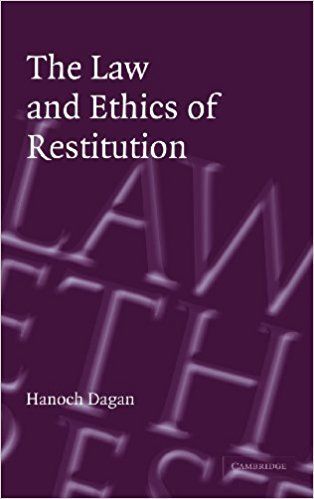
Dagan’s book provides a dynamic and much needed account of the American law of restitution. The book reviews the existing doctrine, including the forthcoming (third) Restatement, using an ethical perspective to expose and examine critically the normative underpinnings of the core categories of restitution. Dagan also discusses some of the most controversial issues in the area, such as cohabitation, improper tax payments, and the role of constructive trusts as trumps in bankruptcy. He further tackles the recent restitution claims of slave laborers (or their descendants) against corporations that benefited from their enslavements, and of governmental bodies against injurious industries. Dagan argues that the concept of unjust enrichment is not an independent reason for restitution but, rather, serves as a loose framework, structuring the contextual application of commitments to autonomy, utility, and community in situations where either the cause of action or the measure of recovery is benefit-based. By integrating doctrinal and ethical analyses of restitution across the spectrum of restitution contexts, the author offers significant and provocative insights on existing law as well as possible reforms.
The fundamental question of the ethics of belief is “What ought one to believe?” According to the traditional view of evidentialism, the strength of one’s beliefs should be proportionate to the evidence. Conventional ways of defending and challenging evidentialism rely on the idea that what one ought to believe is a matter of what it is rational, prudent, ethical, or personally fulfilling to believe. Common to all these approaches is that they look outside of belief itself to determine what one ought to believe.In this book Jonathan Adler offers a strengthened version of evidentialism, arguing that the ethics of belief should be rooted in the concept of belief—that evidentialism is belief’s own ethics. A key observation is that it is not merely that one ought not, but that one cannot, believe, for example, that the number of stars is even. The “cannot” represents a conceptual barrier, not just an inability. Therefore belief in defiance of one’s evidence (or evidentialism) is impossible. Adler addresses such questions as irrational beliefs, reasonableness, control over beliefs, and whether justifying beliefs requires a foundation. Although he treats the ethics of belief as a central topic in epistemology, his ideas also bear on rationality, argument and pragmatics, philosophy of religion, ethics, and social cognitive psychology.
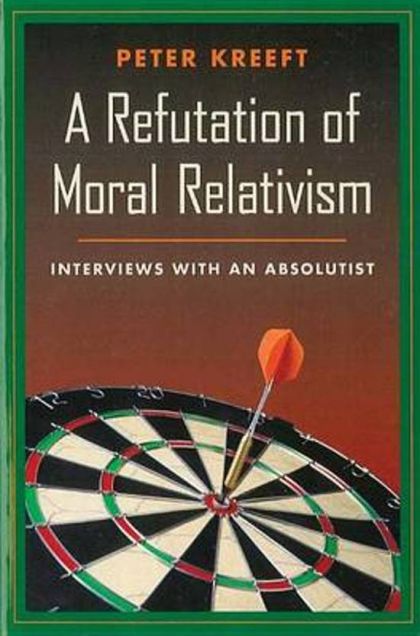
No issue is more fateful for civilization than moral relativism. History knows not one example of a successful society which repudiated moral absolutes. Yet most attacks on relativism have been either pragmatic (looking at its social consequences) or exhorting (preaching rather than proving), and philosophers’ arguments against it have been specialized, technical, and scholarly.In his typical unique writing style, Peter Kreeft lets an attractive, honest, and funny relativist interview a “Muslim fundamentalist” absolutist so as not to stack the dice personally for absolutism. In an engaging series of personal interviews, every conceivable argument the “sassy Black feminist” reporter Libby gives against absolutism is simply and clearly refuted, and none of the many arguments for moral absolutism is refuted.
ما از اخلاق چه انتظاری داریم؟ این سوال شاید تاحدودی برای عموم مردم و یا متخصصان این رشته قابل پاسخ باشد؛ اینکه خوب بودن را به ما بیاموزد و در تنظیم روابط فردی م...

جشن کتاب تهران به ایستگاه سی و یکم رسیده است. حال و احوال نشر کتاب خوب نیست و باید فرهنگدوستان را به خرید و هدیه دادن کتاب ترغیب نمود. خانه اخلاقپژوهان جوان ب...

بنیاد کتابهای اخلاق اسلامی عمدتا پالایش جان از آلودگیها و آراستن آن به زیباییها است. اندیشه محوری این قبیل کتابها آن است که انسان فعلی آنی نیست که باید باشد...

-
0 Comments