Notice: تابع WP_Block_Type_Registry::register به طورنادرست فراخوانی شد. نامهای نوع بلوک نباید حروف بزرگ داشته باشند. لطفاً برای اطلاعات بیشتر، اشکال زدایی در وردپرس را مشاهده کنید. (این پیام در نگارش 5.0.0 افزوده شده است.) in /home/ethicsho/public_html/wp-includes/functions.php on line 5313
Warning: Use of undefined constant TDC_PATH_LEGACY - assumed 'TDC_PATH_LEGACY' (this will throw an Error in a future version of PHP) in /home/ethicsho/public_html/wp-content/plugins/td-composer/td-composer.php on line 109
Warning: Use of undefined constant TDSP_THEME_PATH - assumed 'TDSP_THEME_PATH' (this will throw an Error in a future version of PHP) in /home/ethicsho/public_html/wp-content/plugins/td-composer/td-composer.php on line 113 بایگانیهای LB2324 .G53 2009 - خانه اخلاق پژوهان جوان Notice: Trying to access array offset on value of type bool in /home/ethicsho/public_html/wp-content/plugins/wp-ulike/inc/general-functions.php on line 807
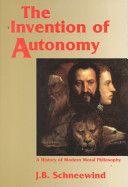
This remarkable book is the most comprehensive study ever written of the history of moral philosophy in the seventeenth and eighteenth centuries. Its aim is to set Kant’s still influential ethics in its historical context by showing in detail what the central questions in moral philosophy were for him and how he arrived at his own distinctive ethical views. The book is organised into four main sections, each exploring moral philosophy by discussing the work of many influential philosophers of the seventeenth and eighteenth centuries. In an epilogue the author discusses Kant’s view of his own historicity, and of the aims of moral philosophy. In its range, in its analyses of many philosophers not discussed elsewhere, and in revealing the subtle interweaving of religious and political thought with moral philosophy, this is an unprecedented account of the evolution of Kant’s ethics.
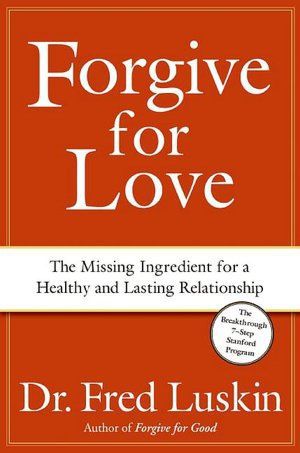
Finding the love of your life and holding onto that relationship is more difficult than ever. The problem hasn’t gone unnoticed. From relationship therapists to speed-dating, self-help books to online matchmaking, an entire industry has developed to help us navigate the bumpy road of relationships. Yet in spite of the availability of all these resources, many of us still struggle to discover and keep the love of our lives. That is, until now. This groundbreaking book from the frontiers of psychology offers startling new research about the one missing factor that is vital to relationships—forgiveness. A national bestselling author and leading expert on forgiveness, Dr. Fred Luskin shows that no matter how much two people may love each other, their relationship will not succeed unless they practice forgiveness—an approach that most relationship experts continue to ignore. Why is forgiveness an essential tool for relationships? Studies reveal that 70 percent for what we argue about at the beginning of our relationships will never be fully resolved. In other words, our basic needs and behaviors don’t change over time. The issues are endless: the socks that always end up on the floor, how often to have sex, the ESPN obsession, working hours, and, of course, friends and family. Without forgiveness, these issues, however big or small, too easily turn into relationship-eroding grudges. Forgive for Love is the solution for your relationship woes, providing the tools you need to find and hold onto the love of your life. Dr. Luskin delivers a proven seven-step program for creating and maintaining loving and lasting relationships, teaching easy-to-learn forgiveness skills that will not only resolve immediate conflicts but improve the overall happiness and longevity of your relationships. Simply put: people in healthy relationships figure out how to forgive their partners for being themselves. They do so because it is nearly impossible to change other people and because none of us are perfect. Forgiveness is the key, and Forgive for Love has the answers.
The Oxford Handbook of Ethical Theory is a major new reference work in ethical theory consisting of commissioned essays by leading moral philosophers. Ethical theories have always been of central importance to philosophy, and remain so; ethical theory is one of the most active areas of philosophical research and teaching today. Courses in ethics are taught in colleges and universities at all levels, and ethical theory is the organizing principle for all of them. The Handbook is divided into two parts, mirroring the field. The first part treats meta-ethical theory, which deals with theoretical questions about morality and moral judgment, including questions about moral language, the epistemology of moral belief, the truth aptness of moral claims, and so forth. The second part addresses normative theory, which deals with general moral issues, including the plausibility of various ethical theories and abstract principles of behavior. Examples of such theories are consequentialism and virtue theory. As with other Oxford Handbooks, the twenty-five contributors cover the field in a comprehensive and highly accessible way, while achieving three goals: exposition of central ideas, criticism of other approaches, and putting forth a distinct viewpoint.
Book Summary of Aiming At Virtue In PlatoThis innovative study of Plato’s ethics focuses on the concept of virtue. Based on detailed readings of the most prominent Platonic dialogues on virtue, it argues that there is a central yet previously unnoticed conceptual distinction in Plato between the idea of virtue as the supreme aim of one’s actions and the determination of which action-tokens or -types are virtuous. Appreciating the ‘aiming/determining distinction’ provides detailed and mutually consistent readings of the most well-known Platonic dialogues on virtue as well as original interpretations of central Platonic questions. Unlike most examinations of Plato’s ethics, this study does not take as its centrepiece the ‘eudaimonist framework’, which focusses on the relationship between virtue and happiness. Instead Aiming at Virtue in Plato argues that the dialogues themselves begin with the idea of the supremacy of virtue, examine how that claim can be defended, and address how to determine what constitutes the virtuous action..
Metaethics, understood as a distinct branch of ethics, is often traced to G. E. Moore’s 1903 classic, Principia Ethica. Whereas normative ethics is concerned to answer first-order moral questions about what is good and bad, right and wrong, metaethics is concerned to answer second-order non-moral questions about the semantics, metaphysics, and epistemology of moral thought and discourse. Moore has continued to exert a powerful influence, and the sixteen essays here (most of them specially written for the volume) represent the most up-to-date work in metaethics after, and in some cases directly inspired by, the work of Moore. Contributors include Robert Audi, Stephen Barker, Paul Bloomfield, Panayot Butchvarvov, Jonathan Dancy, Stephen Darwall, Jamie Dreier, Allan Gibbard, Brad Hooker, Terry Horgan, Connie Rosati, Russ Shafer-Landau, Walter Sinnott-Armstrong, Michael Smith, Philip Stratton-Lake, Sigrun Svavarsdottir, Mark Timmons, and Judith Jarvis Thomson.
ما از اخلاق چه انتظاری داریم؟ این سوال شاید تاحدودی برای عموم مردم و یا متخصصان این رشته قابل پاسخ باشد؛ اینکه خوب بودن را به ما بیاموزد و در تنظیم روابط فردی م...

جشن کتاب تهران به ایستگاه سی و یکم رسیده است. حال و احوال نشر کتاب خوب نیست و باید فرهنگدوستان را به خرید و هدیه دادن کتاب ترغیب نمود. خانه اخلاقپژوهان جوان ب...

بنیاد کتابهای اخلاق اسلامی عمدتا پالایش جان از آلودگیها و آراستن آن به زیباییها است. اندیشه محوری این قبیل کتابها آن است که انسان فعلی آنی نیست که باید باشد...

-
0 Comments