Notice: تابع WP_Block_Type_Registry::register به طورنادرست فراخوانی شد. نامهای نوع بلوک نباید حروف بزرگ داشته باشند. لطفاً برای اطلاعات بیشتر، اشکال زدایی در وردپرس را مشاهده کنید. (این پیام در نگارش 5.0.0 افزوده شده است.) in /home/ethicsho/public_html/wp-includes/functions.php on line 5313
Warning: Use of undefined constant TDC_PATH_LEGACY - assumed 'TDC_PATH_LEGACY' (this will throw an Error in a future version of PHP) in /home/ethicsho/public_html/wp-content/plugins/td-composer/td-composer.php on line 109
Warning: Use of undefined constant TDSP_THEME_PATH - assumed 'TDSP_THEME_PATH' (this will throw an Error in a future version of PHP) in /home/ethicsho/public_html/wp-content/plugins/td-composer/td-composer.php on line 113 بایگانیهای KF316.5 .H39 1990 - خانه اخلاق پژوهان جوان Notice: Trying to access array offset on value of type bool in /home/ethicsho/public_html/wp-content/plugins/wp-ulike/inc/general-functions.php on line 807
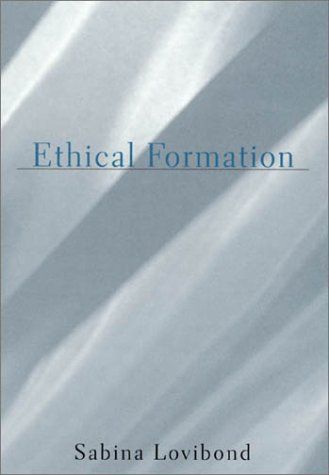
Sabina Lovibond invites her readers to see how the “practical reason view of ethics” can survive challenges from within philosophy and from the antirationalist postmodern critique of reason.She elaborates and defends a modern practical-reason view of ethics by focusing on virtue or ideal states of character that involve sensitivity to the objective reasons circumstances bring into play. At the heart of her argument is the Aristotelian idea of the formation of character through upbringing; these ancient ideas can be made contemporary if one understands them in a naturalized way. She then explores the implications that arise from the naturalization of the classical view, weaving into her theory ideas of Jacques Derrida and J. L. Austin. The book also discusses two modes of resistance to an existing ethical culture–one committed to the critical employment of shared norms of rationality, the other aspiring to a more radical attitude, grounded in hostility to the “universal.” Lovibond tries to determine what may be correct in this second, admittedly paradoxical, tendency. This is a timely and valuable effort to connect the most advanced forms of thinking in the analytic tradition and in the Continental tradition, and to extend our understanding of the intimacies and resistances between these two prominent strands of contemporary philosophy.
Oxford Studies in Ancient Philosophy is a volume of original articles on all aspects of ancient philosophy. The articles may be of substantial length, and include critical notices of major books. OSAP is now published twice yearly, in both hardback and paperback. This volume covers a wide chronological range of ancient philosophy, from the Presocratics, Heraclitus and Anaxagoras, to Galen and Aspasius in the second century AD. At the core of the volume are five articles on Aristotle.
Film & Ethics considers a range of films and texts of film criticism alongside disparate philosophical discourses of ethics by Levinas, Derrida, Foucault, Lacanian psychoanalysts and postmodern theorists. While an ethics of looking is implicitly posited in most strands of cinema theory, there is no established body of work that might be called ethical film criticism. This book, therefore, redresses the reluctance of many existing works to address cinema from an explicitly ethical perspective. Readings range across popular Hollywood films such as Thelma and Louise, Alfred Hitchcock’s canonical corpus, and films from European and World cinemas, including Dreyer’s The Passion of Joan of Arc and the little-known African film Bamako. The book engages with debates concerning censorship and pornography; the ethical implications of ‘positive representation’; the ethics of making and viewing images of atrocity and suffering; and the relationship between ethics and aesthetics. Lisa Downing and Libby Saxton re-invigorate debates in film studies by foregrounding the ethical dimensions of the moving image, and create dialogues between ostensibly incompatible philosophical and political trends of thought, without seeking to reconcile their differences.
This book lays out foundations for a “science of morals.” Binmore uses game theory as a systematic tool for investigating ethical matters. He reinterprets classical social contract ideas within a game-theory framework and generates new insights into the fundamental questions of social philosophy. In contrast to the previous writing in moral philosophy that relied on vague notion such as ” societal well-being” and “moral duty,” Binmore begins with individuals; rational decision-makers with the ability to emphasize with one another. Any social arrangement that prescribes them to act against their interests will become unstable and eventually will be replaced by another, until one is found that includes worthwhile actions for all individuals involved.
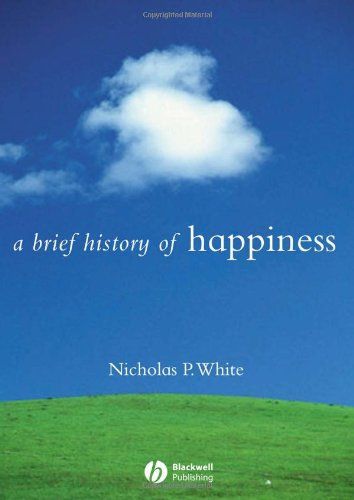
In this brief history, philosopher Nicholas White reviews 2,500 years of philosophical thought about happiness.Addresses key questions such as: What is happiness? Should happiness play such a dominant role in our lives? How can we deal with conflicts between the various things that make us happy? Considers the ways in which major thinkers from antiquity to the modern day have treated happiness: from Plato’s notion of the harmony of the soul, through to Nietzsche’s championing of conflict over harmony. Relates questions about happiness to ethics and to practical philosophy.
ما از اخلاق چه انتظاری داریم؟ این سوال شاید تاحدودی برای عموم مردم و یا متخصصان این رشته قابل پاسخ باشد؛ اینکه خوب بودن را به ما بیاموزد و در تنظیم روابط فردی م...

جشن کتاب تهران به ایستگاه سی و یکم رسیده است. حال و احوال نشر کتاب خوب نیست و باید فرهنگدوستان را به خرید و هدیه دادن کتاب ترغیب نمود. خانه اخلاقپژوهان جوان ب...

بنیاد کتابهای اخلاق اسلامی عمدتا پالایش جان از آلودگیها و آراستن آن به زیباییها است. اندیشه محوری این قبیل کتابها آن است که انسان فعلی آنی نیست که باید باشد...

-
0 Comments