Notice: تابع WP_Block_Type_Registry::register به طورنادرست فراخوانی شد. نامهای نوع بلوک نباید حروف بزرگ داشته باشند. لطفاً برای اطلاعات بیشتر، اشکال زدایی در وردپرس را مشاهده کنید. (این پیام در نگارش 5.0.0 افزوده شده است.) in /home/ethicsho/public_html/wp-includes/functions.php on line 5313
Warning: Use of undefined constant TDC_PATH_LEGACY - assumed 'TDC_PATH_LEGACY' (this will throw an Error in a future version of PHP) in /home/ethicsho/public_html/wp-content/plugins/td-composer/td-composer.php on line 109
Warning: Use of undefined constant TDSP_THEME_PATH - assumed 'TDSP_THEME_PATH' (this will throw an Error in a future version of PHP) in /home/ethicsho/public_html/wp-content/plugins/td-composer/td-composer.php on line 113 بایگانیهای KF2979 .L36 2003 - خانه اخلاق پژوهان جوان Notice: Trying to access array offset on value of type bool in /home/ethicsho/public_html/wp-content/plugins/wp-ulike/inc/general-functions.php on line 807
A new investigation into how the advent of precision-guided munitions affects the likelihood of US policy makers to use force. As such, this is an inquiry into the impact of ethics, strategy and military technology on the decision calculus of national leaders. Following the first Gulf War in 1991, this new study shows how US Presidents increasingly used stand-off precision guided munitions (or “PGMs,” especially the Tomahawk cruise missile) either to influence foreign adversaries to make specific policy choices or to signal displeasure with their actions. Such uses of force are attractive because they can lead to desirable policy outcomes where conventional diplomacy has failed but without the large cost of lives, economic resources, or political capital that result from large-scale military operations. In a post-9/11 world, understanding alternative uses of force under significant policy constraints is still of supreme importance.
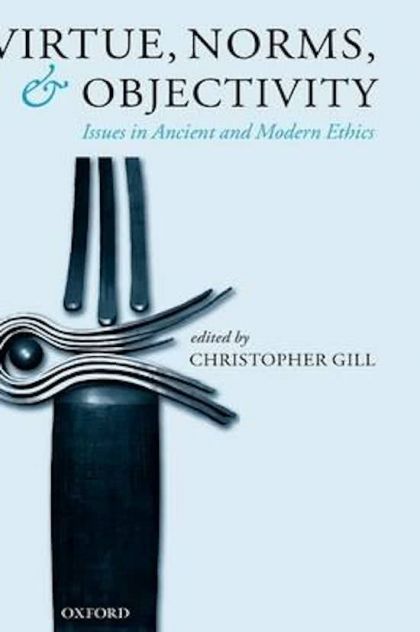
For much of the twentieth century it was common to contrast the characteristic forms and preoccupations of modern ethical theory with those of the ancient world. However, the last few decades have seen a growing recognition that contemporary moral philosophy now has much in common with its ancient incarnation, in areas as diverse as virtue ethics and ethical epistemology. Christopher Gill has assembled an international team to conduct a fascinating exploration of the relationship between the two fields, exploring key issues in ancient ethics in a way that highlights their conceptual significance for the study of ethics more generally. Virtue, Norms, and Objectivity will be as interesting and relevant to modern moral philosophers, therefore, as it will be to specialists in ancient thought.
One of the world’s most famous philosophers, Jacques Derrida, explores difficult questions in this important and engaging book. Is it still possible to uphold international hospitality and justice in the face of increasing nationalism and civil strife in so many countries? Drawing on examples of treatment of minority groups in Europe, he skillfully and accessibly probes the thinking that underlies much of the practice, and rhetoric, that informs cosmopolitanism. What have duties and rights to do with hospitality? Should hospitality be grounded in a private or public ethic, or even a religious one? This fascinating book will be illuminating reading for all.
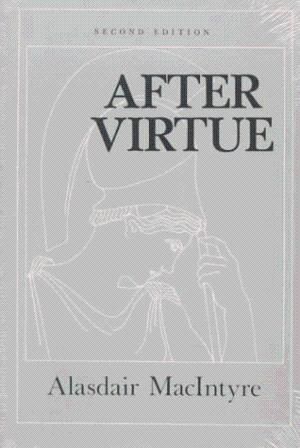
A disquieting suggestion — The nature of moral disagreement today and the claims of emotivism — Emotivism: social content and social context — The predecessor culture and the enlightenment project of justifying morality — Why the enlightenment project of justifying morality had to fail — Some consequences of the failure of the enlightenment project — “Fact”, explanation and expertise — The character of generalizations in social science and their lack of predictive power — Nietzsche or Aristotle? — The virtues in heroic societies — The virtues at Athens — Aristotle’s account of the virtues — Medieval aspects and occasions — The nature of the virtues — The virtues, the unity of a human life and the concept of a tradition — From the virtues to virtue and after virtue — Justice as a virtue: changing conceptions — After virtue: Nietzsche or Aristotle, Trotsky and St. Benedict — Postscript to the second edition.
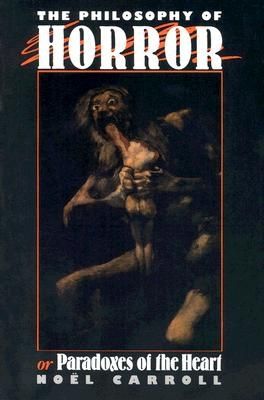
For decades, the horror genre has been a major popular entertainment and has dominated the publishing and film industries. Yet there exists no philosophical examination of the genre – the time for its aesthetic analysis is ripe. Noel Carroll, film scholar and philosopher, offers the first serious look at the aesthetics of horror. In this book he discusses the nature and narrative structures of the genre, dealing with horror as a “transmedia” phenomenon. A fan and serious student of the horror genre, Carroll brings to bear his comprehensive knowledge of obscure and forgotten works, as well as of the horror masterpieces. Working from a philosophical perspective, he tries to account for how people can find pleasure in having their wits scared out of them. What, after all, are those “paradoxes of the heart” that make us want to be horrified?
ما از اخلاق چه انتظاری داریم؟ این سوال شاید تاحدودی برای عموم مردم و یا متخصصان این رشته قابل پاسخ باشد؛ اینکه خوب بودن را به ما بیاموزد و در تنظیم روابط فردی م...

جشن کتاب تهران به ایستگاه سی و یکم رسیده است. حال و احوال نشر کتاب خوب نیست و باید فرهنگدوستان را به خرید و هدیه دادن کتاب ترغیب نمود. خانه اخلاقپژوهان جوان ب...

بنیاد کتابهای اخلاق اسلامی عمدتا پالایش جان از آلودگیها و آراستن آن به زیباییها است. اندیشه محوری این قبیل کتابها آن است که انسان فعلی آنی نیست که باید باشد...

-
0 Comments