Notice: تابع WP_Block_Type_Registry::register به طورنادرست فراخوانی شد. نامهای نوع بلوک نباید حروف بزرگ داشته باشند. لطفاً برای اطلاعات بیشتر، اشکال زدایی در وردپرس را مشاهده کنید. (این پیام در نگارش 5.0.0 افزوده شده است.) in /home/ethicsho/public_html/wp-includes/functions.php on line 5313
Warning: Use of undefined constant TDC_PATH_LEGACY - assumed 'TDC_PATH_LEGACY' (this will throw an Error in a future version of PHP) in /home/ethicsho/public_html/wp-content/plugins/td-composer/td-composer.php on line 109
Warning: Use of undefined constant TDSP_THEME_PATH - assumed 'TDSP_THEME_PATH' (this will throw an Error in a future version of PHP) in /home/ethicsho/public_html/wp-content/plugins/td-composer/td-composer.php on line 113 بایگانیهای K334 .H37 1982 - خانه اخلاق پژوهان جوان Notice: Trying to access array offset on value of type bool in /home/ethicsho/public_html/wp-content/plugins/wp-ulike/inc/general-functions.php on line 807
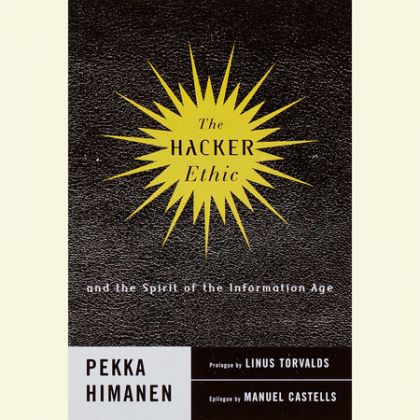
You may be a hacker and not even know it. Being a hacker has nothing to do with cyberterrorism, and it doesn’t even necessarily relate to the open-source movement. Being a hacker has more to do with your underlying assumptions about stress, time management, work, and play. It’s about harmonizing the rhythms of your creative work with the rhythms of the rest of your life so that they amplify each other. It is a fundamentally new work ethic that is revolutionizing the way business is being done around the world.Without hackers there would be no universal access to e-mail, no Internet, no World Wide Web, but the hacker ethic has spread far beyond the world of computers. It is a mind-set, a philosophy, based on the values of play, passion, sharing, and creativity, that has the potential to enhance every individual’s and company’s productivity and competitiveness. Now there is a greater need than ever for entrepreneurial versatility of the sort that has made hackers the most important innovators of our day. Pekka Himanen shows how we all can make use of this ongoing transformation in the way we approach our working lives.
“Organ shortage is an ongoing problem in many countries. The needless death and suffering which have resulted necessitate an investigation into potential solutions. This examination of contemporary ethical means, both practical and policy-oriented, of reducing the shortfall in organs draws on the experiences of a range of countries. The authors focus on the resolution and negotiation of ethical conflict, examine systems approaches such as the ‘Spanish model’ and the US Breakthrough Collaboratives, evaluate policy proposals relating to incentives, presumed consent, and modifications regarding end-of-life care, and evaluate the greatly increased use of (non-heart-beating) donors suffering circulatory death, as well as living donors. The proposed strategies and solutions are not only capable of resolving the UK’s own organ-shortage crisis, but also of being implemented in other countries grappling with how to address the growing gap between supply and demand for organs”–
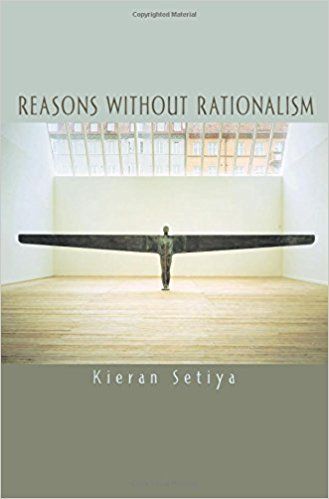
Modern philosophy has been vexed by the question “Why should I be moral?” and by doubts about the rational authority of moral virtue. In Reasons without Rationalism, Kieran Setiya shows that these doubts rest on a mistake. The “should” of practical reason cannot be understood apart from the virtues of character, including such moral virtues as justice and benevolence, and the considerations to which the virtues make one sensitive thereby count as reasons to act. Proposing a new framework for debates about practical reason, Setiya argues that the only alternative to this “virtue theory” is a form of ethical rationalism in which reasons derive from the nature of intentional action. Despite its recent popularity, however, ethical rationalism is false. It wrongly assumes that we act “under the guise of the good,” or it relies on dubious views about intention and motivation. It follows from the failure of rationalism that the virtue theory is true: we cannot be fully good without the perfection of practical reason, or have that perfection without being good. Addressing such topics as the psychology of virtue and the explanation of action, Reasons without Rationalism is essential reading for philosophers interested in ethics, rationality, or the philosophy of mind.
“When we act, our reason is slave to our passions, said Hume. And the two questions, according to Kant, that a philosopher should address are, What can I know? and What am I to do? The essays collected by editor Edna Ullmann-Margalit in Reasoning Practically address the often elusive link between reason, or theory, and practice, or action.
ما از اخلاق چه انتظاری داریم؟ این سوال شاید تاحدودی برای عموم مردم و یا متخصصان این رشته قابل پاسخ باشد؛ اینکه خوب بودن را به ما بیاموزد و در تنظیم روابط فردی م...

جشن کتاب تهران به ایستگاه سی و یکم رسیده است. حال و احوال نشر کتاب خوب نیست و باید فرهنگدوستان را به خرید و هدیه دادن کتاب ترغیب نمود. خانه اخلاقپژوهان جوان ب...

بنیاد کتابهای اخلاق اسلامی عمدتا پالایش جان از آلودگیها و آراستن آن به زیباییها است. اندیشه محوری این قبیل کتابها آن است که انسان فعلی آنی نیست که باید باشد...

-
0 Comments