Notice: تابع WP_Block_Type_Registry::register به طورنادرست فراخوانی شد. نامهای نوع بلوک نباید حروف بزرگ داشته باشند. لطفاً برای اطلاعات بیشتر، اشکال زدایی در وردپرس را مشاهده کنید. (این پیام در نگارش 5.0.0 افزوده شده است.) in /home/ethicsho/public_html/wp-includes/functions.php on line 5313
Warning: Use of undefined constant TDC_PATH_LEGACY - assumed 'TDC_PATH_LEGACY' (this will throw an Error in a future version of PHP) in /home/ethicsho/public_html/wp-content/plugins/td-composer/td-composer.php on line 109
Warning: Use of undefined constant TDSP_THEME_PATH - assumed 'TDSP_THEME_PATH' (this will throw an Error in a future version of PHP) in /home/ethicsho/public_html/wp-content/plugins/td-composer/td-composer.php on line 113 بایگانیهای K230.H432 .P47 1987 - خانه اخلاق پژوهان جوان Notice: Trying to access array offset on value of type bool in /home/ethicsho/public_html/wp-content/plugins/wp-ulike/inc/general-functions.php on line 807
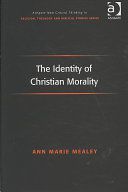
This book argues that moral theology has yet to embrace the recommendations of the Second Vatican Council concerning the ways in which moral theology is to be renewed. There is little or no consensus between theologians regarding the nature, content and uniqueness of Christian morality. After highlighting the strengths and weaknesses of the so-called autonomy and faith ethic schools of thought, Mealey argues that there is little dividing them and that, in some instances, both schools are simply defending one aspect of a hermeneutical dialectic.In an attempt to move away from the divisions between proponents of the faith-ethic and autonomy positions, Mealey enlists the help of the hermeneutical theory of Paul Ricoeur, arguing that the debate on the uniqueness of Christian morality can be mediated if scholars look to the possibilities opened up by Ricoeur’s hermeneutics of interpretation. Mealey also argues that the uniqueness of Christian morality is more adequately explained in terms of a specific identity (self) that is constantly subject to change and revision in light of many, often conflicting, moral sources. She advocates a move away from attempts to explain the uniqueness of Christian morality in terms of one specific, unchanging context, motivation, norm or divine command or value. By embracing the possibilities opened up by Ricoeurian hermeneutics, Mealey explains how concepts such as revelation, tradition, orthodoxy and moral conscience may be understood in a hermeneutical way without being deemed sectarian or unorthodox.
In The Concealed Art of the Soul, Jonardon Ganeri presents a variety of perspectives on the nature of the self as seen by major schools of classical Indian philosophy. For Indian thinkers, a philosophical treatise about the self should not only reveal the truth about the nature of the soul, but should also engage the reader in a process of study and contemplation that will eventually lead to self-transformation. By combining careful attention to philosophical content and sensitivity to literary form, Ganeri deepens our understanding of some of the greatest works in Indian literary history. His magisterial survey includes the Upanisads, the Buddha’s discourses, the epic Mahabharata, and the writings of Candrakirti, whose work was later to provide the foundation for Tibetan Buddhism. Ganeri argues that many Western theories of selfhood are not only present in, but are developed to high degree of sophistication in these writings, and that there are other ideas about the self found in the work of classical Indian thinkers which present-day analytic philosophers have not yet begun to explore. Scholars and students of philosophy and religious studies, particularly those with an interest in Indian and Western conceptions of the self, will find this book fascinating reading.
How do the hard facts of political responsibility shape and constrain the demands of ethical life? That question lies at the heart of the problem of ‘dirty hands’ in public life. Those who exercise political power often feel they must act in ways that would otherwise be considered immoral: indeed, paradoxically, they sometimes feel that it would be immoral of them not to perform or condone such acts as killing or lying. John Parrish offers a wide-ranging account of how this important philosophical problem emerged and developed, tracing it – and its proposed solutions – from ancient Greece through the Enlightenment. His central argument is that many of our most familiar concepts and institutions – from Augustine’s interiorised ethics, to Hobbes’s sovereign state, to Adam Smith’s ‘invisible hand’, understanding of the modern commercial economy – were designed partly as responses to the ethical problem of dirty hands in public life.
ما از اخلاق چه انتظاری داریم؟ این سوال شاید تاحدودی برای عموم مردم و یا متخصصان این رشته قابل پاسخ باشد؛ اینکه خوب بودن را به ما بیاموزد و در تنظیم روابط فردی م...

جشن کتاب تهران به ایستگاه سی و یکم رسیده است. حال و احوال نشر کتاب خوب نیست و باید فرهنگدوستان را به خرید و هدیه دادن کتاب ترغیب نمود. خانه اخلاقپژوهان جوان ب...

بنیاد کتابهای اخلاق اسلامی عمدتا پالایش جان از آلودگیها و آراستن آن به زیباییها است. اندیشه محوری این قبیل کتابها آن است که انسان فعلی آنی نیست که باید باشد...

-
0 Comments