Notice: تابع WP_Block_Type_Registry::register به طورنادرست فراخوانی شد. نامهای نوع بلوک نباید حروف بزرگ داشته باشند. لطفاً برای اطلاعات بیشتر، اشکال زدایی در وردپرس را مشاهده کنید. (این پیام در نگارش 5.0.0 افزوده شده است.) in /home/ethicsho/public_html/wp-includes/functions.php on line 5313
Warning: Use of undefined constant TDC_PATH_LEGACY - assumed 'TDC_PATH_LEGACY' (this will throw an Error in a future version of PHP) in /home/ethicsho/public_html/wp-content/plugins/td-composer/td-composer.php on line 109
Warning: Use of undefined constant TDSP_THEME_PATH - assumed 'TDSP_THEME_PATH' (this will throw an Error in a future version of PHP) in /home/ethicsho/public_html/wp-content/plugins/td-composer/td-composer.php on line 113 بایگانیهای K123 .L83 2007 - خانه اخلاق پژوهان جوان Notice: Trying to access array offset on value of type bool in /home/ethicsho/public_html/wp-content/plugins/wp-ulike/inc/general-functions.php on line 807
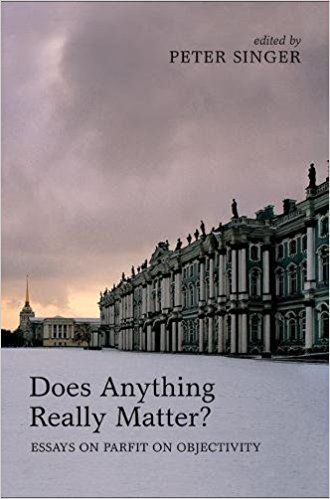
“In the first two volumes of On What Matters Derek Parfit argues that there are objective moral truths, and other normative truths about what we have reasons to believe, and to want, and to do. He thus challenges a view of the role of reason in action that can be traced back to David Hume, and is widely assumed to be correct, not only by philosophers but also by economists. In defending his view, Parfit argues that if there are no objective normative truths, nihilism follows, and nothing matters. He criticizes, often forcefully, many leading contemporary philosophers working on the nature of ethics, including Simon Blackburn, Stephen Darwall, Allen Gibbard, Frank Jackson, Peter Railton, Mark Schroeder, Michael Smith, and Sharon Street. ‘Does Anything Really Matter?’ gives these philosophers an opportunity to respond to Parfit’s criticisms, and includes essays on Parfit’s views by Richard Chappell, Andrew Huddleston, Katarzyna de Lazari-Radek and Peter Singer, Bruce Russell, and Larry Temkin. A third volume of On What Matters, in which Parfit engages with his critics and breaks new ground in finding significant agreement between his own views and theirs, is appearing as a separate companion volume.”–
Based on a non-consequentialist ethical theory, this book critically examines the prevalent view that if a fetus has the moral standing of a person, it has a right to life and abortion is impermissible. Most discussion of abortion has assumed that this view is correct, and so has focused on the question of the personhood of the fetus. Kamm begins by considering in detail the permissibility of killing in non-abortion cases which are similar to abortion cases. She goes on to consider the case for the permissibility of abortion in many types of pregnancies, including ones resulting from rape, voluntary pregnancy, and pregnancy resulting from a voluntary sex act, even if the fetus is considered a person. This argument emerges as part of a broader theory of creating new people responsibly. Kamm explores the implications of this argument for informed consent to abortion; responsibilities in pregnancy that is not aborted, and the significance of extra-uterine gestation devices for the permissibility of abortion.
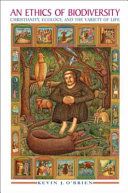
Life on earth is wildly diverse, but the future of that diversity is now in question. Through environmentally destructive farming practices, ever-expanding energy use, and the development and homogenization of land, human beings are responsible for unprecedented reductions in the variety of life forms around us. Estimates suggest that species extinctions caused by humans occur at up to 1,000 times the natural rate, and that one of every twenty species on the planet could be eradicated by 2060. An Ethics of Biodiversity argues that these facts should inspire careful reflection and action in Christian churches, which must learn from earth’s vast diversity in order to help conserve the natural and social diversity of our planet. Bringing scientific data into conversation with theological tradition, the book shows that biodiversity is a point of intersection between faith and ethics, social justice and environmentalism, science and politics, global problems and local solutions. An Ethics of Biodiversity offers a set of tools for students, environmentalists, and people of faith to think critically about how human beings can live with and as part of the variety of life in God’s creation.
ما از اخلاق چه انتظاری داریم؟ این سوال شاید تاحدودی برای عموم مردم و یا متخصصان این رشته قابل پاسخ باشد؛ اینکه خوب بودن را به ما بیاموزد و در تنظیم روابط فردی م...

جشن کتاب تهران به ایستگاه سی و یکم رسیده است. حال و احوال نشر کتاب خوب نیست و باید فرهنگدوستان را به خرید و هدیه دادن کتاب ترغیب نمود. خانه اخلاقپژوهان جوان ب...

بنیاد کتابهای اخلاق اسلامی عمدتا پالایش جان از آلودگیها و آراستن آن به زیباییها است. اندیشه محوری این قبیل کتابها آن است که انسان فعلی آنی نیست که باید باشد...

-
0 Comments