Notice: تابع WP_Block_Type_Registry::register به طورنادرست فراخوانی شد. نامهای نوع بلوک نباید حروف بزرگ داشته باشند. لطفاً برای اطلاعات بیشتر، اشکال زدایی در وردپرس را مشاهده کنید. (این پیام در نگارش 5.0.0 افزوده شده است.) in /home/ethicsho/public_html/wp-includes/functions.php on line 5313
Warning: Use of undefined constant TDC_PATH_LEGACY - assumed 'TDC_PATH_LEGACY' (this will throw an Error in a future version of PHP) in /home/ethicsho/public_html/wp-content/plugins/td-composer/td-composer.php on line 109
Warning: Use of undefined constant TDSP_THEME_PATH - assumed 'TDSP_THEME_PATH' (this will throw an Error in a future version of PHP) in /home/ethicsho/public_html/wp-content/plugins/td-composer/td-composer.php on line 113 بایگانیهای JZ1306 .R46 2007 - خانه اخلاق پژوهان جوان Notice: Trying to access array offset on value of type bool in /home/ethicsho/public_html/wp-content/plugins/wp-ulike/inc/general-functions.php on line 807
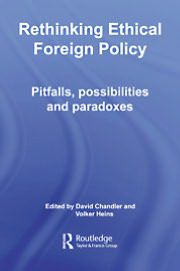
The book is a critical review of accountability conducted under the authority of the United Nations Security Council, by the International Criminal Tribunal for Rwanda (ICTR), and the United Nations Transitional Administration in East Timor (UNTAET). It is centred on two case studies: the 1999 events in Rwanda, which constituted genocide, “the crime of crimes”, and the 1999 mayhem in East Timor. The books subjects to testing cross-examination tools to hold accountable persons with “the greatest responsibility” for serious international humanitarian law violations.A detailed expose is made of conspiracy to commit genocide. Comparison is also made whether joint criminal enterprise, and the forms of co-perpetration embodied in the Statute of the International Criminal Court provide effective alternatives in the case of atrocity crimes. A unique aspect of the book is its high-light of lessons learn in prosecution strategies; approaches in profiling perpetrators, particularly those with the highest level of responsibility for international humanitarian law violations; victor’s justice; superior responsibility; guilty pleas, and the effectiveness of the East Timor and the Indonesian Ad Hoc Human Rights Court processes. In the final analysis, the book offers a Matrix on Accountability.
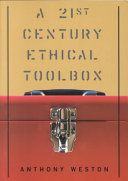
Taking a refreshingly hands-on approach to introductory ethics, A 21st Century Ethical Toolbox provides students with a set of tools to help them understand and make a constructive difference in real-life moral controversies. Thoroughly optimistic, it invites students to approach ethical issues with a reconstructive intent, making room for more and better options than the traditional “pro” and “con” positions that have grown up around tough problems like abortion and animal rights. Ideal for introductory and applied ethics courses, this unique text does not treat ethics as a purely academic, historical, or theoretical subject, but as a wide-ranging and ongoing set of challenges that calls for multiple and interwoven kinds of intelligence. It covers the skills that are most vital to making real progress in ethics, including paying careful attention to the values at stake on all sides of an issue; looking for creative opportunities within difficult problems; critical-thinking skills such as defining key terms and making sure to judge similar cases alike; and learning how to engage in constructive dialogue. Instructors can readily use the experiential and applied activities inspired by this “toolbox” of practical skills to design an interactive and collaborative ethics course. Students can carry these essential skills directly from this book into such projects as campaigning for environmental awareness and staffing local homeless shelters. In addition to his own discussion, Weston includes gripping and provocative short selections from essayists, activists, and philosophers, and also cites his own students. Extensive “Exercises and Notes” sections end each chapter, and a detailed appendix offers instructors advice on how to use the Toolbox in the classroom.
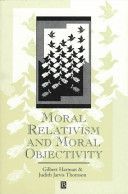
Do moral questions have objective answers? In this great debate, Gilbert Harman explains and argues for relativism, emotivism, and moral scepticism. In his view, moral disagreements are like disagreements about what to pay for a house; there are no correct answers ahead of time, except in relation to one or another moral framework. Independently, Judith Jarvis Thomson examines what she takes to be the case against moral objectivity, and rejects it; she argues that it is possible to find out the correct answers to some moral questions. In her view, some moral disagreements are like disagreements about whether the house has a ghost. Harman and Thomson then reply to each other. This important, lively accessible exchange will be invaluable to all students of moral theory and meta-ethics.
Max Weber�2s The Protestant Ethic and the Spirit of Capitalism continues to be one of the most influential texts in the sociology of modern Western societies. Although Weber never produced the further essays with which he intended to extend the study, he did complete four lengthy Replies to reviews of the text by two German historians. Written between 1907 and 1910, the Replies offer a fascinating insight into Weber�2s intentions in the original study, and the present volume is the first complete translation of all four Replies in English.
ما از اخلاق چه انتظاری داریم؟ این سوال شاید تاحدودی برای عموم مردم و یا متخصصان این رشته قابل پاسخ باشد؛ اینکه خوب بودن را به ما بیاموزد و در تنظیم روابط فردی م...

جشن کتاب تهران به ایستگاه سی و یکم رسیده است. حال و احوال نشر کتاب خوب نیست و باید فرهنگدوستان را به خرید و هدیه دادن کتاب ترغیب نمود. خانه اخلاقپژوهان جوان ب...

بنیاد کتابهای اخلاق اسلامی عمدتا پالایش جان از آلودگیها و آراستن آن به زیباییها است. اندیشه محوری این قبیل کتابها آن است که انسان فعلی آنی نیست که باید باشد...

-
0 Comments