Notice: تابع WP_Block_Type_Registry::register به طورنادرست فراخوانی شد. نامهای نوع بلوک نباید حروف بزرگ داشته باشند. لطفاً برای اطلاعات بیشتر، اشکال زدایی در وردپرس را مشاهده کنید. (این پیام در نگارش 5.0.0 افزوده شده است.) in /home/ethicsho/public_html/wp-includes/functions.php on line 5313
Warning: Use of undefined constant TDC_PATH_LEGACY - assumed 'TDC_PATH_LEGACY' (this will throw an Error in a future version of PHP) in /home/ethicsho/public_html/wp-content/plugins/td-composer/td-composer.php on line 109
Warning: Use of undefined constant TDSP_THEME_PATH - assumed 'TDSP_THEME_PATH' (this will throw an Error in a future version of PHP) in /home/ethicsho/public_html/wp-content/plugins/td-composer/td-composer.php on line 113 بایگانیهای JC578.R383 .P638 2007 - خانه اخلاق پژوهان جوان Notice: Trying to access array offset on value of type bool in /home/ethicsho/public_html/wp-content/plugins/wp-ulike/inc/general-functions.php on line 807
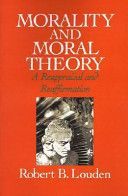
Contemporary philosophers have grown increasingly skeptical toward both morality and moral theory. Some argue that moral theory is a radically misguided enterprise that does not illuminate moral practice, while others simply deny the value of morality in human life. In this important new book, Louden responds to the arguments of both “anti-morality” and “anti-theory” skeptics. In Part One, he develops and defends an alternative conception of morality, which, he argues, captures more of the central features of both Aristotelian and Kantian ethics than do other contemporary models, and enables the central importance of morality to be convincingly reaffirmed. In Louden’s model, morality is primarily a matter of what one does to oneself, rather than what one does or does not do to others. This model eliminates the gulf that many anti-morality critics say exists between morality’s demands and the personal point of view. Louden further argues that morality’s primary focus should be on agents and their lives, rather than on right actions, and that it is always better to be morally better–i.e. it is impossible to be “too moral.” Part Two presents Louden’s alternative conception of moral theory. Here again he draws on the work of Aristotle and Kant, showing that their moral theories have far more in common than is usually thought, and that those features that they share can be the basis for a viable moral theory that is immune to the standard anti-theory objections. Louden reaffirms the necessity and importance of moral theory in human life, and shows that moral theories fulfill a variety of genuine and indispensable human needs.
“Laura Rowley makes us all understand the money-happiness connection in our own lives so that we spend our time and our efforts wisely. She gets to the heart of why money can bring feelings of stress, joy, and freedom, and Rowley offers insight that every reader can use to make smarter decisions that will lead to living a rich life in every possible definition of the term.”Lucy Danziger, Editor-in-Chief, Self magazin “This is a wry and companionable guide to getting your finances in better sync with your values, and who wouldn’t be enriched by that?” Melinda Henneberger, Contributing Editor, Newsweek “Money and Happiness takes cold, hard, financial information and warms it up through the voice of your best friend. You’ll find out how to achieve your life dreams, and avoid money nightmares. The cost of this book may be the best investment you’ll ever make.”Kevin McKinley, CFP™, author of Make Your Kid a Millionaire and host of public radio’s On Your Mone “Laura Rowley helps demystify the age-old connection between money and happiness while providing lots of helpful hints on how to find the right balance of both in your life.” Terry Keenan, Anchor, Fox News Channe “Let Laura Rowley guide you to a rational and rewarding life by helping you re-order your approach to your financial well-being. This book covers all the dimensions you need to know about how to plan properly for your reality. She teaches that you need not be loaded to be happy. And she shows you how to set, then achieve, your goals. For your sanity, Rowley is a welcome antidote to the wave of materialism washing over our culture.”Allan Dodds Frank, Bloomberg Televisio
Virtue ethics is perhaps the most important development within late twentieth-century moral philosophy. Rosalind Hursthouse, who has made notable contributions to this development, now presents a full exposition and defence of her neo-Aristotelian version of virtue ethics. She shows how virtueethics can provide guidance for action, illuminate moral dilemmas, and bring out the moral significance of the emotions. Deliberately avoiding a combative stance, she finds less disagreement between Kantian and neo-Aristotelian approaches than is usual, and she offers the first account from a virtueethics perspective of acting ‘from a sense of duty’. She considers the question which character traits are virtues, and explores how answers to this question can be justified by appeal to facts about human nature. Written in a clear, engaging style which makes it accessible to non-specialists, OnVirtue Ethics will appeal to anyone with an interest in moral philosophy.
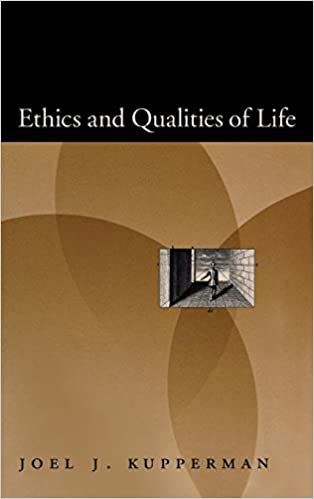
Ethics and Qualities of Life looks at what enters into ethical judgment and choice. Interpretation of a case and of what the options are is always a factor, as is a sense of the possible values at stake. Intuitions also enter in, but often are unreliable. For a long time it seemed only fair that oldest sons inherited, and struck few people as unfair that women were not allowed to attend universities. A moral judgment is putatively part of a moral order in a society that any reasonable person would accept. But what counts as “reasonable” is generally contestable. The unreliability of intuitions leads naturally to ethical theory. Kantian, contractualist, and consequentialist theories all have some important truth in them, but not the whole truth. Contractualism lacks the resources required for a fully determinate account of what counts as “reasonable”. Broad general rules are important to Kant and are at the center of everyday morality. But can Kantian ethics explain why they have to have this central role? Our evolving social contract now contains elements (e.g. the rejection of racism and sexism) that once would have seemed counter-intuitive to most people. But could consequentialists have predicted with entire confidence the consequences of social changes that we now think were desirable? The last part of this book contains a double argument. One is that ethical theory is employed by humans in a state of semi-ignorance of relevant factors, grasping at likely truths and evolved intuitions. The other is that consequentialist considerations have a major role at the fundamental level, but much more in justification or criticism than in ethical discovery.
ما از اخلاق چه انتظاری داریم؟ این سوال شاید تاحدودی برای عموم مردم و یا متخصصان این رشته قابل پاسخ باشد؛ اینکه خوب بودن را به ما بیاموزد و در تنظیم روابط فردی م...

جشن کتاب تهران به ایستگاه سی و یکم رسیده است. حال و احوال نشر کتاب خوب نیست و باید فرهنگدوستان را به خرید و هدیه دادن کتاب ترغیب نمود. خانه اخلاقپژوهان جوان ب...

بنیاد کتابهای اخلاق اسلامی عمدتا پالایش جان از آلودگیها و آراستن آن به زیباییها است. اندیشه محوری این قبیل کتابها آن است که انسان فعلی آنی نیست که باید باشد...

-
0 Comments