Notice: تابع WP_Block_Type_Registry::register به طورنادرست فراخوانی شد. نامهای نوع بلوک نباید حروف بزرگ داشته باشند. لطفاً برای اطلاعات بیشتر، اشکال زدایی در وردپرس را مشاهده کنید. (این پیام در نگارش 5.0.0 افزوده شده است.) in /home/ethicsho/public_html/wp-includes/functions.php on line 5313
Warning: Use of undefined constant TDC_PATH_LEGACY - assumed 'TDC_PATH_LEGACY' (this will throw an Error in a future version of PHP) in /home/ethicsho/public_html/wp-content/plugins/td-composer/td-composer.php on line 109
Warning: Use of undefined constant TDSP_THEME_PATH - assumed 'TDSP_THEME_PATH' (this will throw an Error in a future version of PHP) in /home/ethicsho/public_html/wp-content/plugins/td-composer/td-composer.php on line 113 بایگانیهای JC575 .W35 2019 - خانه اخلاق پژوهان جوان Notice: Trying to access array offset on value of type bool in /home/ethicsho/public_html/wp-content/plugins/wp-ulike/inc/general-functions.php on line 807
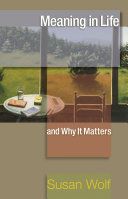
Most people, including philosophers, tend to classify human motives as falling into one of two categories: the egoistic or the altruistic, the self-interested or the moral. According to Susan Wolf, however, much of what motivates us does not comfortably fit into this scheme. Often we act neither for our own sake nor out of duty or an impersonal concern for the world. Rather, we act out of love for objects that we rightly perceive as worthy of love–and it is these actions that give meaning to our lives. Wolf makes a compelling case that, along with happiness and morality, this kind of meaningfulness constitutes a distinctive dimension of a good life. Written in a lively and engaging style, and full of provocative examples, Meaning in Life and Why It Matters is a profound and original reflection on a subject of permanent human concern.
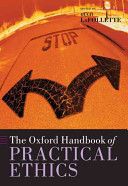
The Oxford Handbook of Practical Ethics is a lively and authoritative guide to current thought about ethical issues in all areas of human activity–personal, medical, sexual, social, political, judicial, and international, from the natural world to the world of business. Twenty-eight topics are covered in specially written surveys by leading figures in their fields: each gives an authoritative map of the ethical terrain, explaining how the debate has developed in recent years, engaging critically with the most notable work in the area, and pointing directions for future work. The Handbook will be essential reading, and a fascinating resource of ideas and information, for academics and students across a wide range of disciplines.
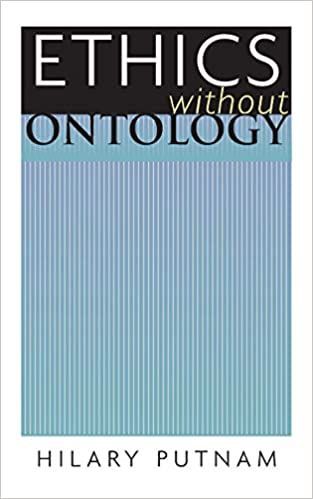
In this brief book one of the most distinguished living American philosophers takes up the question of whether ethical judgments can properly be considered objective–a question that has vexed philosophers over the past century. Looking at the efforts of philosophers from the Enlightenment through the twentieth century, Putnam traces the ways in which ethical problems arise in a historical context. Hilary Putnam’s central concern is ontology–indeed, the very idea of ontology as the division of philosophy concerned with what (ultimately) exists. Reviewing what he deems the disastrous consequences of ontology’s influence on analytic philosophy–in particular, the contortions it imposes upon debates about the objective of ethical judgments–Putnam proposes abandoning the very idea of ontology. He argues persuasively that the attempt to provide an ontological explanation of the objectivity of either mathematics or ethics is, in fact, an attempt to provide justifications that are extraneous to mathematics and ethics–and is thus deeply misguided.
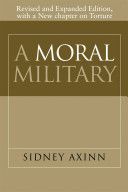
In this new edition of the classic book on the moral conduct of war, Sidney Axinn provides a full-length treatment of the military conventions from a philosophical point of view. Axinn considers these basic ethical questions within the context of the laws of warfare: Should a good soldier ever disobey a direct military order? Are there restrictions on how we fight a war? What is meant by “military honour,” and does it really affect the contemporary soldier? Is human dignity possible under battlefield conditions?Axinn answers “yes” to these questions. His objective inA Moral Militaryis to establish a basic framework for moral military action and to assist in analyzing military professional ethics. He argues for the seriousness of the concept of military honour but limits honourable military activity by a strict interpretation of the notion of war crime.With revisions and expansions throughout, including a new chapter on torture,A Moral Militaryis an essential guide on the nature of war during a time when the limits of acceptable behaviour are being stretched in new directions.
ما از اخلاق چه انتظاری داریم؟ این سوال شاید تاحدودی برای عموم مردم و یا متخصصان این رشته قابل پاسخ باشد؛ اینکه خوب بودن را به ما بیاموزد و در تنظیم روابط فردی م...

جشن کتاب تهران به ایستگاه سی و یکم رسیده است. حال و احوال نشر کتاب خوب نیست و باید فرهنگدوستان را به خرید و هدیه دادن کتاب ترغیب نمود. خانه اخلاقپژوهان جوان ب...

بنیاد کتابهای اخلاق اسلامی عمدتا پالایش جان از آلودگیها و آراستن آن به زیباییها است. اندیشه محوری این قبیل کتابها آن است که انسان فعلی آنی نیست که باید باشد...

-
0 Comments