Notice: تابع WP_Block_Type_Registry::register به طورنادرست فراخوانی شد. نامهای نوع بلوک نباید حروف بزرگ داشته باشند. لطفاً برای اطلاعات بیشتر، اشکال زدایی در وردپرس را مشاهده کنید. (این پیام در نگارش 5.0.0 افزوده شده است.) in /home/ethicsho/public_html/wp-includes/functions.php on line 5313
Warning: Use of undefined constant TDC_PATH_LEGACY - assumed 'TDC_PATH_LEGACY' (this will throw an Error in a future version of PHP) in /home/ethicsho/public_html/wp-content/plugins/td-composer/td-composer.php on line 109
Warning: Use of undefined constant TDSP_THEME_PATH - assumed 'TDSP_THEME_PATH' (this will throw an Error in a future version of PHP) in /home/ethicsho/public_html/wp-content/plugins/td-composer/td-composer.php on line 113 بایگانیهای JC153.H659 .S67 2007 - خانه اخلاق پژوهان جوان Notice: Trying to access array offset on value of type bool in /home/ethicsho/public_html/wp-content/plugins/wp-ulike/inc/general-functions.php on line 807
Tradition, Rationality, and Virtue provides the first comprehensive and detailed treatment of the work of Alasdair MacIntyre. In this book Thomas D’Andrea presents an accessible critical study of the full range of MacIntyre’s thought across ethical theory, psychoanalytic theory, social and political philosophy, Marxist theory, and the philosophy of religion. Moving from the roots of MacIntyre’s thought in ethical inquiry, this book examines MacIntyre’s treatment of Marx, Christianity, and the nature of human action and discusses in depth the development and applications of MacIntyre’s After Virtue project. The book culminates in an examination of major internal and external criticisms of MacIntyre’s work and a consideration of its future directions.
A National Jewish Book Award WinnerRabbi Dorff focuses on the social aspects of the Jewish tradition, while tackling such timely topics as poverty, war, intrafaith and interfaith relations, and forgiveness. In addition, he discusses Jewish social ethics as they both relate to and contrast with Christian and American belief systems in modern society. Dorff argues that Jewish sources, when properly placed within the framework of the realities of our own times, can provide important guidance for Jews on how to act in their daily lives.
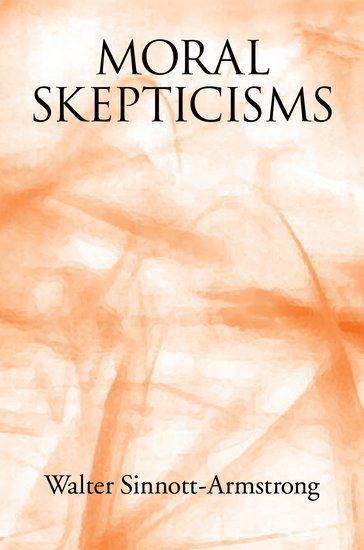
All contentious moral issues–from gay marriage to abortion and affirmative action–raise difficult questions about the justification of moral beliefs. How can we be justified in holding on to our own moral beliefs while recognizing that other intelligent people feel quite differently and that many moral beliefs are distorted by self-interest and by corrupt cultures? Even when almost everyone agrees–e.g. that experimental surgery without consent is immoral–can we know that such beliefs are true? If so, how? These profound questions lead to fundamental issues about the nature of morality, language, metaphysics, justification, and knowledge. They also have tremendous practical importance in handling controversial moral questions in health care ethics, politics, law, and education. Sinnott-Armstrong here provides an extensive overview of these difficult subjects, looking at a wide variety of questions, including: Are any moral beliefs true? Are any justified? What is justified belief? The second half of the book explores various moral theories that have grappled with these issues, such as naturalism, normativism, intuitionism, and coherentism, all of which are attempts to answer moral skepticism. Sinnott-Armstrong argues that all these approaches fail to rule out moral nihilism–the view that nothing is really morally wrong or right, bad or good. Then he develops his own novel theory,–“moderate Pyrrhonian moral skepticism”–which concludes that some moral beliefs can be justified out of a modest contrast class but no moral beliefs can be justified out of an extreme contrast class. While explaining this original position and criticizing alternatives, Sinnott-Armstrong provides a wide-ranging survey of the epistemology of moral beliefs.
ما از اخلاق چه انتظاری داریم؟ این سوال شاید تاحدودی برای عموم مردم و یا متخصصان این رشته قابل پاسخ باشد؛ اینکه خوب بودن را به ما بیاموزد و در تنظیم روابط فردی م...

جشن کتاب تهران به ایستگاه سی و یکم رسیده است. حال و احوال نشر کتاب خوب نیست و باید فرهنگدوستان را به خرید و هدیه دادن کتاب ترغیب نمود. خانه اخلاقپژوهان جوان ب...

بنیاد کتابهای اخلاق اسلامی عمدتا پالایش جان از آلودگیها و آراستن آن به زیباییها است. اندیشه محوری این قبیل کتابها آن است که انسان فعلی آنی نیست که باید باشد...

-
0 Comments