Notice: تابع WP_Block_Type_Registry::register به طورنادرست فراخوانی شد. نامهای نوع بلوک نباید حروف بزرگ داشته باشند. لطفاً برای اطلاعات بیشتر، اشکال زدایی در وردپرس را مشاهده کنید. (این پیام در نگارش 5.0.0 افزوده شده است.) in /home/ethicsho/public_html/wp-includes/functions.php on line 5313
Warning: Use of undefined constant TDC_PATH_LEGACY - assumed 'TDC_PATH_LEGACY' (this will throw an Error in a future version of PHP) in /home/ethicsho/public_html/wp-content/plugins/td-composer/td-composer.php on line 109
Warning: Use of undefined constant TDSP_THEME_PATH - assumed 'TDSP_THEME_PATH' (this will throw an Error in a future version of PHP) in /home/ethicsho/public_html/wp-content/plugins/td-composer/td-composer.php on line 113 بایگانیهای JA79 .M46 2009 - خانه اخلاق پژوهان جوان Notice: Trying to access array offset on value of type bool in /home/ethicsho/public_html/wp-content/plugins/wp-ulike/inc/general-functions.php on line 807
Adam Smith (1723-90) is celebrated all over the world as the author ofThe Wealth of Nationsand the founder of modern economics. A few of his ideas–that of the “invisible hand” of the market and that “It is not from the benevolence of the butcher, the brewer, or the baker that we expect our dinner, but from their regard to their own interest” have become iconic. Yet Smith saw himself primarily as a philosopher rather than an economist and would never have predicted that the ideas for which he is now best known were his most important. This book shows the extent to whichThe Wealth of Nationsand Smith’s other great work,The Theory of Moral Sentiments,were part of a larger scheme to establish a grand “Science of Man,” one of the most ambitious projects of the European Enlightenment, which was to encompass law, history, and aesthetics as well as economics and ethics, and which was only half complete on Smith’s death in 1790. Nick Phillipson reconstructs Smith’s intellectual ancestry and shows what Smith took from, and what he gave to, in the rapidly changing intellectual and commercial cultures of Glasgow and Edinburgh as they entered the great years of the Scottish Enlightenment. Above all he explains how far Smith’s ideas developed in dialogue with those of his closest friend, the other titan of the age, David Hume.
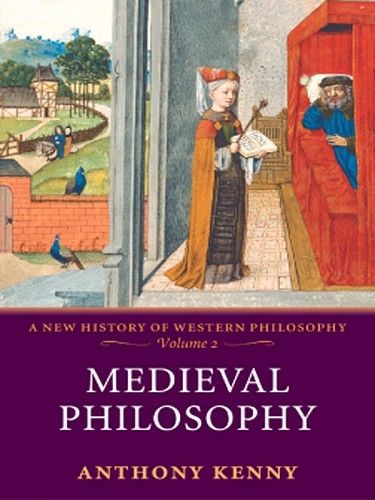
Sir Anthony Kenny here continues his fascinating account of the history of philosophy, focusing on the thousand-year-long medieval period. This is the second volume of a four-book set in which Kenny will unfold a magisterial new history of Western philosophy, the first major single-author history of philosophy to appear in decades. In this volume, Kenny takes us on a fascinating tour through more than a millennium of thought from 400 AD onwards, charting the story of philosophy from the founders of Christian and Islamic thought through to the Renaissance. The Middle Ages saw a great flourishing of philosophy, and the intellectual endeavor of the era reaches its climax in the thirteenth and fourteenth centuries, with the systems of the great schoolmen such as Thomas Aquinas and John Duns Scotus. With Kenny as guide, we see these major philosophers through the eyes of a man who has spent a lifetime contemplating their work. Thus we do not simply get an overview of philosophy, but also a penetrating and insightful critique of it. Kenny offers an illuminating account of various thinkers and schools of thought, from Augustine to Maimonides and from Grosseteste to Pomponazzi. And he offers much insight into medieval thinking about logic and language, knowledge, physics, metaphysics, the mind, the soul, and God. Vividly written, but serious and deep enough to offer a genuine understanding of the great philosophers, Kenny’s lucid and stimulating history will become the definitive work for anyone interested in the people and ideas that shaped the course of Western thought.
In this provocative book, philosopher Nicholas Agar defends the idea that parents should be allowed to enhance their children’s characteristics.Gets away from fears of a Huxleyan ‘Brave New World’ or a return to the fascist eugenics of the past. Written from a philosophically and scientifically informed point of view. Considers real contemporary cases of parents choosing what kind of child to have. Uses ‘moral images’ as a way to get readers with no background in philosophy to think about moral dilemmas. Provides an authoritative account of the science involved, making the book suitable for readers with no knowledge of genetics. Creates a moral framework for assessing all new technologies.
ما از اخلاق چه انتظاری داریم؟ این سوال شاید تاحدودی برای عموم مردم و یا متخصصان این رشته قابل پاسخ باشد؛ اینکه خوب بودن را به ما بیاموزد و در تنظیم روابط فردی م...

جشن کتاب تهران به ایستگاه سی و یکم رسیده است. حال و احوال نشر کتاب خوب نیست و باید فرهنگدوستان را به خرید و هدیه دادن کتاب ترغیب نمود. خانه اخلاقپژوهان جوان ب...

بنیاد کتابهای اخلاق اسلامی عمدتا پالایش جان از آلودگیها و آراستن آن به زیباییها است. اندیشه محوری این قبیل کتابها آن است که انسان فعلی آنی نیست که باید باشد...

-
0 Comments