Notice: تابع WP_Block_Type_Registry::register به طورنادرست فراخوانی شد. نامهای نوع بلوک نباید حروف بزرگ داشته باشند. لطفاً برای اطلاعات بیشتر، اشکال زدایی در وردپرس را مشاهده کنید. (این پیام در نگارش 5.0.0 افزوده شده است.) in /home/ethicsho/public_html/wp-includes/functions.php on line 5313
Warning: Use of undefined constant TDC_PATH_LEGACY - assumed 'TDC_PATH_LEGACY' (this will throw an Error in a future version of PHP) in /home/ethicsho/public_html/wp-content/plugins/td-composer/td-composer.php on line 109
Warning: Use of undefined constant TDSP_THEME_PATH - assumed 'TDSP_THEME_PATH' (this will throw an Error in a future version of PHP) in /home/ethicsho/public_html/wp-content/plugins/td-composer/td-composer.php on line 113 بایگانیهای JA79 .C62 2008 - خانه اخلاق پژوهان جوان Notice: Trying to access array offset on value of type bool in /home/ethicsho/public_html/wp-content/plugins/wp-ulike/inc/general-functions.php on line 807
Containing material from hundreds of highly distinguished contributors representing the world’s top universities and institutions, the second edition has a truly global perspective. It contains more than 2,100 entries — including more than 450 new articles. Among the many topics covered are African, Islamic, Jewish, Russian, Chinese, and Buddhist philosophies; bioethics and biomedical ethics; art and aesthetics; epistemology; metaphysics; peace and war; social and political philosophy; the Holocaust; feminist thought; and much more. Additionally, the second edition also features 1,000 biographical entries on major figures in philosophical thought throughout history.
Why does art matter to us, and what makes good art? Why is the role of imagination so important in art? Illustrated with carefully chosen color and black-and-white plates of examples from Michelangelo to Matisse and Poussin to Jackson Pollock,Revealing Artexplores some of the most important questions we can ask about art. Matthew Kieran clearly but forcefully asks how art inspires us and disgusts us and whether artistic judgment is simply a matter of taste, and if art can be immoral or obscene, should it be censored? He brings such abstract issues to life with fascinating discussions of individual paintings, photographs and sculptures, such as Michelangelo’sPieta,Andres Serrano’sPiss Christand Jackson Pollock’sSummertime. He also suggests some answers to problems that any one in an art gallery or museum is likely to ask themselves: what is a beautiful work of art, and can art really reveal something true about our own nature? Revealing Artis ideal foranyone interested in debates about art today, or who has simply stood in front of a painting and felt baffled.
Self-deception raises complex questions about the nature of belief and the structure of the human mind. In this book, Alfred Mele addresses four of the most critical of these questions: What is it to deceive oneself? How do we deceive ourselves? Why do we deceive ourselves? Is self-deception really possible?Drawing on cutting-edge empirical research on everyday reasoning and biases, Mele takes issue with commonplace attempts to equate the processes of self-deception with those of stereotypical interpersonal deception. Such attempts, he demonstrates, are fundamentally misguided, particularly in the assumption that self-deception is intentional. In their place, Mele proposes a compelling, empirically informed account of the motivational causes of biased beliefs. At the heart of this theory is an appreciation of how emotion and motivation may, without our knowing it, bias our assessment of evidence for beliefs. Highlighting motivation and emotion, Mele develops a pair of approaches for explaining the two forms of self-deception: the “straight” form, in which we believe what we want to be true, and the “twisted” form, in which we believe what we wish to be false.Underlying Mele’s work is an abiding interest in understanding and explaining the behavior of real human beings. The result is a comprehensive, elegant, empirically grounded theory of everyday self-deception that should engage philosophers and social scientists alike.
Christine Korsgaard has become one of the leading interpreters of Kants moral philosophy. She is identified with a small group of philosophers who are intent on producing a version of Kants moral philosophy that is at once sensitive to its historical roots while revealing its particular relevance to contemporary problems. She rejects the traditional picture of Kants ethics as a cold vision of the moral life which emphasises duty at the expense of love and value. Rather, Kants work is seen as providing a resource for addressing not only the metaphysics of morals, but also for tackling practical questions about personal relations, politics, and everyday human interaction. This collection contains some of the finest current work on Kants ethics and will command the attention of all those involved in teaching and studying moral theory.
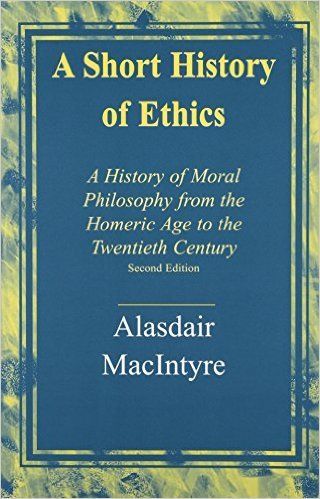
The author writes…’This history of moral philosophy which runs from the Greeks to contemporary Anglo-Saxon discussion is necessarily compressed and selective, but is intended to enable the general reader and the student to place particular texts in moral philosophy in an historical perspective. The function of this perspective is to clarify three kinds of historical and philosophical connection whose importance is often underrated. The first is a matter of the debts which moral philosophers owe to their predecessors; the second concerns the question of the nature of the moral concepts which furnish any moral philosopher with the objects of his enquiry upon moral concepts themselves and the extent to which the philosophical analysis of a concept may play a part in transforming or even discrediting it. A consequence of these preoccupations is that the book contains a higher proportion of purely philosophical enquiry than might be expected in an historical work.’
ما از اخلاق چه انتظاری داریم؟ این سوال شاید تاحدودی برای عموم مردم و یا متخصصان این رشته قابل پاسخ باشد؛ اینکه خوب بودن را به ما بیاموزد و در تنظیم روابط فردی م...

جشن کتاب تهران به ایستگاه سی و یکم رسیده است. حال و احوال نشر کتاب خوب نیست و باید فرهنگدوستان را به خرید و هدیه دادن کتاب ترغیب نمود. خانه اخلاقپژوهان جوان ب...

بنیاد کتابهای اخلاق اسلامی عمدتا پالایش جان از آلودگیها و آراستن آن به زیباییها است. اندیشه محوری این قبیل کتابها آن است که انسان فعلی آنی نیست که باید باشد...

-
0 Comments