Notice: تابع WP_Block_Type_Registry::register به طورنادرست فراخوانی شد. نامهای نوع بلوک نباید حروف بزرگ داشته باشند. لطفاً برای اطلاعات بیشتر، اشکال زدایی در وردپرس را مشاهده کنید. (این پیام در نگارش 5.0.0 افزوده شده است.) in /home/ethicsho/public_html/wp-includes/functions.php on line 5313
Warning: Use of undefined constant TDC_PATH_LEGACY - assumed 'TDC_PATH_LEGACY' (this will throw an Error in a future version of PHP) in /home/ethicsho/public_html/wp-content/plugins/td-composer/td-composer.php on line 109
Warning: Use of undefined constant TDSP_THEME_PATH - assumed 'TDSP_THEME_PATH' (this will throw an Error in a future version of PHP) in /home/ethicsho/public_html/wp-content/plugins/td-composer/td-composer.php on line 113 بایگانیهای HV8593 .J44 2009 - خانه اخلاق پژوهان جوان Notice: Trying to access array offset on value of type bool in /home/ethicsho/public_html/wp-content/plugins/wp-ulike/inc/general-functions.php on line 807
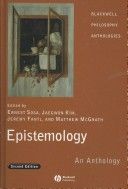
New and thoroughly updated, Epistemology: An Anthology continues to represent the most comprehensive and authoritative collection of canonical readings in the theory of knowledge. Concentrates on the central topics of the field, such as skepticism and the Pyrrhonian problematic, the definition of knowledge, and the structure of epistemic justification Offers coverage of more specific topics, such as foundationalism vs coherentism, and virtue epistemology Presents wholly new sections on ‘Testimony, Memory, and Perception’ and ‘The Value of Knowledge’ Features modified sections on ‘The Structure of Knowledge and Justification’, ‘The Non-Epistemic in Epistemology’, and ‘The Nature of the Epistemic’ Includes many of the most important contributions made in recent decades by several outstanding authors
Xiaohe Lu is Professor at the Institute of Philosophy and Executive Director of the Centre for Business Ethics, Shanghai Academy of Social Sciences. Georges Enderle is Arthur and Mary O’Neil Professor of International Business Ethics at the Mendoza College of Business, University of Notre Dame.
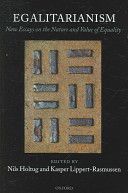
Egalitarianism, the view that equality matters, attracts a great deal of attention amongst contemporary political theorists. And yet it has turned out to be surprisingly difficult to provide a fully satisfactory egalitarian theory. The cutting-edge articles in Egalitarianism move the debate forward. They are written by some of the leading political philosophers in the field.
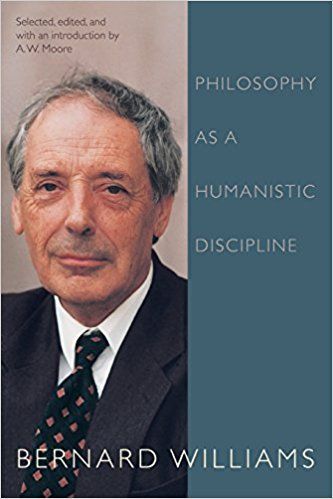
What can–and what can’t–philosophy do? What are its ethical risks–and its possible rewards? How does it differ from science? In Philosophy as a Humanistic Discipline, Bernard Williams addresses these questions and presents a striking vision of philosophy as fundamentally different from science in its aims and methods even though there is still in philosophy “something that counts as getting it right.” Written with his distinctive combination of rigor, imagination, depth, and humanism, the book amply demonstrates why Williams was one of the greatest philosophers of the twentieth century. Spanning his career from his first publication to one of his last lectures, the book’s previously unpublished or uncollected essays address metaphysics, epistemology, and ethics, as well as the scope and limits of philosophy itself. The essays are unified by Williams’s constant concern that philosophy maintain contact with the human problems that animate it in the first place. As the book’s editor, A. W. Moore, writes in his introduction, the title essay is “a kind of manifesto for Williams’s conception of his own life’s work.” It is where he most directly asks “what philosophy can and cannot contribute to the project of making sense of things”–answering that what philosophy can best help make sense of is “being human.”Philosophy as a Humanistic Discipline is one of three posthumous books by Williams to be published by Princeton University Press. In the Beginning Was the Deed: Realism and Moralism in Political Argument was published in the fall of 2005. The Sense of the Past: Essays in the History of Philosophy is being published shortly after the present volume.
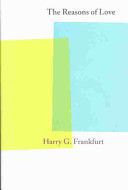
This beautifully written book by one of the world’s leading moral philosophers argues that the key to a fulfilled life is to pursue wholeheartedly what one cares about, that love is the most authoritative form of caring, and that the purest form of love is, in a complicated way, self-love. Harry Frankfurt writes that it is through caring that we infuse the world with meaning. Caring provides us with stable ambitions and concerns; it shapes the framework of aims and interests within which we lead our lives. The most basic and essential question for a person to raise about the conduct of his or her life is not what he or she should care about but what, in fact, he or she cannot help caring about. The most important form of caring, Frankfurt writes, is love, a nonvoluntary, disinterested concern for the flourishing of what is loved. Love is so important because meaningful practical reasoning must be grounded in ends that we do not seek only to attain other ends, and because it is in loving that we become bound to final ends desired for their own sakes. Frankfurt argues that the purest form of love is self-love. This sounds perverse, but self-love–as distinct from self-indulgence–is at heart a disinterested concern for whatever it is that the person loves. The most elementary form of self-love is nothing more than the desire of a person to love. Insofar as this is true, self-love is simply a commitment to finding meaning in our lives.
ما از اخلاق چه انتظاری داریم؟ این سوال شاید تاحدودی برای عموم مردم و یا متخصصان این رشته قابل پاسخ باشد؛ اینکه خوب بودن را به ما بیاموزد و در تنظیم روابط فردی م...

جشن کتاب تهران به ایستگاه سی و یکم رسیده است. حال و احوال نشر کتاب خوب نیست و باید فرهنگدوستان را به خرید و هدیه دادن کتاب ترغیب نمود. خانه اخلاقپژوهان جوان ب...

بنیاد کتابهای اخلاق اسلامی عمدتا پالایش جان از آلودگیها و آراستن آن به زیباییها است. اندیشه محوری این قبیل کتابها آن است که انسان فعلی آنی نیست که باید باشد...

-
0 Comments