Notice: تابع WP_Block_Type_Registry::register به طورنادرست فراخوانی شد. نامهای نوع بلوک نباید حروف بزرگ داشته باشند. لطفاً برای اطلاعات بیشتر، اشکال زدایی در وردپرس را مشاهده کنید. (این پیام در نگارش 5.0.0 افزوده شده است.) in /home/ethicsho/public_html/wp-includes/functions.php on line 5313
Warning: Use of undefined constant TDC_PATH_LEGACY - assumed 'TDC_PATH_LEGACY' (this will throw an Error in a future version of PHP) in /home/ethicsho/public_html/wp-content/plugins/td-composer/td-composer.php on line 109
Warning: Use of undefined constant TDSP_THEME_PATH - assumed 'TDSP_THEME_PATH' (this will throw an Error in a future version of PHP) in /home/ethicsho/public_html/wp-content/plugins/td-composer/td-composer.php on line 113 بایگانیهای HQ32 .P75 1999 - خانه اخلاق پژوهان جوان Notice: Trying to access array offset on value of type bool in /home/ethicsho/public_html/wp-content/plugins/wp-ulike/inc/general-functions.php on line 807
In this sequel to his Morality, Politics, and Law, Michael Perry addresses the proper relation of moral convictions to the politics of a morally pluralistic society. While his analysis focuses on religious morality, Perry’s argument applies to morality generally. Contending that no justification of a contested political choice can be neutral among competing conceptions of human good, the author develops an ideal of “ecumenical politics” in which moral convictions about human good can be brought to bear in a productive way in political argument.
Robert Axelrod is widely known for his groundbreaking work in game theory and complexity theory. He is a leader in applying computer modeling to social science problems. His book The Evolution of Cooperation has been hailed as a seminal contribution and has been translated into eight languages since its initial publication. The Complexity of Cooperation is a sequel to that landmark book. It collects seven essays, originally published in a broad range of journals, and adds an extensive new introduction to the collection, along with new prefaces to each essay and a useful new appendix of additional resources. Written in Axelrod’s acclaimed, accessible style, this collection serves as an introductory text on complexity theory and computer modeling in the social sciences and as an overview of the current state of the art in the field.The articles move beyond the basic paradigm of the Prisoner’s Dilemma to study a rich set of issues, including how to cope with errors in perception or implementation, how norms emerge, and how new political actors and regions of shared culture can develop. They use the shared methodology of agent-based mo
Why is ethics part of philosophy? Stephen Darwall’s Philosophical Ethicsintroduces students to ethics from a distinctively philosophical perspective, one that weaves together central ethical questions such as “What has value?” and “What are our moral obligations?” with fundamental philosophical issues such as “What is value?” and “What can a moral obligation consist in?”With one eye on contemporary discussions and another on classical texts, Philosophical Ethicsshows how Hobbes, Mill, Kant, Aristotle, and Nietzsche all did ethical philosophy–how, for example, they sought to gain insight into what has value through understanding what value itself is. After an introductory section, and one on main approaches to metaethics, chapters discuss “modern” philosophical moralists–Hobbes, Mill, and Kant–and pre- and postmodern philosophical approaches to ethics in Aristotle, Nietzsche, and the ethics of care.Throughout, the reader is invited to do–rather than just read about–philosophical ethics and, in doing so, to think through questions that face all thoughtful human beings. Themes include the nature of value and moral obligation, freedom and choice, human flourishing, excellence and merit, radical critiques of morality, and the importance of relationships for human life.
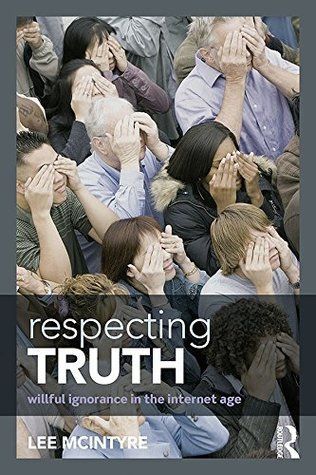
Throughout history, humans have always indulged in certain irrationalities and held some fairly wrong-headed beliefs. But in his newest book, philosopher Lee McIntyre shows how we’ve now reached a watershed moment for ignorance in the modern era, due to the volume of misinformation, the speed with which it can be digitally disseminated, and the savvy exploitation of our cognitive weaknesses by those who wish to advance their ideological agendas. In Respecting Truth: Willful Ignorance in the Internet Age, McIntyre issues a call to fight back against this slide into the witless abyss. In the tradition of Galileo, the author champions the importance of using tested scientific methods for arriving at true beliefs, and shows how our future survival is dependent on a more widespread, reasonable world.
ما از اخلاق چه انتظاری داریم؟ این سوال شاید تاحدودی برای عموم مردم و یا متخصصان این رشته قابل پاسخ باشد؛ اینکه خوب بودن را به ما بیاموزد و در تنظیم روابط فردی م...

جشن کتاب تهران به ایستگاه سی و یکم رسیده است. حال و احوال نشر کتاب خوب نیست و باید فرهنگدوستان را به خرید و هدیه دادن کتاب ترغیب نمود. خانه اخلاقپژوهان جوان ب...

بنیاد کتابهای اخلاق اسلامی عمدتا پالایش جان از آلودگیها و آراستن آن به زیباییها است. اندیشه محوری این قبیل کتابها آن است که انسان فعلی آنی نیست که باید باشد...

-
0 Comments