Notice: تابع WP_Block_Type_Registry::register به طورنادرست فراخوانی شد. نامهای نوع بلوک نباید حروف بزرگ داشته باشند. لطفاً برای اطلاعات بیشتر، اشکال زدایی در وردپرس را مشاهده کنید. (این پیام در نگارش 5.0.0 افزوده شده است.) in /home/ethicsho/public_html/wp-includes/functions.php on line 5313
Warning: Use of undefined constant TDC_PATH_LEGACY - assumed 'TDC_PATH_LEGACY' (this will throw an Error in a future version of PHP) in /home/ethicsho/public_html/wp-content/plugins/td-composer/td-composer.php on line 109
Warning: Use of undefined constant TDSP_THEME_PATH - assumed 'TDSP_THEME_PATH' (this will throw an Error in a future version of PHP) in /home/ethicsho/public_html/wp-content/plugins/td-composer/td-composer.php on line 113 بایگانیهای HM665 .G55 2004 - خانه اخلاق پژوهان جوان Notice: Trying to access array offset on value of type bool in /home/ethicsho/public_html/wp-content/plugins/wp-ulike/inc/general-functions.php on line 807
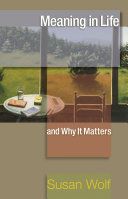
Most people, including philosophers, tend to classify human motives as falling into one of two categories: the egoistic or the altruistic, the self-interested or the moral. According to Susan Wolf, however, much of what motivates us does not comfortably fit into this scheme. Often we act neither for our own sake nor out of duty or an impersonal concern for the world. Rather, we act out of love for objects that we rightly perceive as worthy of love–and it is these actions that give meaning to our lives. Wolf makes a compelling case that, along with happiness and morality, this kind of meaningfulness constitutes a distinctive dimension of a good life. Written in a lively and engaging style, and full of provocative examples, Meaning in Life and Why It Matters is a profound and original reflection on a subject of permanent human concern.
The capability approach to social justice construes a person’s well-being in terms of the substantive freedoms people have reason to value beyond mere utility or access to resources. In this book John Alexander engages with the rapidly growing body of literature on the capability approach in economics, inequality and poverty measurement, and development studies, paying particular attention to Amartya Sen and Martha Nussbaum’s collaborative work on the capability approach in normative economics, social ethics and political philosophy. Through a critical discussion of Sen and Nussbaum’s literature, the book develops a unified vision of the capability approach embodied in the ideal of creating the greatest possible condition for the realization of basic capabilities for all and assesses it as a political theory arguing that capabilities are necessary but not sufficient for overcoming conditions of domination and concluding that the freedom as non-domination calls for a reinforcement of certain basic capabilities under ‘constitutional provisions’ and for envisioning a more intimate relationship between individual liberty and the freedom of the political community as a whole.
Containing material from hundreds of highly distinguished contributors representing the world’s top universities and institutions, the second edition has a truly global perspective. It contains more than 2,100 entries — including more than 450 new articles. Among the many topics covered are African, Islamic, Jewish, Russian, Chinese, and Buddhist philosophies; bioethics and biomedical ethics; art and aesthetics; epistemology; metaphysics; peace and war; social and political philosophy; the Holocaust; feminist thought; and much more. Additionally, the second edition also features 1,000 biographical entries on major figures in philosophical thought throughout history.
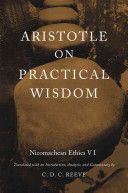
Nicomachean Ethics VI is considered one of classical philosophy’s greatest achievements. Aristotle on Practical Wisdom is the first full-scale commentary on this work to be issued in over a century, and is the most comprehensive and philosophically illuminating to date. A meticulous translation coupled with facing-page analysis enables readers to engage directly with the account of phronêsis or practical wisdom that Aristotle is developing, while a full introduction locates that account in the context of his ethical thought and of later ethical thought more generally.The commentary discusses the text line by line, illuminating obscure passages, explaining technical ones, and providing a new overall interpretation of the work and the nature of practical reason. A companion volume, Action, Contemplation, and Happiness, expands on this interpretation to provide a startling new picture of Aristotle’s thought as a whole. Although the two books can be approached separately, together they constitute one of the most daring and original contemporary readings of Aristotle’s philosophy. Aimed at committed students of these notoriously difficult writings, C. D. C. Reeve’s engaging and lucid books should find a wide audience among philosophers, classicists, and all readers willing to wrestle with a thinker of unparalleled subtlety, depth, and scope.
ما از اخلاق چه انتظاری داریم؟ این سوال شاید تاحدودی برای عموم مردم و یا متخصصان این رشته قابل پاسخ باشد؛ اینکه خوب بودن را به ما بیاموزد و در تنظیم روابط فردی م...

جشن کتاب تهران به ایستگاه سی و یکم رسیده است. حال و احوال نشر کتاب خوب نیست و باید فرهنگدوستان را به خرید و هدیه دادن کتاب ترغیب نمود. خانه اخلاقپژوهان جوان ب...

بنیاد کتابهای اخلاق اسلامی عمدتا پالایش جان از آلودگیها و آراستن آن به زیباییها است. اندیشه محوری این قبیل کتابها آن است که انسان فعلی آنی نیست که باید باشد...

-
0 Comments