Notice: تابع WP_Block_Type_Registry::register به طورنادرست فراخوانی شد. نامهای نوع بلوک نباید حروف بزرگ داشته باشند. لطفاً برای اطلاعات بیشتر، اشکال زدایی در وردپرس را مشاهده کنید. (این پیام در نگارش 5.0.0 افزوده شده است.) in /home/ethicsho/public_html/wp-includes/functions.php on line 5313
Warning: Use of undefined constant TDC_PATH_LEGACY - assumed 'TDC_PATH_LEGACY' (this will throw an Error in a future version of PHP) in /home/ethicsho/public_html/wp-content/plugins/td-composer/td-composer.php on line 109
Warning: Use of undefined constant TDSP_THEME_PATH - assumed 'TDSP_THEME_PATH' (this will throw an Error in a future version of PHP) in /home/ethicsho/public_html/wp-content/plugins/td-composer/td-composer.php on line 113 بایگانیهای HB835 .C85 2004 - خانه اخلاق پژوهان جوان Notice: Trying to access array offset on value of type bool in /home/ethicsho/public_html/wp-content/plugins/wp-ulike/inc/general-functions.php on line 807
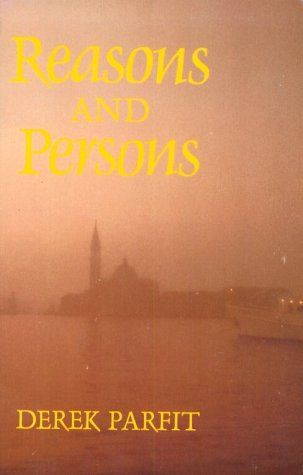
“Very few works in the subject can compare with Parfit’s in scope, fertility, imaginative resource, and cogency of reasoning.”–P.F. Strawson, The New York Review of Books. “Extraordinary…Brilliant…Astonishingly rich in ideas…Reasons and Persons is a major contribution to philosophy: it will be read, honoured, and argued about for many years to come.”–Samuel Scheffler, Times Literary Supplement. “A brilliantly clever and imaginative book…Strange and excitingly intense.”–Alan Ryan, Sunday Times (London). “Not many books reset the philosophical agenda in the way that his one does…Western philosophy, especially systematic ethics, will not be the same again.”–Annette Baier, Philosophical Books. Challenging, with several powerful arguments, some of our deepest beliefs about rationality, morality, and personal identity, Parfit claims that we have a false view about our own nature. It is often rational to act against our own best interersts, he argues, and most of us have moral views that are self-defeating. We often act wrongly, although we know there will be no one with serious grounds for complaint, and when we consider future generations it is very hard to avoid conclusions that most of us will find very disturbing.
The Oxford Handbook of Practical Ethics is a lively and authoritative guide to current thought about ethical issues in all areas of human activity–personal, medical, sexual, social, political, judicial, and international, from the natural world to the world of business. Twenty-eight topics are covered in specially written surveys by leading figures in their fields: each gives an authoritative map of the ethical terrain, explaining how the debate has developed in recent years, engaging critically with the most notable work in the area, and pointing directions for future work. The Handbook will be essential reading, and a fascinating resource of ideas and information, for academics and students across a wide range of disciplines.
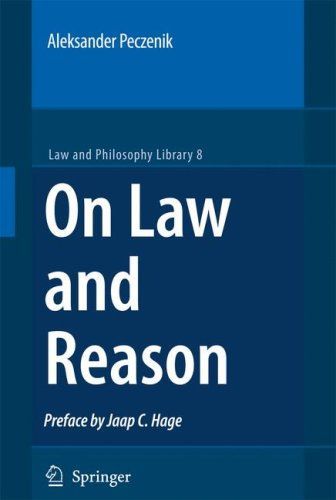
‘This is an outline of a coherence theory of law. Its basic ideas are: reasonable support and weighing of reasons. All the rest is commentary.’These words at the beginning of the preface of this book perfectly indicate what On Law and Reason is about. It is a theory about the nature of the law which emphasises the role of reason in the law and which refuses to limit the role of reason to the application of deductive logic.In 1989, when the first edition of On Law and Reason appeared, this book was ground breaking for several reasons. It provided a rationalistic theory of the law in the language of analytic philosophy and based on a thorough understanding of the results, including technical ones, of analytic philosophy. That was not an obvious combination at the time of the book’s first appearance and still is not. The result is an analytical rigor that is usually associated with positivist theories of the law, combined with a philosophical position that is not natural law in a strict sense, but which shares with it the emphasis on the role of reason in determining what the law is. If only for this rare combination, On Law and Reason still deserves careful study.On Law and Reason also foreshadowed and influenced a development in the field of Legal Logic that would take place in the nineties of the 20th century, namely the development of non-monotonic (‘defeasible’) logics for the analysis of legal reasoning. In the new Introduction to this second edition, this aspect is explored in some more detail.
ما از اخلاق چه انتظاری داریم؟ این سوال شاید تاحدودی برای عموم مردم و یا متخصصان این رشته قابل پاسخ باشد؛ اینکه خوب بودن را به ما بیاموزد و در تنظیم روابط فردی م...

جشن کتاب تهران به ایستگاه سی و یکم رسیده است. حال و احوال نشر کتاب خوب نیست و باید فرهنگدوستان را به خرید و هدیه دادن کتاب ترغیب نمود. خانه اخلاقپژوهان جوان ب...

بنیاد کتابهای اخلاق اسلامی عمدتا پالایش جان از آلودگیها و آراستن آن به زیباییها است. اندیشه محوری این قبیل کتابها آن است که انسان فعلی آنی نیست که باید باشد...

-
0 Comments