Notice: تابع WP_Block_Type_Registry::register به طورنادرست فراخوانی شد. نامهای نوع بلوک نباید حروف بزرگ داشته باشند. لطفاً برای اطلاعات بیشتر، اشکال زدایی در وردپرس را مشاهده کنید. (این پیام در نگارش 5.0.0 افزوده شده است.) in /home/ethicsho/public_html/wp-includes/functions.php on line 5313
Warning: Use of undefined constant TDC_PATH_LEGACY - assumed 'TDC_PATH_LEGACY' (this will throw an Error in a future version of PHP) in /home/ethicsho/public_html/wp-content/plugins/td-composer/td-composer.php on line 109
Warning: Use of undefined constant TDSP_THEME_PATH - assumed 'TDSP_THEME_PATH' (this will throw an Error in a future version of PHP) in /home/ethicsho/public_html/wp-content/plugins/td-composer/td-composer.php on line 113 بایگانیهای HB72 - خانه اخلاق پژوهان جوان Notice: Trying to access array offset on value of type bool in /home/ethicsho/public_html/wp-content/plugins/wp-ulike/inc/general-functions.php on line 807
This book presents an ethical theory that uniquely integrates naturalistic and rationalistic elements. Robert Audi develops his theory in four areas: moral epistemology, the metaphysics of ethics, moral psychology, and the foundations of ethics. Comprising both new and published work, the book sets forth a moderate intuitionism, clarifies the relation between reason and motivation, constructs a theory of intrinsic value and its place in moral obligation, and presents a sophisticated account of moral justification. The concluding chapter articulates a new normative framework built from both Kantian and intuitionist elements. Connecting ethics in novel ways to both the theory of value and the philosophy of action, the essays explore topics such as ethical intuition, reason and judgement, and virtue. Audi also considers major views in the history of ethics, including those of Aristotle, Hume, Kant, Mill, Moore, and W. D. Ross, and engages contemporary work on autonomy, responsibility, objectivity, reasons, and other issues. Clear and conceptually rich, this book makes vital reading for students and scholars of ethics.
This book contains new essays in honor of Melvin J. Lerner, a pioneer in the psychological study of justice. The contributors to this volume are internationally renowned scholars from psychology, business, and law. They examine the role of justice motivation in a wide variety of contexts, including workplace violence, affirmative action programs, helping or harming innocent victims and how people react to their own fate. Contributors explore fundamental issues such as whether people’s interest in justice is motivated by self-interest or a genuine concern for the welfare of others, when and why people feel a need to punish transgressors, how a concern for justice emerges during the development of societies and individuals, and the relation of justice motivation to moral motivation. How an understanding of justice motivation can contribute to the amelioration of major social problems is also examined.
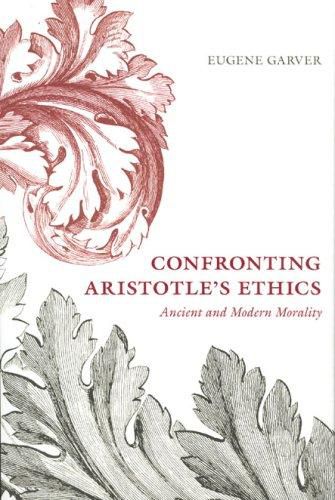
Book Summary of Confronting Aristotle’s Ethics: Ancient And Modern MoralityWhat is the good life? Posing this question today would likely elicit very different answers. Some might say that the good life means doing good?improving one?s community and the lives of others. Others might respond that it means doing well?cultivating one?s own abilities in a meaningful way. But for Aristotle these two distinct ideas?doing good and doing well?were one and the same and could be realized in a single life. In Confronting Aristotle?s Ethics, Eugene Garver examines how we can draw this conclusion from Aristotle’s works, while also studying how this conception of the good life relates to contemporary ideas ofmorality. The key to Aristotle?s views on ethics, argues Garver, lies in the Metaphysics or, more specifically, in his thoughts on activities, actions, and capacities. For Aristotle, Garver shows, it is only possible to be truly active when acting for the common good, and it is only possible to be truly happy when active to the extent of one?s own powers. But does this mean we should aspire to Aristotle?s impossibly demanding vision of the good life? In a word, no. Garver stresses the enormous gap between life in Aristotle?s time and ours. As a result, this book will be a welcome rumination on not only Aristotle, but the relationship between the individual and society in everyday life..
If your anger, or that of a loved one, is out of control and threatening your life and livelihood, you need the calm, clear, and understanding help you’ll find in Anger Management For Dummies. This concise and practical guidebook shares specific anger management methods, skills, and exercises that will help you identify the sources of your anger and release yourself from their grip. You’ll find out how to: Defuse your anger before it strikes Express your feelings calmly Respond rather than react Prevent anger incidents in the future Release healthy anger in a healthy way Confess your anger in a journal Use anger constructively Get beyond old anger through forgiveness Complete with coverage of road rage, air rage, office rage, and dealing with angry children, Anger Management for Dummies gives you the tools you need to overcome your anger and live a happier, more productive life.
ما از اخلاق چه انتظاری داریم؟ این سوال شاید تاحدودی برای عموم مردم و یا متخصصان این رشته قابل پاسخ باشد؛ اینکه خوب بودن را به ما بیاموزد و در تنظیم روابط فردی م...

جشن کتاب تهران به ایستگاه سی و یکم رسیده است. حال و احوال نشر کتاب خوب نیست و باید فرهنگدوستان را به خرید و هدیه دادن کتاب ترغیب نمود. خانه اخلاقپژوهان جوان ب...

بنیاد کتابهای اخلاق اسلامی عمدتا پالایش جان از آلودگیها و آراستن آن به زیباییها است. اندیشه محوری این قبیل کتابها آن است که انسان فعلی آنی نیست که باید باشد...

-
0 Comments