Notice: تابع WP_Block_Type_Registry::register به طورنادرست فراخوانی شد. نامهای نوع بلوک نباید حروف بزرگ داشته باشند. لطفاً برای اطلاعات بیشتر، اشکال زدایی در وردپرس را مشاهده کنید. (این پیام در نگارش 5.0.0 افزوده شده است.) in /home/ethicsho/public_html/wp-includes/functions.php on line 5313
Warning: Use of undefined constant TDC_PATH_LEGACY - assumed 'TDC_PATH_LEGACY' (this will throw an Error in a future version of PHP) in /home/ethicsho/public_html/wp-content/plugins/td-composer/td-composer.php on line 109
Warning: Use of undefined constant TDSP_THEME_PATH - assumed 'TDSP_THEME_PATH' (this will throw an Error in a future version of PHP) in /home/ethicsho/public_html/wp-content/plugins/td-composer/td-composer.php on line 113 بایگانیهای BV4647.F55 .B38 2007 - خانه اخلاق پژوهان جوان Notice: Trying to access array offset on value of type bool in /home/ethicsho/public_html/wp-content/plugins/wp-ulike/inc/general-functions.php on line 807
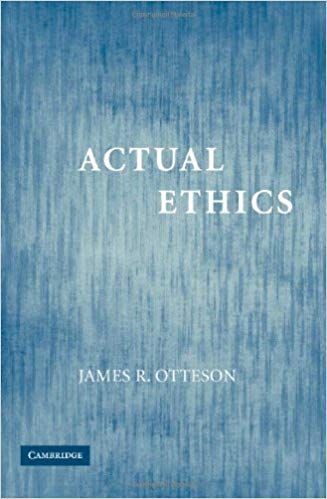
Actual Ethics offers a moral defense of the ‘classical liberal’ political tradition and applies it to several of today’s vexing moral and political issues. James Otteson argues that a Kantian conception of personhood and an Aristotelian conception of judgment are compatible and even complementary. He shows why they are morally attractive, and perhaps most controversially, when combined, they imply a limited, classical liberal political state. Otteson then addresses several contemporary problems – wealth and poverty, public education, animal welfare, and affirmative action – and shows how each can be plausibly addressed within the Kantian, Aristotelian and classical liberal framework. Written in clear, engaging, and jargon-free prose, Actual Ethics will give students and general audiences an overview of a powerful and rich moral and political tradition that they might not otherwise consider.
After World War II, U.S. policy experts–convinced that unchecked population growth threatened global disaster–successfully lobbied bipartisan policy-makers in Washington to initiate federally-funded family planning. In Intended Consequences, Donald T. Critchlow deftly chronicles how the government’s involvement in contraception and abortion evolved into one of the most bitter, partisan controversies in American political history. The growth of the feminist movement in the late 1960s fundamentally altered the debate over the federal family planning movement, shifting its focus from population control directed by established interests in the philanthropic community to highly polarized pro-abortion and anti-abortion groups mobilized at the grass-roots level. And when the Supreme Court granted women the Constitutional right to legal abortion in 1973, what began as a bi-partisan, quiet revolution during the administrations of Kennedy and Johnson exploded into a contentious argument over sexuality, welfare, the role of women, and the breakdown of traditional family values. Intended Consequences encompasses over four decades of political history, examining everything from the aftermath of the Republican “moral revolution” during the Reagan and Bush years to the current culture wars concerning unwed motherhood, homosexuality, and the further protection of women’s abortion rights. Critchlow’s carefully balanced appraisal of federal birth control and abortion policy reveals that despite the controversy, the family planning movement has indeed accomplished much in the way of its intended goal–the reduction of population growth in many parts of the world. Written with authority, fresh insight, and impeccable research, Intended Consequences skillfully unfolds the history of how the federal government found its way into the private bedrooms of the American family.
This book is about the gap between the moral demand on us and our natural capacities to meet it. John Hare starts with Kants statement of the moral demand and his acknowledgement of this gap. Hare then analyses Kants use of the resources of the Christian tradition to make sense of this gap,especially the notions of revelation, providence, and Gods grace. Kant reflects the traditional way of making sense of this gap, which is to invoke Gods assistance in bridging it. Hare goes on to examine various contemporary philosophers who do not use these resources. He considers three mainstrategies: exaggerating our natural capacities, diminishing the moral demand, and finding some naturalistic substitute for Gods assistance. He argues that these strategies do not work, and that we are therefore left with the gap and with the problem that it is unreasonable to demand of ourselves astandard which we cannot reach. In the final section of the book, Hare looks in more detail at the Christian doctrines of atonement, justification, and sanctification. He discusses Kierkegaards account of the relation between the ethical life and the Christian life, and ends by considering humanforgiveness, and the ways in which Gods forgiveness is both like and unlike our forgiveness of each other. The book is intended for those interested in both ethical theory and Christian theology.
ما از اخلاق چه انتظاری داریم؟ این سوال شاید تاحدودی برای عموم مردم و یا متخصصان این رشته قابل پاسخ باشد؛ اینکه خوب بودن را به ما بیاموزد و در تنظیم روابط فردی م...

جشن کتاب تهران به ایستگاه سی و یکم رسیده است. حال و احوال نشر کتاب خوب نیست و باید فرهنگدوستان را به خرید و هدیه دادن کتاب ترغیب نمود. خانه اخلاقپژوهان جوان ب...

بنیاد کتابهای اخلاق اسلامی عمدتا پالایش جان از آلودگیها و آراستن آن به زیباییها است. اندیشه محوری این قبیل کتابها آن است که انسان فعلی آنی نیست که باید باشد...

-
0 Comments