Notice: تابع WP_Block_Type_Registry::register به طورنادرست فراخوانی شد. نامهای نوع بلوک نباید حروف بزرگ داشته باشند. لطفاً برای اطلاعات بیشتر، اشکال زدایی در وردپرس را مشاهده کنید. (این پیام در نگارش 5.0.0 افزوده شده است.) in /home/ethicsho/public_html/wp-includes/functions.php on line 5313
Warning: Use of undefined constant TDC_PATH_LEGACY - assumed 'TDC_PATH_LEGACY' (this will throw an Error in a future version of PHP) in /home/ethicsho/public_html/wp-content/plugins/td-composer/td-composer.php on line 109
Warning: Use of undefined constant TDSP_THEME_PATH - assumed 'TDSP_THEME_PATH' (this will throw an Error in a future version of PHP) in /home/ethicsho/public_html/wp-content/plugins/td-composer/td-composer.php on line 113 بایگانیهای BP195.M6 .H55 2007 - خانه اخلاق پژوهان جوان Notice: Trying to access array offset on value of type bool in /home/ethicsho/public_html/wp-content/plugins/wp-ulike/inc/general-functions.php on line 807
What motivates us to be altruistic? How did an altruistic trait evolve in humans, given that evolutionary theory assumes we are self-interested? What sorts of people are altruistic and in what circumstances? Is the welfare state a channel for altruism or does it crowd out people’s altruistic motivations? This accessible book is the first introduction to the idea of altruism. It explores how we have come to be altruistic, and considers why it is important to remain altruistic, not just for the sake of others, but in order maintain the fragile fabric of human society. The book surveys the history of the concept of altruism and examines it from a variety of disciplinary perspectives, including moral philosophy, evolutionary biology, psychology, economics and political science. It then attempts to bring together the distinct issues and concerns of these disciplines to arrive at a unified understanding of altruism. The rational self-interested individual of economics is compared with the altruist who exhibits the virtues of empathy, compassion and benevolence. The book also discusses heroic altruism, such as that displayed by rescuers of Jews in Nazi-occupied Europe, and psychological experiments which seek to identify the altruistic trait. Scott and Seglow argue that altruism is easily extinguished and hard to nourish, but vital for a fundamentally human future. Academics and students in social sciences and philosophy will find Altruism of great interest. So too will professionals in the voluntary and charitable sectors and journalists involved in communicating social scientific and philosophical ideas to the public.
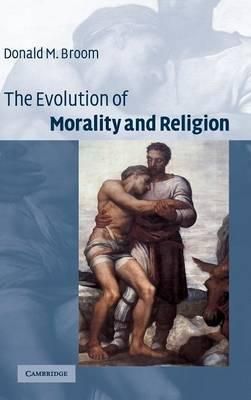
Accepted codes of conduct and established religions are features of human societies throughout the world. Why should this be? In this book, biologist Donald Broom argues that these aspects of human culture have evolved as a consequence of natural selection; that morally acceptable behaviour benefits the humans and other animals and that a principal function of religion is to underpin and encourage such behaviour. The author provides biological insights drawn especially from work on animal behaviour and presents ideas and information from the fields of philosophy and theology to produce a thought-provoking, interdisciplinary treatment. Scientists who read this book will gain an appreciation of the wider literature on morality and religion, and non-scientists will benefit from the author’s extensive knowledge of the biological mechanisms underlying the behaviour of humans and other social animals.
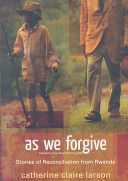
Can a country known for its radical brutality become a country known for an even more radical forgiveness? More than a decade after the 1994 genocide, the Rwandan government has released tens of thousands of murderers back into the communities they ravaged. Survivors and perpetrators have had to learn to live again as neighbors. Inspired by the award-winning film As We Forgive, this book explores the pain, the mystery, and the hope through seven compelling stories as victims, orphans, widows, and perpetrators journey toward reconciliation.
This volume is a collection of thirteen seminal essays on ethics, free will, and the philosophy of mind. The essays deal with such central topics as freedom of the will, moral responsibility, the concept of a person, the structure of the will, the nature of action, the constitution of the self, and the theory of personal ideals. By focusing on the distinctive nature of human freedom, Professor Frankfurt is ale to explore fundamental problems of what it is to be a person and of what one should care about in life.
ما از اخلاق چه انتظاری داریم؟ این سوال شاید تاحدودی برای عموم مردم و یا متخصصان این رشته قابل پاسخ باشد؛ اینکه خوب بودن را به ما بیاموزد و در تنظیم روابط فردی م...

جشن کتاب تهران به ایستگاه سی و یکم رسیده است. حال و احوال نشر کتاب خوب نیست و باید فرهنگدوستان را به خرید و هدیه دادن کتاب ترغیب نمود. خانه اخلاقپژوهان جوان ب...

بنیاد کتابهای اخلاق اسلامی عمدتا پالایش جان از آلودگیها و آراستن آن به زیباییها است. اندیشه محوری این قبیل کتابها آن است که انسان فعلی آنی نیست که باید باشد...

-
0 Comments