Notice: تابع WP_Block_Type_Registry::register به طورنادرست فراخوانی شد. نامهای نوع بلوک نباید حروف بزرگ داشته باشند. لطفاً برای اطلاعات بیشتر، اشکال زدایی در وردپرس را مشاهده کنید. (این پیام در نگارش 5.0.0 افزوده شده است.) in /home/ethicsho/public_html/wp-includes/functions.php on line 5313
Warning: Use of undefined constant TDC_PATH_LEGACY - assumed 'TDC_PATH_LEGACY' (this will throw an Error in a future version of PHP) in /home/ethicsho/public_html/wp-content/plugins/td-composer/td-composer.php on line 109
Warning: Use of undefined constant TDSP_THEME_PATH - assumed 'TDSP_THEME_PATH' (this will throw an Error in a future version of PHP) in /home/ethicsho/public_html/wp-content/plugins/td-composer/td-composer.php on line 113 بایگانیهای BL65.H78 .D63 2007 - خانه اخلاق پژوهان جوان Notice: Trying to access array offset on value of type bool in /home/ethicsho/public_html/wp-content/plugins/wp-ulike/inc/general-functions.php on line 807
This book compares the genocide perpetrated by both Nazism and Communism. Both political systems were evil yet, when compared, they lose some of their power to shock. The book considers: the different receptions given to Nazism and Communism; whether people can behave “rationally” in contexts of great wickedness; whether the Communist or Nazi worldview was more “rational” the relationship between post-war memories and history; and how atrocities are remembered by society and how intellectuals construct them. The editors argue that these twentieth-century evils invite comparison if only because of their traumatic effects and that we have an obligation to understand what happened and an obligation to understand how we have dealt with it.
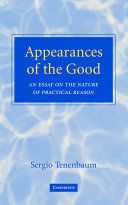
‘We desire all and only those things we conceive to be good; we avoid what we conceive to be bad.’ This slogan was once the standard view of the relationship between desire or motivation and rational evaluation. Many critics have rejected this scholastic formula as either trivial or wrong. It appears to be trivial if we just define the good as ‘what we want’, and wrong if we consider apparent conflicts between what we seem to want and what we seem to think is good. In Appearances of the Good, Sergio Tenenbaum argues that the old slogan is both significant and right, even in cases of apparent conflict between our desires and our evaluative judgments. Maintaining that the good is the formal end of practical inquiry in much the same way as truth is the formal end of theoretical inquiry, he provides a fully unified account of motivation and evaluation.
“Dimensions of Moral Theory “examines the key presuppositions and philosophical commitments that support and shape moral theories. Many of the topics discussed belong to “metaethics,” the study of moral concepts, language, and thought rather than a study of moral issues themselves. Other topics are under the heading of “moral psychology” and concern fundamental issues about the nature of moral agents, moral motivation, and the roles of reason, desire, and pleasure in moral action and experience. The book introduces metaethical and moral psychological positions and arguments and shows how they are generated and why they are important. It thereby brings to light some of the most important philosophical problems raised by moral theorizing.This volume formulates these issues of moral epistemology, the metaphysics of moral value, and moral motivation in a clear and rigorous but non-technical manner.
This book studies education and curriculum from the perspective of the teacher’s stance in the classroom. Writing through the lenses offered by autobiography, a lifetime in the classroom serving as teacher, and drawing heavily on Jewish and secular scholarly texts, Block offers a vision of education that serves as an alternative to the increasingly instrumentalist, managerial, standards-driven impersonal nature of contemporary schools. He advocates not for a pedagogy of ethics, but for the original ethical stance every teacher already assumes by entering into the classroom. It is from this stance in ethics, he argues, that all pedagogy derives.
ما از اخلاق چه انتظاری داریم؟ این سوال شاید تاحدودی برای عموم مردم و یا متخصصان این رشته قابل پاسخ باشد؛ اینکه خوب بودن را به ما بیاموزد و در تنظیم روابط فردی م...

جشن کتاب تهران به ایستگاه سی و یکم رسیده است. حال و احوال نشر کتاب خوب نیست و باید فرهنگدوستان را به خرید و هدیه دادن کتاب ترغیب نمود. خانه اخلاقپژوهان جوان ب...

بنیاد کتابهای اخلاق اسلامی عمدتا پالایش جان از آلودگیها و آراستن آن به زیباییها است. اندیشه محوری این قبیل کتابها آن است که انسان فعلی آنی نیست که باید باشد...

-
0 Comments