Notice: تابع WP_Block_Type_Registry::register به طورنادرست فراخوانی شد. نامهای نوع بلوک نباید حروف بزرگ داشته باشند. لطفاً برای اطلاعات بیشتر، اشکال زدایی در وردپرس را مشاهده کنید. (این پیام در نگارش 5.0.0 افزوده شده است.) in /home/ethicsho/public_html/wp-includes/functions.php on line 5313
Warning: Use of undefined constant TDC_PATH_LEGACY - assumed 'TDC_PATH_LEGACY' (this will throw an Error in a future version of PHP) in /home/ethicsho/public_html/wp-content/plugins/td-composer/td-composer.php on line 109
Warning: Use of undefined constant TDSP_THEME_PATH - assumed 'TDSP_THEME_PATH' (this will throw an Error in a future version of PHP) in /home/ethicsho/public_html/wp-content/plugins/td-composer/td-composer.php on line 113 بایگانیهای BJ55 .L954 1993 - خانه اخلاق پژوهان جوان Notice: Trying to access array offset on value of type bool in /home/ethicsho/public_html/wp-content/plugins/wp-ulike/inc/general-functions.php on line 807
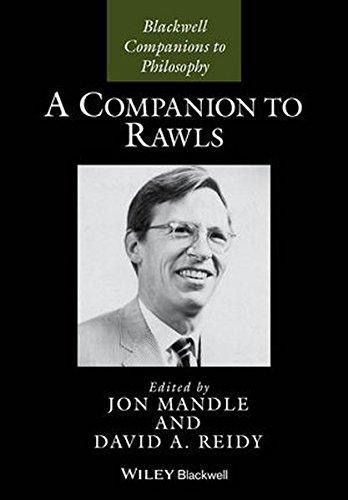
Wide ranging and up to date, this is the single most comprehensive treatment of the most influential political philosopher of the 20th century, John Rawls. An unprecedented survey that reflects the surge of Rawls scholarship since his death, and the lively debates that have emerged from his work Features an outstanding list of contributors, including senior as well as “next generation” Rawls scholars Provides careful, textually informed exegesis and well-developed critical commentary across all areas of his work, including non-Rawlsian perspectives Includes discussion of new material, covering Rawls’s work from the newly published undergraduate thesis to the final writings on public reason and the law of peoples Covers Rawls’s moral and political philosophy, his distinctive methodological commitments, and his relationships to the history of moral and political philosophy and to jurisprudence and the social sciences Includes discussion of his monumental 1971 book, A Theory of Justice, which is often credited as having revitalized political philosophy
Western tradition, from Plato to John Rawls and other contemporary writers. Chronologically oriented, the book’s unbiased and comprehensive coverage fosters a firm grasp of many seminal ideas and thinkers in the history of Western ethics. This latest edition of Johnson’s classic anthology features a significant revision of Part III, “The Contemporary Period.” In addition to providing a historical introduction to moral philosophy, the book now provides a very timely introduction to the main currents in contemporary moral philosophy, such as contemporary deontology, Kantianism, consequentialism, contractarianism, and virtue theory. Newly added contemporary readings that articulate well with the classical sources demonstrate the continuity between historical and contemporary concerns, for example showing how the ideas of the classical writers have been taken up and developed by contemporary philosophers.
Talbot Brewer presents an invigorating new approach to ethical theory, in the context of human selfhood and agency. The first main theme of the book is that contemporary ethical theorists have focused too narrowly on actions and the discrete episodes of deliberation through which we choose them, and that the subject matter of the field looks quite different if one looks instead at unfolding activities and the continuous forms of evaluative awareness that carry them forward and that constitute an essential element of those activities. The second is that ethical reflection is itself a centrally important life activity, and that philosophical ethics is an extension of this practical activity rather than a merely theoretical reflection upon it. Brewer’s approach is founded on a far-reaching reconsideration of the notions of the nature and sources of human agency, and particularly of the way in which practical thinking gives shape to activities, relationships and lives. He contests the usual understanding of the relationship between philosophical psychology and ethics. The Retrieval of Ethics shows the need for a new contemplative vision of the point or value of human action–without which we will remain unable to make optimal sense of our efforts to unify our lives around a tenable conception of how best to live them, or of the yearnings that draw us to our ideals and to each other.
Current controversies about abortion, the environment, pornography, AIDS, capital punishment, and similar issues naturally lead to the question of whether there are any values that can be ultimately justified, or whether values are simply conventional. John Kekes argues that the present moral and political uncertainties are due to a deep change in our society from a dogmatic to a pluralistic view of values. Dogmatism is committed to there being only one justifiable system of values. Pluralism recognizes many such systems, and yet it avoids a chaotic relativism according to which all values are in the end arbitrary. Maintaining that good lives must be reasonable, but denying that they must conform to one true pattern, Kekes develops and justifies a pluralistic account of good lives and values, and works out its political, moral, and personal implications. The author defines values as possibilities whose realization would make lives good. He recognizes that their realization is difficult, especially since it involves choices among many, often conflicting, values. He argues, however, that living a good life requires a resolution of these conflicts, although reasonable resolutions are themselves plural in nature. His central claim is that pluralism is both reasonable and a preferable alternative to dogmatism and relativism.
What is the pitch of philosophy? Something thrown, for us to catch? A lurch, meant to unsettle us? The relative position of a tone on a scale? A speech designed to persuade? This book is an invitation to the life of philosophy in the United States, as Emerson once lived it and as Stanley Cavell now lives it – in all its topographical ambiguity. Cavell talks about his vocation in connection with what he calls voice – the tone of philosophy – and his right to take that tone, and to describe an anecdotal journey toward the discovery of his own voice. Cavell asks how the voice of philosophy can be heard amid the commerce of everyday life. His autobiographical exercises begin at home with his parents, his father an accidental pawnbroker and accomplished raconteur, his mother a trained and talented musician. In the course of showing us his certain steps in the discovery of his trade, he conveys the sense of what it means to learn to walk on one’s own, with a Thoreauvian deliberateness. He pays suitableattention to a serious ally and antagonist to the task of philosophy as he understands it, namely, Jacques Derrida – yet Derrida has mounted a full-scale attack on “voice” and other concepts that Cavell has held open for much of a lifetime. The chapters are interwoven with intense family reminiscences in Cavell’s discovery of J. L. Austin, his understanding of Wittgenstein, his raising of Emerson to the philosophical canon, his fascination with film (images of women in a medium for women), the revelation that film and opera are the media of otherness for women. And the voice at the end: hearing in himself the voice of his mother, which is music. Complex, sentimental, witty, A Pitch ofPhilosophy is for anyone who cares to take on philosophy, under whatever name it goes.
ما از اخلاق چه انتظاری داریم؟ این سوال شاید تاحدودی برای عموم مردم و یا متخصصان این رشته قابل پاسخ باشد؛ اینکه خوب بودن را به ما بیاموزد و در تنظیم روابط فردی م...

جشن کتاب تهران به ایستگاه سی و یکم رسیده است. حال و احوال نشر کتاب خوب نیست و باید فرهنگدوستان را به خرید و هدیه دادن کتاب ترغیب نمود. خانه اخلاقپژوهان جوان ب...

بنیاد کتابهای اخلاق اسلامی عمدتا پالایش جان از آلودگیها و آراستن آن به زیباییها است. اندیشه محوری این قبیل کتابها آن است که انسان فعلی آنی نیست که باید باشد...

-
0 Comments