Notice: تابع WP_Block_Type_Registry::register به طورنادرست فراخوانی شد. نامهای نوع بلوک نباید حروف بزرگ داشته باشند. لطفاً برای اطلاعات بیشتر، اشکال زدایی در وردپرس را مشاهده کنید. (این پیام در نگارش 5.0.0 افزوده شده است.) in /home/ethicsho/public_html/wp-includes/functions.php on line 5313
Warning: Use of undefined constant TDC_PATH_LEGACY - assumed 'TDC_PATH_LEGACY' (this will throw an Error in a future version of PHP) in /home/ethicsho/public_html/wp-content/plugins/td-composer/td-composer.php on line 109
Warning: Use of undefined constant TDSP_THEME_PATH - assumed 'TDSP_THEME_PATH' (this will throw an Error in a future version of PHP) in /home/ethicsho/public_html/wp-content/plugins/td-composer/td-composer.php on line 113 بایگانیهای BJ47 .R58 2008 - خانه اخلاق پژوهان جوان Notice: Trying to access array offset on value of type bool in /home/ethicsho/public_html/wp-content/plugins/wp-ulike/inc/general-functions.php on line 807
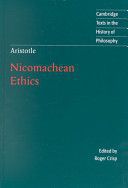
Aristotles Nicomachean Ethics, based on lectures that he gave in Athens in the fourth century BCE, is one of the most significant works in moral philosophy, and has profoundly influenced the whole course of subsequent philosophical endeavour. It is soundly located within a philosophical tradition, but its argument differs markedly from those of Plato and Socrates in its emphasis on the exercise – as opposed to the mere possession – of virtue as the key to human happiness, offering seminal discussions of ethical issues that are practical in their intent. Topics covered include the role of luck in human wellbeing, moral education, responsibility, courage, justice, moral weakness, friendship and pleasure. This accessible new translation by Roger Crisp follows the Greek text closely and also provides a non-Greek-reader with the flavour of the original. The volume also includes a historical and philosophical introduction and notes on further reading.
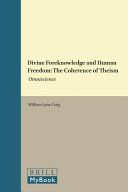
The ancient problem of fatalism, more particularly theological fatalism, has resurfaced with surprising vigour in the second half of the twentieth century. Two questions predominate in the debate: (1) Is divine foreknowledge compatible with human freedom and (2) How can God foreknow future free acts?Having surveyed the historical background of this debate in “The Problem of Divine Foreknowledge and “Future Contingents from Aristotle to Suarez (Brill: 1988), William Lane Craig now attempts to address these issues critically. His wide-ranging discussion brings together a thought- provoking array of related topics such as logical fatalism, multivalent logic, backward causation, precognition, time travel, counterfactual logic, temporal necessity, Newcomb’s Problem, middle knowledge, and relativity theory.The present work serves both as a useful survey of the extensive literature on theological fatalism and related fields and as a stimulating assessment of the possibility of divine foreknowledge of future free acts.
ما از اخلاق چه انتظاری داریم؟ این سوال شاید تاحدودی برای عموم مردم و یا متخصصان این رشته قابل پاسخ باشد؛ اینکه خوب بودن را به ما بیاموزد و در تنظیم روابط فردی م...

جشن کتاب تهران به ایستگاه سی و یکم رسیده است. حال و احوال نشر کتاب خوب نیست و باید فرهنگدوستان را به خرید و هدیه دادن کتاب ترغیب نمود. خانه اخلاقپژوهان جوان ب...

بنیاد کتابهای اخلاق اسلامی عمدتا پالایش جان از آلودگیها و آراستن آن به زیباییها است. اندیشه محوری این قبیل کتابها آن است که انسان فعلی آنی نیست که باید باشد...

-
0 Comments