Notice: تابع WP_Block_Type_Registry::register به طورنادرست فراخوانی شد. نامهای نوع بلوک نباید حروف بزرگ داشته باشند. لطفاً برای اطلاعات بیشتر، اشکال زدایی در وردپرس را مشاهده کنید. (این پیام در نگارش 5.0.0 افزوده شده است.) in /home/ethicsho/public_html/wp-includes/functions.php on line 5313
Warning: Use of undefined constant TDC_PATH_LEGACY - assumed 'TDC_PATH_LEGACY' (this will throw an Error in a future version of PHP) in /home/ethicsho/public_html/wp-content/plugins/td-composer/td-composer.php on line 109
Warning: Use of undefined constant TDSP_THEME_PATH - assumed 'TDSP_THEME_PATH' (this will throw an Error in a future version of PHP) in /home/ethicsho/public_html/wp-content/plugins/td-composer/td-composer.php on line 113 بایگانیهای BJ352 .B67 2006 - خانه اخلاق پژوهان جوان Notice: Trying to access array offset on value of type bool in /home/ethicsho/public_html/wp-content/plugins/wp-ulike/inc/general-functions.php on line 807
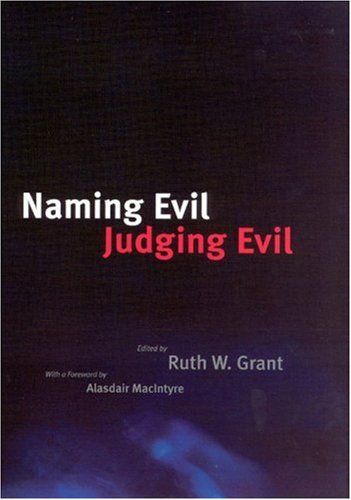
Is it more dangerous to call something evil or not to? This fundamental question deeply divides those who fear that the term oversimplifies grave problems and those who worry that, to effectively address such issues as terrorism and genocide, we must first acknowledge them as evil. Recognizing that the way we approach this dilemma can significantly affect both the harm we suffer and the suffering we inflict, a distinguished group of contributors engages in the debate with this series of timely and original essays. Drawing on Western conceptions of evil from the Middle Ages to the present, these pieces demonstrate that, while it may not be possible to definitively settle moral questions, we are still ableand in fact are obligatedto make moral arguments and judgments. Using a wide variety of approaches, the authors raise tough questions: Why is so much evil perpetrated in the name of good? Could evil ever be eradicated? How can liberal democratic politics help us strike a balance between the need to pass judgment and the need to remain tolerant? Their insightful answers exemplify how the sometimes rarefied worlds of political theory, philosophy, theology, and history can illuminate pressing contemporary concerns.
Jacques Cory’s second book Activist Business Ethics expands upon the theoretical concepts developed in his first book Business Ethics: The Ethical Revolution of Minority Shareholders published by Kluwer Academic Publishers in March 2001. Activist business ethics is needed in order to remedy the wrongdoing committed to stakeholders and minority shareholders. This will be achieved by cooperation between ethical businessmen, activist academics, stakeholders and minority shareholders. We should treat others as we would want others to treat us, not through interest, but by conviction. Yet this principle is not the guideline of many companies in the modern business world, despite the fact that most religions and philosophers have advocated it in the last 3,000 years. How can we convince or compel modern business to apply this principle? And is it essential to the success of economy? In order to answer these questions this book examines the evolution of activist business ethics in business, in democracies, in Christianity, Judaism, Islam, Buddhism, in philosophy and psychology. The book examines international aspects, the personification of stakeholders, the predominance of values and ethics for CEOs and the inefficient safeguards of the stakeholders’ interests. The book presents new vehicles for the safeguard of those interests, such as the Internet, Transparency, Ethical Funds and Activist Associations, and future activist vehicles, such as the Supervision Board and the Institute of Ethics. Today everybody is a stakeholder and a minority shareholder of a company, directly or through our pension funds, or as a client, a supplier, a member of a community and a citizen. The principal premise of the book is, therefore, that ultimately the wrongdoers act against themselves. The book is woven with many references on ethics and business ethics from the professional and classic world literature, the Bible and other religious texts, poetry, maxims, and folk tales; showing that ethical problems are similar throughout the ages and cultures, but some of the solutions given in this book are new and original. Activist Business Ethics is primarily intended for the academic market and is particularly appropriate for academics in business administration, ethics and finance. It should also appeal strongly to the professional business/finance market, and to stakeholders and minority shareholders as well, who are aware of the wrongdoing committed to them and who want to remedy the situation by activist conduct.
“Profound wisdom from noted writers on following forgiveness with making amends As indispensable as forgiveness has been to the healing process throughout history, there is another equally profound action that is needed for reconciliation, which Arun Gandhi, grandson of Mohandas Gandhi, calls “the other side of the coin.” Turning over the coin of forgiveness, we discover atonement, the half-hidden, much-overlooked other half of the reconciliation process Includes 15 essays and interviews by high-profile thinkers and activist including: Huston Smith, Jacob Needleman, Arun Gandhi, and Azim Khamisa Discussed atonement as a process that can enable us to become unstuck from the past and live in the present This rich and powerful book shows how acts of atonement can relieve us of the pain of the past and give us a hopeful future”–
Death is the one ineradicable fact of being human. How we think about it is central to our understanding of and engagement with the world. Our human and cultural construction of death and dying shapes the structure and purpose of our institutions and has underpinned the work of scholars and philosophers down the ages. In its organization and values, its form and content, its construction of the past and of the future, the relationship between law and mortality remains one of the most perplexing and under-theorized aspects of the legal system, whether dealing with AIDS, euthanasia, sadomasochism, “mercy killings,” murder, the judicial review of the right to die, or the criminal death sentence. This timely and important collection brings together scholars from Australia, Britain and the United States to reconsider the relationship between death and the law, in ways that will be of particular interest to post-structural philosophers and legal theorists and to cultural theorists and practitioners in a much wider field, for whom there is nothing more certain than the existence of “death and taxes.” Contributors, and their university or col
The first to use Judith Butler?s work as a reading of how the legal subject is formed, this book traces how Butler comes to the themes of ethics, law and politics analyzing their interrelation and explaining how they relate to Butler?s question of how people can have more liveable and viable lives. Acknowledging the potency and influence of Butler?s ?concept? of gender as process, which occupies a well developed and well discussed position in current literature, Elena Loizidou argues that the possibility of people having more liveable and viable lives is articulated by Butler within the parameters of a sustained agonistic relationship between the three spheres of ethics, law and politics. Suggesting that Butler?s rounded understanding of the interrelationship of these three spheres will enable critical legal scholarship, as well as critical theory more generally, to consider how the question of life?s unsustainable conditions can be rethought and redressed, this book is a key readfor all students of legal ethics, political philosophy and social theory.
ما از اخلاق چه انتظاری داریم؟ این سوال شاید تاحدودی برای عموم مردم و یا متخصصان این رشته قابل پاسخ باشد؛ اینکه خوب بودن را به ما بیاموزد و در تنظیم روابط فردی م...

جشن کتاب تهران به ایستگاه سی و یکم رسیده است. حال و احوال نشر کتاب خوب نیست و باید فرهنگدوستان را به خرید و هدیه دادن کتاب ترغیب نمود. خانه اخلاقپژوهان جوان ب...

بنیاد کتابهای اخلاق اسلامی عمدتا پالایش جان از آلودگیها و آراستن آن به زیباییها است. اندیشه محوری این قبیل کتابها آن است که انسان فعلی آنی نیست که باید باشد...

-
0 Comments