Jason Stanley presents a startling and provocative claim about knowledge: that whether or not someone knows a proposition at a given time is in part determined by his or her practical interests, i.e. by how much is at stake for that person at that time. So whether a true belief is knowledge is not merely a matter of supporting beliefs or reliability; in the case of knowledge, practical rationality and theoretical rationality are intertwined. Stanley defends this thesis against alternative accounts of the phenomena that motivate it, such as the claim that knowledge attributions are linguistically context-sensitive (contextualism about knowledge attributions), and the claim that the truth of a knowledge claim is somehow relative to the person making the claim (relativism about knowledge). In the course of his argument Stanley introduces readers to a number of strategies for resolving philosophical paradox, making the book essential not just for specialists in epistemology but for all philosophers interested in philosophical methodology. Since a number of his strategies appeal to linguistic evidence, it will be of great interest to linguists as well.
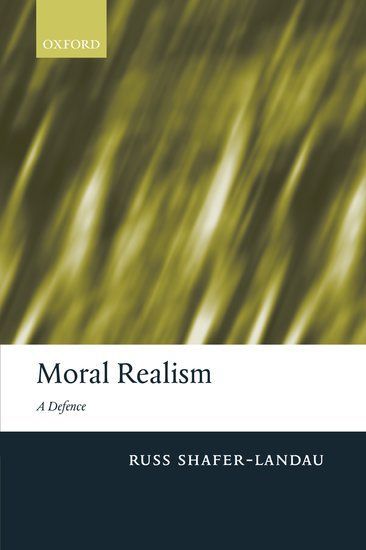
Moral Realism is a systematic defence of the idea that there are objective moral standards. Russ Shafer-Landau argues that there are moral principles that are true independently of what anyone, anywhere, happens to think of them. His central thesis, as well as the many novel supporting arguments used to defend it, will spark much controversy among those concerned with the foundations of ethics.
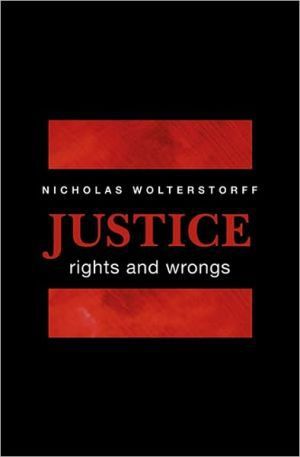
Wide-ranging and ambitious, Justice combines moral philosophy and Christian ethics to develop an important theory of rights and of justice as grounded in rights. Nicholas Wolterstorff discusses what it is to have a right, and he locates rights in the respect due the worth of the rights-holder. After contending that socially-conferred rights require the existence of natural rights, he argues that no secular account of natural human rights is successful; he offers instead a theistic account. Wolterstorff prefaces his systematic account of justice as grounded in rights with an exploration of the common claim that rights-talk is inherently individualistic and possessive. He demonstrates that the idea of natural rights originated neither in the Enlightenment nor in the individualistic philosophy of the late Middle Ages, but was already employed by the canon lawyers of the twelfth century. He traces our intuitions about rights and justice back even further, to Hebrew and Christian scriptures. After extensively discussing justice in the Old Testament and the New, he goes on to show why ancient Greek and Roman philosophy could not serve as a framework for a theory of rights. Connecting rights and wrongs to God’s relationship with humankind, Justice not only offers a rich and compelling philosophical account of justice, but also makes an important contribution to overcoming the present-day divide between religious discourse and human rights.
ما از اخلاق چه انتظاری داریم؟ این سوال شاید تاحدودی برای عموم مردم و یا متخصصان این رشته قابل پاسخ باشد؛ اینکه خوب بودن را به ما بیاموزد و در تنظیم روابط فردی م...

جشن کتاب تهران به ایستگاه سی و یکم رسیده است. حال و احوال نشر کتاب خوب نیست و باید فرهنگدوستان را به خرید و هدیه دادن کتاب ترغیب نمود. خانه اخلاقپژوهان جوان ب...

بنیاد کتابهای اخلاق اسلامی عمدتا پالایش جان از آلودگیها و آراستن آن به زیباییها است. اندیشه محوری این قبیل کتابها آن است که انسان فعلی آنی نیست که باید باشد...

-
0 Comments