Notice: تابع WP_Block_Type_Registry::register به طورنادرست فراخوانی شد. نامهای نوع بلوک نباید حروف بزرگ داشته باشند. لطفاً برای اطلاعات بیشتر، اشکال زدایی در وردپرس را مشاهده کنید. (این پیام در نگارش 5.0.0 افزوده شده است.) in /home/ethicsho/public_html/wp-includes/functions.php on line 5313
Warning: Use of undefined constant TDC_PATH_LEGACY - assumed 'TDC_PATH_LEGACY' (this will throw an Error in a future version of PHP) in /home/ethicsho/public_html/wp-content/plugins/td-composer/td-composer.php on line 109
Warning: Use of undefined constant TDSP_THEME_PATH - assumed 'TDSP_THEME_PATH' (this will throw an Error in a future version of PHP) in /home/ethicsho/public_html/wp-content/plugins/td-composer/td-composer.php on line 113 بایگانیهای BJ1500.M67 .S53 2003 - خانه اخلاق پژوهان جوان Notice: Trying to access array offset on value of type bool in /home/ethicsho/public_html/wp-content/plugins/wp-ulike/inc/general-functions.php on line 807
If Christianity is to be a compelling and relevant voice in the 21st Century, it needs a fresh messagenot a new innovation or novel interpretation, but a return to our roots.
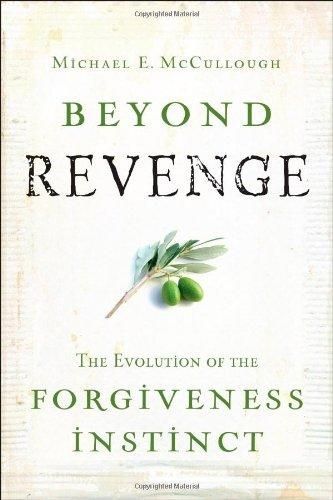
Why is revenge such a pervasive and destructive problem? How can we create a future in which revenge is less common and forgiveness is more common? Psychologist Michael McCullough argues that the key to a more forgiving, less vengeful world is to understand the evolutionary forces that gave rise to these intimately human instincts and the social forces that activate them in human minds today. Drawing on exciting breakthroughs from the social and biological sciences, McCullough dispenses surprising and practical advice for making the world a more forgiving place. Michael E. McCullough (Miami, Florida), an internationally recognized expert on forgiveness and revenge, is a professor of psychology at the University of Miami in Coral Gables, Florida, where he directs the Laboratory for Social and Clinical Psychology.
`The author has provided us with a masterful overview and critique of liberal theorizing of the past quarter-century. While dealing exhaustively and fairly with each of a variety of broadly liberal approaches, Gaus also presents a compelling argument for his own preferred “justificatory” approach. His analyses range across familiar territory – Berlin, Gauthier, Baier, Habermas, social choice theory, Rawls, and so on – and are always illuminating and, taken together, provide both the newcomer and the old-hand much to ponder’ – Fred D’Agostino, University of New England, Armidale `[A]ll that man is and all that raises him above animals he owes to his reason’ – Ludwig von Mises Contemporary Theories of Liberalism provides students with a comprehensive overview of the key tenets of liberalism developed through Hobbes, Locke, Kant and Rawls to present day theories and debates. Central to recent debate has been the idea of public reason. The text introduces and explores seven dominant theories of public reason, namely, pluralism, Neo-Hobbesianism, pragmatism, deliberative democracy, political democracy, Rawlsian political liberalism and justificatory liberalism. As a proponent of justificatory liberalism, Gaus presents an accessible and critical analysis of all contempoary liberal political theory and powerfully illustrates the distinct and importsant contribution of justificatory liberalism. Contemporary Theories of Liberalism is essential reading for students and academics seeking a deeper understanding of liberal political theory today.
Argues that Sidgwick is largely correct about many central ethical questions in his 1874 book, but that it can be hard to understand and raises many qustions. Provides a comprehensive perspective on Methods of ethics.
ما از اخلاق چه انتظاری داریم؟ این سوال شاید تاحدودی برای عموم مردم و یا متخصصان این رشته قابل پاسخ باشد؛ اینکه خوب بودن را به ما بیاموزد و در تنظیم روابط فردی م...

جشن کتاب تهران به ایستگاه سی و یکم رسیده است. حال و احوال نشر کتاب خوب نیست و باید فرهنگدوستان را به خرید و هدیه دادن کتاب ترغیب نمود. خانه اخلاقپژوهان جوان ب...

بنیاد کتابهای اخلاق اسلامی عمدتا پالایش جان از آلودگیها و آراستن آن به زیباییها است. اندیشه محوری این قبیل کتابها آن است که انسان فعلی آنی نیست که باید باشد...

-
0 Comments