Notice: تابع WP_Block_Type_Registry::register به طورنادرست فراخوانی شد. نامهای نوع بلوک نباید حروف بزرگ داشته باشند. لطفاً برای اطلاعات بیشتر، اشکال زدایی در وردپرس را مشاهده کنید. (این پیام در نگارش 5.0.0 افزوده شده است.) in /home/ethicsho/public_html/wp-includes/functions.php on line 5313
Warning: Use of undefined constant TDC_PATH_LEGACY - assumed 'TDC_PATH_LEGACY' (this will throw an Error in a future version of PHP) in /home/ethicsho/public_html/wp-content/plugins/td-composer/td-composer.php on line 109
Warning: Use of undefined constant TDSP_THEME_PATH - assumed 'TDSP_THEME_PATH' (this will throw an Error in a future version of PHP) in /home/ethicsho/public_html/wp-content/plugins/td-composer/td-composer.php on line 113 بایگانیهای BJ1461 .A32 2001 - خانه اخلاق پژوهان جوان Notice: Trying to access array offset on value of type bool in /home/ethicsho/public_html/wp-content/plugins/wp-ulike/inc/general-functions.php on line 807
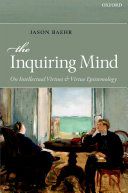
This book is the first systematic treatment of ‘responsibilist’ or character-based virtue epistemology, an approach to epistemology that focuses on intellectual character virtues like open-mindedness, fair-mindedness, inquisitiveness, and intellectual courage, rigor, and carefulness. Baehr distinguishes four main varieties of character-based virtue epistemology and develops a comprehensive assessment of each. For students and professional philosophers looking for an introduction to this important and exciting new field, Baehr provides a brief history of virtue epistemology, an overview of contemporary research in the field, and an introduction to the intellectual virtues that distinguishes them from intellectual talents, temperaments, faculties, and skills. For specialists in epistemology, the book offers the most in depth examination to date of the role that the concept of intellectual virtue should play in a philosophical account of knowledge. Baehr also argues for expanding the borders of epistemology proper to include a more immediate concern with intellectual virtues and their role in a good intellectual life. For virtue theorists and moral psychologists, Baehr defends a ‘personal worth’ account of the nature and structure of an intellectual virtue, situating this account vis-à-vis several related accounts of moral and intellectual virtue in the literature. The book also contains chapter-length analyses of two individual character virtues (open-mindedness and intellectual courage) and an appendix on the relation between intellectual virtues and moral virtues. Overall, the book is a comprehensive and groundbreaking treatment of an important topic in philosophy.
This book shows how Darwinian biology supports an Aristotelian view of ethics as rooted in human nature. Defending a conception of “Darwinian natural right” based on the claim that the good is the desirable, the author argues that there are at least twenty natural desires that are universal to all human societies because they are based in human biology. The satisfaction of these natural desires constitutes a universal standard for judging social practice as either fulfilling or frustrating human nature, although prudence is required in judging what is best for particular circumstances.The author studies the familial bonding of parents and children and the conjugal bonding of men and women as illustrating social behavior that conforms to Darwinian natural right. He also studies slavery and psychopathy as illustrating social behavior that contradicts Darwinian natural right. He argues as well that the natural moral sense does not require religious belief, although such belief can sometimes reinforce the dictates of nature.
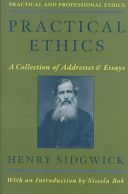
A classic work in the field of practical and professional ethics, this collection of nine essays by English philosopher and educator Henry Sidgwick (1838-1900) was first published in 1898 and forms a vital complement to Sidgwick’s major treatise on moral theory, The Methods of Ethics. Reissued here as Volume One in a new series sponsored by the Association for Practical and Professional Ethics, the book is composed chiefly of addresses to members of two ethical societies that Sidgwick helped to found in Cambridge and London in the 1880s. Clear, taut, and lively, these essays demonstrate the compassion and calm reasonableness that Sidgwick brought to all his writings. As Sidgwick explains in his opening essay, the societies he addressed aimed to allow academics, professionals, and others to pursue joint efforts at reaching “some results of value for practical guidance and life.” Sidgwick hoped that members might discuss such questions as when, if ever, public officials might be justified in lying or in breaking promises, whether scientists could legitimately inflict suffering on animals for research purposes, when nations might have just cause in going to war, and a score of other issues of ethics in public and private life still debated a century later. This valuable reissue returns Practical Ethics to its rightful place in Sidgwick’s oeuvre. Noted ethicist Sissela Bok provides a superb Introduction, ranging over the course of Sidgwick’s life and career and underscoring the relevance of Practical Ethics to contemporary debate. She writes: “Practical Ethics, the last book that Henry Sidgwick published before his death in 1900, contains the distillation of a lifetime of reflection on ethics and on what it would take for ethical debate to be ‘really of use in the solution of practical questions.'” This rich, engaging work is essential reading for all concerned with the relationship between ethical theory and. practice, and with the questions that have driven the study of professional ethics in recent years.
Challenging, with several powerful arguments, some of our deepest beliefs about rationality, morality, and personal identity, Parfit claims that we have a false view about our own nature. It is often rational to act against our own best interests, he argues, and most of us have moral views that are self-defeating. We often act wrongly, although we know there will be no one with serious grounds for complaint, and when we consider future generations it is very hard to avoid conclusions that most of us will find very disturbing.
ما از اخلاق چه انتظاری داریم؟ این سوال شاید تاحدودی برای عموم مردم و یا متخصصان این رشته قابل پاسخ باشد؛ اینکه خوب بودن را به ما بیاموزد و در تنظیم روابط فردی م...

جشن کتاب تهران به ایستگاه سی و یکم رسیده است. حال و احوال نشر کتاب خوب نیست و باید فرهنگدوستان را به خرید و هدیه دادن کتاب ترغیب نمود. خانه اخلاقپژوهان جوان ب...

بنیاد کتابهای اخلاق اسلامی عمدتا پالایش جان از آلودگیها و آراستن آن به زیباییها است. اندیشه محوری این قبیل کتابها آن است که انسان فعلی آنی نیست که باید باشد...

-
0 Comments