Notice: تابع WP_Block_Type_Registry::register به طورنادرست فراخوانی شد. نامهای نوع بلوک نباید حروف بزرگ داشته باشند. لطفاً برای اطلاعات بیشتر، اشکال زدایی در وردپرس را مشاهده کنید. (این پیام در نگارش 5.0.0 افزوده شده است.) in /home/ethicsho/public_html/wp-includes/functions.php on line 5313
Warning: Use of undefined constant TDC_PATH_LEGACY - assumed 'TDC_PATH_LEGACY' (this will throw an Error in a future version of PHP) in /home/ethicsho/public_html/wp-content/plugins/td-composer/td-composer.php on line 109
Warning: Use of undefined constant TDSP_THEME_PATH - assumed 'TDSP_THEME_PATH' (this will throw an Error in a future version of PHP) in /home/ethicsho/public_html/wp-content/plugins/td-composer/td-composer.php on line 113 بایگانیهای BJ1291 .F28 1991 - خانه اخلاق پژوهان جوان Notice: Trying to access array offset on value of type bool in /home/ethicsho/public_html/wp-content/plugins/wp-ulike/inc/general-functions.php on line 807
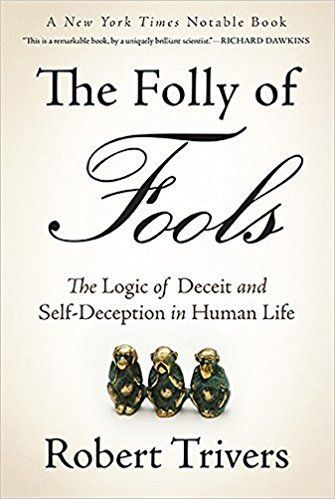
Whether it’s in a cockpit at takeoff or the planning of an offensive war, a romantic relationship or a dispute at the office, there are many opportunities to lie and self-deceive?but deceit and self-deception carry the costs of being alienated from reality and can lead to disaster. So why does deception play such a prominent role in our everyday lives? In short, why do we deceive? In his bold new work, prominent biological theorist Robert Trivers unflinchingly argues that self-deception evolved in the service of deceit?the better to fool others. We do it for biological reasons?in order to help us survive and procreate. From viruses mimicking host behavior to humans misremembering (sometimes intentionally) the details of a quarrel, science has proven that the deceptive one can always outwit the masses. But we undertake this deception at our own peril. Trivers has written an ambitious investigation into the evolutionary logic of lying and the costs of leaving it unchecked.
More Moral Than God takes a unique look at the psychological motivations behind religious violence. Drawing from psychology, philosophy, and theology, Charlene Burns illuminates the interplay between our images of God, our individual egos, and our collective selves, and brings to light the degree to which each of us can and must take responsibility for the religious landscape. In addition to her own analysis, Burns provides a brief history of religious violence and addresses other possible motivations, including politics, economics, globalization, family dynamics and more.
Philips defends a middle ground between the view that there is a set of standards binding on rational beings as such (universalism) and the view that differences in morals reduce ultimately to matters of taste (skepticism). He begins with a sustained critique of universalist moral theories and of certain familiar approaches to concrete moral questions that presuppose them (most appeals to intuitions, respect-for-persons moralities, and versions of contractarianism and wide reflective equilibrium). He goes on to criticize major recent attempts to develop nonuniversalist alternatives to skepticism, arguing that they rely on excessively abstract and philosophically indefensible preference satisfaction theories of the good. According to Philips’s positive alternative, ethics as social artifact, moral codes are social instruments and they are justified to the extent that they effectively do their jobs, which is to promote reasonably valued ways of life. Accordingly, he argues that different standards may be justified for different societies, depending on their circumstances, traditions, and current institutions. His account of a reasonably valued way of life depends on a “falsifiability” approach to reasonable values according to which existing values are treated as reasonable unless good arguments can be made against them. He describes many strategies for making such arguments, the upshot being an approach to the justification of moral standards that is sufficiently “grounded” to settle many controversies and to mark off areas in which rational persons are free to disagree. It also explains why the weight of a moral consideration may vary reasonably from one “domain” of social life toanother. An original approach to the uses and limits of reason in ethics, Between Universalism and Skepticism provides a theoretical basis for approaching actual moral controversies and questions of applied and professional ethics in a systematic way.
This book presents a critical analysis of the debate at the religious, legal and political level sparked off by the introduction of new biomedical technologies (cloning, genetics, organ transplants, IVF, etc.) in Muslim countries. It compares the positions of “classic” Muslim law and contemporary religious authorities; laws in Muslim countries; the attitudes and concrete behaviour of populations, families and individuals, as well as the regulations of medical associations, bioethics committees etc..The result is a mosaic of positions which are often different (including from the point of view of ethics) but all in pursuit of legitimisation according to the Koran and the Shari’a. The work has an interdisciplinary approach, drawing on law, sociology, anthropology, politics and the history of science. For this reason it will be of interest to scholars and operators in a wide variety of disciplines and fields.
ما از اخلاق چه انتظاری داریم؟ این سوال شاید تاحدودی برای عموم مردم و یا متخصصان این رشته قابل پاسخ باشد؛ اینکه خوب بودن را به ما بیاموزد و در تنظیم روابط فردی م...

جشن کتاب تهران به ایستگاه سی و یکم رسیده است. حال و احوال نشر کتاب خوب نیست و باید فرهنگدوستان را به خرید و هدیه دادن کتاب ترغیب نمود. خانه اخلاقپژوهان جوان ب...

بنیاد کتابهای اخلاق اسلامی عمدتا پالایش جان از آلودگیها و آراستن آن به زیباییها است. اندیشه محوری این قبیل کتابها آن است که انسان فعلی آنی نیست که باید باشد...

-
0 Comments