Notice: تابع WP_Block_Type_Registry::register به طورنادرست فراخوانی شد. نامهای نوع بلوک نباید حروف بزرگ داشته باشند. لطفاً برای اطلاعات بیشتر، اشکال زدایی در وردپرس را مشاهده کنید. (این پیام در نگارش 5.0.0 افزوده شده است.) in /home/ethicsho/public_html/wp-includes/functions.php on line 5313
Warning: Use of undefined constant TDC_PATH_LEGACY - assumed 'TDC_PATH_LEGACY' (this will throw an Error in a future version of PHP) in /home/ethicsho/public_html/wp-content/plugins/td-composer/td-composer.php on line 109
Warning: Use of undefined constant TDSP_THEME_PATH - assumed 'TDSP_THEME_PATH' (this will throw an Error in a future version of PHP) in /home/ethicsho/public_html/wp-content/plugins/td-composer/td-composer.php on line 113 بایگانیهای BJ1278.F45 .P365 2002 - خانه اخلاق پژوهان جوان Notice: Trying to access array offset on value of type bool in /home/ethicsho/public_html/wp-content/plugins/wp-ulike/inc/general-functions.php on line 807
D. D. Raphael provides a critical account of the moral philosophy of Adam Smith, presented in his first book, The Theory of Moral Sentiments. Whilst it does not have the same prominence in its field as his work on economics, The Wealth of Nations, Smith’s writing on ethics is of continuing importance and interest today, especially for its theory of conscience. Smith sees the origin of conscience in the sympathetic and antipathetic feelings of spectators. As spectators of the actions of other people, we can imagine how we would feel in their situation. If we would share their motives, we approve of their action. If not, we disapprove. When we ourselves take an action, we know from experience what spectators would feel, approval or disapproval. That knowledge forms conscience, an imagined impartial spectator who tells us whether an action is right or wrong. In describing the content of moral judgment, Smith is much influenced by Stoic ethics, with an emphasis on self-command, but he voices criticism as well as praise. His own position is a combination of Stoic and Christian values. There is a substantial difference between the first five editions of the Moral Sentiments and the sixth. Failure to take account of this has led some commentators to mistaken views about the supposed youthful idealism of the Moral Sentiments as contrasted with the mature realism of The Wealth of Nations. A further source of error has been the supposition that Smith treats sympathy as the motive of moral action, as contrasted with the supposedly universal motive of self-interest in The Wealth of Nations.
This book shows through accessible argument and numerous examples how understanding moral philosophy can improve economic analysis, how moral philosophy can benefit from economists’ analytical tools, and how economic analysis and moral philosophy together can inform public policy. Part I explores rationality and its connections to morality. It argues that in defending their model of rationality, mainstream economists implicitly espouse contestable moral principles. Part II concerns welfare, utilitarianism and standard welfare economics, while Part III considers important moral notions that are left out of standard welfare economics, such as freedom, rights, equality, and justice. Part III also emphasizes the variety of moral considerations that are relevant to evaluating policies. Part IV then introduces technical work in social choice theory and game theory that is guided by ethical concepts and relevant to moral theorizing. Chapters include recommended readings and the book includes a glossary of relevant terms.
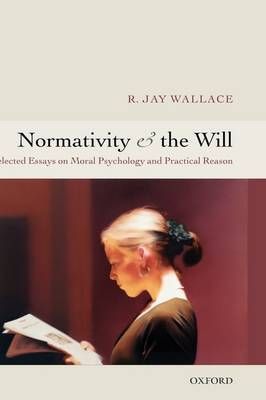
Normativity and the Will collects fourteen important papers on moral psychology and practical reason by R. Jay Wallace, one of the leading philosophers currently working in these areas. The papers explore the interpenetration of normative and psychological issues in a series of debates that lie at the heart of moral philosophy. Themes that are addressed include reason, desire, and the will; responsibility, identification, and emotion; and the relation between morality and other normative domains. Wallace’s treatments of these topics are at once sophisticated and engaging. Taken together, they constitute an advertisement for a distinctive way of pursuing issues in moral psychology and the theory of practical reason, and they articulate and defend a unified framework for thinking about those issues. The volume also features a helpful new introduction.
In Kant’s Rational Theology, Allen W. Wood explores Kant’s views on the concept of God and on the attempt to demonstrate God’s existence. “We cannot have a full or balanced understanding of Kant’s thought on religious subjects,” he writes, “as long as we fail to take account of his reflections, often exceedingly abstract, obscure, and subtle, concerning the rational origin, content, and status of our concept of a supreme being.”
ما از اخلاق چه انتظاری داریم؟ این سوال شاید تاحدودی برای عموم مردم و یا متخصصان این رشته قابل پاسخ باشد؛ اینکه خوب بودن را به ما بیاموزد و در تنظیم روابط فردی م...

جشن کتاب تهران به ایستگاه سی و یکم رسیده است. حال و احوال نشر کتاب خوب نیست و باید فرهنگدوستان را به خرید و هدیه دادن کتاب ترغیب نمود. خانه اخلاقپژوهان جوان ب...

بنیاد کتابهای اخلاق اسلامی عمدتا پالایش جان از آلودگیها و آراستن آن به زیباییها است. اندیشه محوری این قبیل کتابها آن است که انسان فعلی آنی نیست که باید باشد...

-
0 Comments