Notice: تابع WP_Block_Type_Registry::register به طورنادرست فراخوانی شد. نامهای نوع بلوک نباید حروف بزرگ داشته باشند. لطفاً برای اطلاعات بیشتر، اشکال زدایی در وردپرس را مشاهده کنید. (این پیام در نگارش 5.0.0 افزوده شده است.) in /home/ethicsho/public_html/wp-includes/functions.php on line 5313
Warning: Use of undefined constant TDC_PATH_LEGACY - assumed 'TDC_PATH_LEGACY' (this will throw an Error in a future version of PHP) in /home/ethicsho/public_html/wp-content/plugins/td-composer/td-composer.php on line 109
Warning: Use of undefined constant TDSP_THEME_PATH - assumed 'TDSP_THEME_PATH' (this will throw an Error in a future version of PHP) in /home/ethicsho/public_html/wp-content/plugins/td-composer/td-composer.php on line 113 بایگانیهای BJ1249 .N39 1998 - خانه اخلاق پژوهان جوان Notice: Trying to access array offset on value of type bool in /home/ethicsho/public_html/wp-content/plugins/wp-ulike/inc/general-functions.php on line 807
If globalization is to be a benefit and not a burden to humankind, it must be governed by global institutions that are perceived by all people to be democratic and just. But before we can create such institutions, we must imagine them, and that requires a rethinking and extension of normative political theory. Global Justice and Transnational Politics encourages and advances that work.The book’s first part, “Weak Universalism,” contains essays by Amartya Sen and Leif Wenar that offer constructive developments of John Rawls’s statement of the principles a liberal polity might reasonably propose to govern its relations with other peoples. The second part, “Strong Universalism and Transnational Commitments,” contains essays by Jurgen Habermas, David Luban, Martha Nussbaum, and Thomas Pogge examining the normative sources and possible types of cross-border commitments. In the third part, “Transnational Politics and National Identities,” Habermas discusses the possibility of a democratic political order developing within the institutional framework of the European Union; Thomas McCarthy draws on Kant to show how cosmopolitanism might be reconciled with the legacy of nationalism; and Craig Calhoun tries to retrieve a positive aspect of the tradition of nationalism, namely that it provides large populations with a powerful way of imagining political community across space and time.
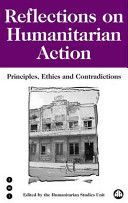
Humanitarian action has become a subject for serious debate in light of recent conflicts across the globe. The debacle in Somalia, the policy of intervention in Bosnia, and domestic conflicts in the West over intervention in Kosovo have given rise to many complex questions surrounding humanitarian action. The contributors to this volume provide a systematic overview of the issues involved from a wide range of viewpoints.The book examines the central problems of humanitarian action: the judicial question and the right to humanitarian assistance; the ethical framework of humanitarian action; the challenge of coordination of all the actors involved in humanitarian action; the recipients in the aid chain; the link between aid, development and emergency action; the role of the media; and a practical evaluation of Operation Lifeline Sudan.
ما از اخلاق چه انتظاری داریم؟ این سوال شاید تاحدودی برای عموم مردم و یا متخصصان این رشته قابل پاسخ باشد؛ اینکه خوب بودن را به ما بیاموزد و در تنظیم روابط فردی م...

جشن کتاب تهران به ایستگاه سی و یکم رسیده است. حال و احوال نشر کتاب خوب نیست و باید فرهنگدوستان را به خرید و هدیه دادن کتاب ترغیب نمود. خانه اخلاقپژوهان جوان ب...

بنیاد کتابهای اخلاق اسلامی عمدتا پالایش جان از آلودگیها و آراستن آن به زیباییها است. اندیشه محوری این قبیل کتابها آن است که انسان فعلی آنی نیست که باید باشد...

-
0 Comments