Notice: تابع WP_Block_Type_Registry::register به طورنادرست فراخوانی شد. نامهای نوع بلوک نباید حروف بزرگ داشته باشند. لطفاً برای اطلاعات بیشتر، اشکال زدایی در وردپرس را مشاهده کنید. (این پیام در نگارش 5.0.0 افزوده شده است.) in /home/ethicsho/public_html/wp-includes/functions.php on line 5313
Warning: Use of undefined constant TDC_PATH_LEGACY - assumed 'TDC_PATH_LEGACY' (this will throw an Error in a future version of PHP) in /home/ethicsho/public_html/wp-content/plugins/td-composer/td-composer.php on line 109
Warning: Use of undefined constant TDSP_THEME_PATH - assumed 'TDSP_THEME_PATH' (this will throw an Error in a future version of PHP) in /home/ethicsho/public_html/wp-content/plugins/td-composer/td-composer.php on line 113 بایگانیهای BJ1188 - خانه اخلاق پژوهان جوان Notice: Trying to access array offset on value of type bool in /home/ethicsho/public_html/wp-content/plugins/wp-ulike/inc/general-functions.php on line 807
“The Essays is commonly considered Kames’s most important philosophical work. In the first part, he sets forth the principles and foundations of morality and justice, attacking Hume’s moral skepticism and addressing the controversial issue of the freedom of human will. In the second part, Kames focuses on questions of metaphysics and epistemology to offer a natural theology in which the authority of the external senses is an important basis for belief in the Deity.” “The text of this volume is based on the third edition of 1779, while the appendix presents substantial variant readings in the first and second editions.”–BOOK JACKET.
People act for reasons. That is how we understand ourselves. But what is it to act for a reason? This is what Fred Schueler investigates. He rejects the dominant view that the beliefs and desires that constitute our reasons for acting simply cause us to act as we do, and argues instead for a view centered on practical deliberation-our ability to evaluate the reasons we accept. Schueler’s account of “reasons explanations: emphasizes the relation between reasons and purposes, and the fact that the reasons for an action are not always good reasons.
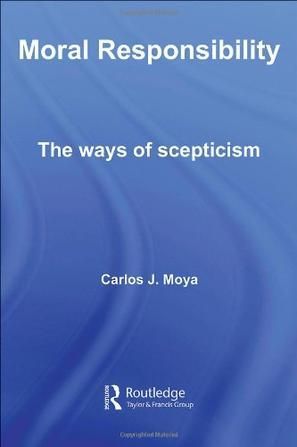
We are strongly inclined to believe in moral responsibility, that some human agents truly deserve moral praise or blame for some of their actions. However, recent philosophical discussion has put this natural belief in the reality of moral responsibility under suspicion. There are important reasons to think that moral responsibility is incompatible with both determinism and indeterminism, possibly rendering moral responsibility an impossibility. This book lays out the major arguments for skepticism about moral responsibility and subjects them to sustained and penetrating critical analysis. Moral Responsibility lays out the intricate dialectic involved in these issues in a helpful and accessible way. The book goes on to suggest a way in which skepticism can be avoided, arguing that an excessive pre-eminence given to the will might lie at the root of skepticism of moral responsibility. Carlos Moya offers an alternative to skepticism, showing how a cognitive approach to moral responsibility whichstresses the importance of belief would rescue our natural and centrally important faith in the reality of moral responsibility.
This stimulating and wide-ranging book mounts a profound enquiry into some of the most pressing questions of our age, by examining the relationship between biological science and Christianity. The history of biological discovery is explored from the point of view of a leading philosopher and ethicist. What effect should modern biological theory and practice have on Christian understanding of ethics? How much of that theory and practice should Christians endorse? To what extent can “nature” set our standards? Professor Clark takes a reasoned look at biological theory since Darwin and argues that an orthodox Christian philosophy is better able to accommodate the truth of such theory than is the sort of progressive, meliorist interpretation of Christian doctrine that is usually offered as the properly “modern” option.
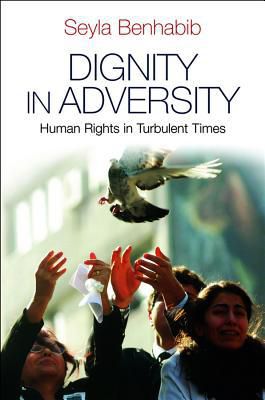
The language of human rights has become the public vocabulary of our contemporary world. Ironically, as the political influence of human rights has grown, their philosophical justification has become ever more controversial. Building on a theory of discourse ethics and communicative rationality, this book addresses the politics and philosophy of human rights against the background of the broader social transformations that are shaping the modern world. Rejecting the reduction of international human rights to the Trojan horse of a neo-liberal empire’s bid for world power, as well as the conservative objections to legal cosmopolitanism as encroachments upon democratic sovereignty, Benhabib develops two key concepts to move beyond these false antitheses. International human rights norms need contextualization in specific polities through processes of what she calls ‘democratic iterations.’ Furthermore, such norms have a ‘jurisgenerative power, ‘ in that they enable new actors to enter fields of social and political contestation; they promote new vocabularies for public claim-making and anticipate a justice to come. — Book Description.
ما از اخلاق چه انتظاری داریم؟ این سوال شاید تاحدودی برای عموم مردم و یا متخصصان این رشته قابل پاسخ باشد؛ اینکه خوب بودن را به ما بیاموزد و در تنظیم روابط فردی م...

جشن کتاب تهران به ایستگاه سی و یکم رسیده است. حال و احوال نشر کتاب خوب نیست و باید فرهنگدوستان را به خرید و هدیه دادن کتاب ترغیب نمود. خانه اخلاقپژوهان جوان ب...

بنیاد کتابهای اخلاق اسلامی عمدتا پالایش جان از آلودگیها و آراستن آن به زیباییها است. اندیشه محوری این قبیل کتابها آن است که انسان فعلی آنی نیست که باید باشد...

-
0 Comments