Notice: تابع WP_Block_Type_Registry::register به طورنادرست فراخوانی شد. نامهای نوع بلوک نباید حروف بزرگ داشته باشند. لطفاً برای اطلاعات بیشتر، اشکال زدایی در وردپرس را مشاهده کنید. (این پیام در نگارش 5.0.0 افزوده شده است.) in /home/ethicsho/public_html/wp-includes/functions.php on line 5313
Warning: Use of undefined constant TDC_PATH_LEGACY - assumed 'TDC_PATH_LEGACY' (this will throw an Error in a future version of PHP) in /home/ethicsho/public_html/wp-content/plugins/td-composer/td-composer.php on line 109
Warning: Use of undefined constant TDSP_THEME_PATH - assumed 'TDSP_THEME_PATH' (this will throw an Error in a future version of PHP) in /home/ethicsho/public_html/wp-content/plugins/td-composer/td-composer.php on line 113 بایگانیهای BJ1188 .L57 1978 - خانه اخلاق پژوهان جوان Notice: Trying to access array offset on value of type bool in /home/ethicsho/public_html/wp-content/plugins/wp-ulike/inc/general-functions.php on line 807
“Human Nature After Darwin” is an original investigation of the implications of Darwinism for our understanding of ourselves and our situation. It casts new light on current Darwinian controversies, and in doing so provides an introduction to philosophical reasoning and a range of philosophical problems. Janet Radcliffe Richards claims that many current battles about Darwinism, in particular about evolutionary psychology and religion, are based on mistaken assumptions about the implications of the rival views. Her analysis of these implications provides a much-needed guide to the fundamentals of Darwinism and the so-called Darwin-wars, as well as providing a set of philosophical techniques relevant to wide areas of moral and political debate. It also raises philosophical problems of knowledge and certainly, free will and responsibility, altruism, the status of ethics, and the relevance of Darwinism to questions of ethics, politics and religion. The lucid presentation makes the book an ideal introduction to both philosophy and Darwinism, as well as a substantive contribution to topics of intense current controversy. It will be of interest to students of philosophy, science and the social sciences, and critical thinking.
“This collection is devoted to questions in meta-ethics and moral psychology arising from the work of David Hume. The collection focuses on questions arising from Humes views on reason, motivation and virtue including new essays from notable Hume scholars
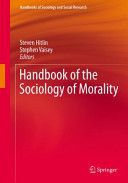
Human beings necessarily understand their social worlds in moral terms, orienting their lives, relationships, and activities around socially-produced notions of right and wrong.Morality is sociologically understood as more than simply helping or harming others; it encompasses any way that individuals form understandings of what behaviors are better than others, what goals are most laudable, and what “proper” people believe, feel, and do. Morality involves the explicit and implicit sets of rules and shared understandings that keep human social groups intact. Morality includes both the “shoulds” and “should nots” of human activity, its proactive and inhibitive elements.At one time, sociologists were centrally concerned with morality, issues like social cohesion, values, the goals and norms that structure society, and the ways individuals get socialized to reproduce those concerns. In the last half-century, however, explicit interest in these topics has waned, and modern sociology has become uninterested in these matters and morality has become marginalized within the discipline.But a resurgence in the topic is happening in related disciplines – psychology, neurology, philosophy, and anthropology – and in the wider national discourse. Sociology has much to offer, but is not fully engaged in this conversation. Many scholars work on areas that would fall under the umbrella of a sociology of morality but do not self-identify in such a manner, nor orient their efforts toward conceptualizing what we know, and should know, along these dimensions.The Handbook of the Sociology of Morality fills a niche within sociology making explicit the shared concerns of scholars across the disciplines as they relate to an often-overlooked dimension of human social life. It is unique in social science as it would be the first systematic compilation of the wider social structural, cultural, cross-national, organizational, and interactional dimension of human moral (understood broadly) thought, feeling, and behavior.
ما از اخلاق چه انتظاری داریم؟ این سوال شاید تاحدودی برای عموم مردم و یا متخصصان این رشته قابل پاسخ باشد؛ اینکه خوب بودن را به ما بیاموزد و در تنظیم روابط فردی م...

جشن کتاب تهران به ایستگاه سی و یکم رسیده است. حال و احوال نشر کتاب خوب نیست و باید فرهنگدوستان را به خرید و هدیه دادن کتاب ترغیب نمود. خانه اخلاقپژوهان جوان ب...

بنیاد کتابهای اخلاق اسلامی عمدتا پالایش جان از آلودگیها و آراستن آن به زیباییها است. اندیشه محوری این قبیل کتابها آن است که انسان فعلی آنی نیست که باید باشد...

-
0 Comments