Notice: تابع WP_Block_Type_Registry::register به طورنادرست فراخوانی شد. نامهای نوع بلوک نباید حروف بزرگ داشته باشند. لطفاً برای اطلاعات بیشتر، اشکال زدایی در وردپرس را مشاهده کنید. (این پیام در نگارش 5.0.0 افزوده شده است.) in /home/ethicsho/public_html/wp-includes/functions.php on line 5313
Warning: Use of undefined constant TDC_PATH_LEGACY - assumed 'TDC_PATH_LEGACY' (this will throw an Error in a future version of PHP) in /home/ethicsho/public_html/wp-content/plugins/td-composer/td-composer.php on line 109
Warning: Use of undefined constant TDSP_THEME_PATH - assumed 'TDSP_THEME_PATH' (this will throw an Error in a future version of PHP) in /home/ethicsho/public_html/wp-content/plugins/td-composer/td-composer.php on line 113 بایگانیهای BJ1031 .S625 2007 - خانه اخلاق پژوهان جوان Notice: Trying to access array offset on value of type bool in /home/ethicsho/public_html/wp-content/plugins/wp-ulike/inc/general-functions.php on line 807
This lecture is MacIntyre’s most explicit defense of his approach to Thomistic metaphysics. This lecture follows MacIntyre’s argument in After Virtue that modern philosophy has very literally lost its way, and the problems it faces are insoluble. The difficulties are twofold, and stem from the Cartesian turn to the self in the XVith century. Modern philosophy cannot reestablish contact with the outside world when our starting point is self-knowledge, and modern philosophy also cannot accept that any principle could be ‘first’ in any absolute sense of the word, because final causality has been rejected. MacIntyre claims that Thomism does not suffer these defects, but he cautions against a premature victory, because Thomism has been decisively rejected by modern philosophy and modern science, so that there is no chance of effective dialogue between Thomism and other traditions. The very vocabulary of Thomism is a stumbling block. However, modern philosophy has not been able to completely eliminate the Aristotelian roots of all philosophy and science, and so keeps returning to themes that it cannot adequately address. Thus MacIntyre proposes to use the tools of modern philosophies, such as the genealogical narrative, to help reconnect modern philosophy and Thomism. A historical approach might make the rejection, and the reasons for it, evident, and allow fruitful dialogue by allowing for the fruits of modern philosophy to be discussed in a context that will allow them to finally flourish. Essentially, the goal is to enable contemporary philosophy to become more itself by freeing it from the tension created by the premises that cast doubt upon the philosophical enterprise.
Distributive justice in its modern sense calls on the state to guarantee that everyone is supplied with a certain level of material means. Samuel Fleischacker argues that guaranteeing aid to the poor is a modern idea, developed only in the last two centuries. Earlier notions of justice, including Aristotle’s, were concerned with the distribution of political office, not of property. It was only in the eighteenth century, in the work of philosophers such as Adam Smith and Immanuel Kant, that justice began to be applied to the problem of poverty. To attribute a longer pedigree to distributive justice is to fail to distinguish between justice and charity. Fleischacker explains how confusing these principles has created misconceptions about the historical development of the welfare state. Socialists, for instance, often claim that modern economics obliterated ancient ideals of equality and social justice. Free-market promoters agree but applaud the apparent triumph of skepticism and social-scientific rigor. Both interpretations overlook the gradual changes in thinking that yielded our current assumption that justice calls for everyone, if possible, to be lifted out of poverty. By examining major writings in ancient, medieval, and modern political philosophy, Fleischacker shows how we arrived at the contemporary meaning of distributive justice.
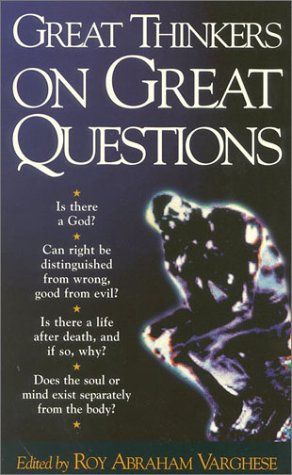
Great minds of the 20th century, including such distinguished names asichard Swinburne, Alvin Platinga and Keith Ward, offers answers to some ofife’s key questions.
ما از اخلاق چه انتظاری داریم؟ این سوال شاید تاحدودی برای عموم مردم و یا متخصصان این رشته قابل پاسخ باشد؛ اینکه خوب بودن را به ما بیاموزد و در تنظیم روابط فردی م...

جشن کتاب تهران به ایستگاه سی و یکم رسیده است. حال و احوال نشر کتاب خوب نیست و باید فرهنگدوستان را به خرید و هدیه دادن کتاب ترغیب نمود. خانه اخلاقپژوهان جوان ب...

بنیاد کتابهای اخلاق اسلامی عمدتا پالایش جان از آلودگیها و آراستن آن به زیباییها است. اندیشه محوری این قبیل کتابها آن است که انسان فعلی آنی نیست که باید باشد...

-
0 Comments