Notice: تابع WP_Block_Type_Registry::register به طورنادرست فراخوانی شد. نامهای نوع بلوک نباید حروف بزرگ داشته باشند. لطفاً برای اطلاعات بیشتر، اشکال زدایی در وردپرس را مشاهده کنید. (این پیام در نگارش 5.0.0 افزوده شده است.) in /home/ethicsho/public_html/wp-includes/functions.php on line 5313
Warning: Use of undefined constant TDC_PATH_LEGACY - assumed 'TDC_PATH_LEGACY' (this will throw an Error in a future version of PHP) in /home/ethicsho/public_html/wp-content/plugins/td-composer/td-composer.php on line 109
Warning: Use of undefined constant TDSP_THEME_PATH - assumed 'TDSP_THEME_PATH' (this will throw an Error in a future version of PHP) in /home/ethicsho/public_html/wp-content/plugins/td-composer/td-composer.php on line 113 بایگانیهای BJ1031 .C37 1995 - خانه اخلاق پژوهان جوان Notice: Trying to access array offset on value of type bool in /home/ethicsho/public_html/wp-content/plugins/wp-ulike/inc/general-functions.php on line 807
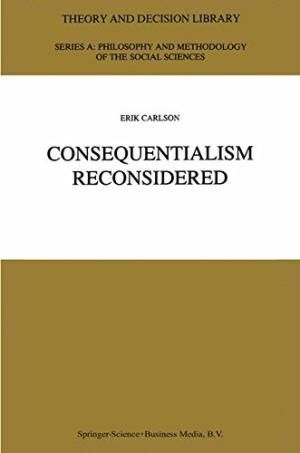
The debate between impartialists and their critics has dominated both moral and political philosophy for over a decade. Characteristically, impartialists argue that any sensible form of impartialism can accommodate the partial concerns we have for others. By contrast, partialists deny that this is so. They see the division as one which runs exceedingly deep and argue that, at the limit, impartialist thinking requires that we marginalise those concerns and commitments that make our lives meaningful. This book attempts to show both that the dispute between impartialists and their critics runs very deep, and that it can nonetheless be resolved. The resolution begins by asking how impartialist political philosophy can defend the priority of justice when it conflicts with people’s commitments to their conceptions of the good. It is argued that priority can only defended if political impartialism has a moral foundation, and that moral foundation must not be a foundation in the ideal of equality (as is often thought), but a foundation in the partial concerns we have for others. In short, impartialist moral philosophy must take our partial concerns as central if it is to gain allegiance. However, if it does take our partial concerns as central, then it can generate a defence of political impartialism which shows why justice must take priority, but which also acknowledges that pluralism about the good is permanent.
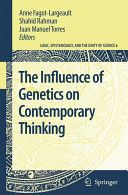
This volume reflects on the effects of recent discoveries in genetics on a broad range of scientific fields. In addition to neuroscience, evolutionary biology, anthropology and medicine, contributors analyze the effects of genetics on theories of health, law, epistemology and philosophy of biology. Social and moral concerns about the relationship between genetics, society and the individual also figure prominently. Genetic discoveries fuel central contemporary public policy debates concerning, for example, human cloning, equitable access to healthcare or the role of genetics in medicine. Perhaps more fundamentally, advances in genetics are altering our perception of human life and death.An interview with François Jacob by Anne Fagot-Largeault opens the volume. In this interview, Jacob, who shared a Nobel Prize with André Lwoff and Jacques Monod for their discoveries concerning genetic control of enzyme and virus synthesis, addresses many of the central methodological epistemological and ethical questions covered in the volume. The dynamic interdisciplinary character of this volume makes it relevant to scholars from many disciplines, from biology, philosophy and the social sciences.
Psychology and ‘Human Nature’ problematizes what psychology usually takes for granted – the meaning of the psyche or ‘human nature’. Peter Ashworth provides a coherent account of many of the major schools of thought in psychology and its related disciplines, including: sociobiology and evolutionary psychology, psychoanalysis, cognitive psychology, radical behaviourism, existentialism, discursive psychology and postmodernism. For each approach he considers the claims or assumptions being made about ‘human nature’, especially regarding issues of consciousness, the self, the body, other people and the physical world.Psychology and ‘Human Nature’ will be essential reading for all students of psychology.Series Details; The Psychology Focus Series provides students with a new focus on key topic areas in psychology.Each short book: * presents clear, in-depth coverage of a discrete area with many applied examples* assumes no prior knowlede of psychology* has been written by an experienced teacher* has chapter summaries, annotated further reading and a glossary of key terms
ما از اخلاق چه انتظاری داریم؟ این سوال شاید تاحدودی برای عموم مردم و یا متخصصان این رشته قابل پاسخ باشد؛ اینکه خوب بودن را به ما بیاموزد و در تنظیم روابط فردی م...

جشن کتاب تهران به ایستگاه سی و یکم رسیده است. حال و احوال نشر کتاب خوب نیست و باید فرهنگدوستان را به خرید و هدیه دادن کتاب ترغیب نمود. خانه اخلاقپژوهان جوان ب...

بنیاد کتابهای اخلاق اسلامی عمدتا پالایش جان از آلودگیها و آراستن آن به زیباییها است. اندیشه محوری این قبیل کتابها آن است که انسان فعلی آنی نیست که باید باشد...

-
0 Comments