Notice: تابع WP_Block_Type_Registry::register به طورنادرست فراخوانی شد. نامهای نوع بلوک نباید حروف بزرگ داشته باشند. لطفاً برای اطلاعات بیشتر، اشکال زدایی در وردپرس را مشاهده کنید. (این پیام در نگارش 5.0.0 افزوده شده است.) in /home/ethicsho/public_html/wp-includes/functions.php on line 5313
Warning: Use of undefined constant TDC_PATH_LEGACY - assumed 'TDC_PATH_LEGACY' (this will throw an Error in a future version of PHP) in /home/ethicsho/public_html/wp-content/plugins/td-composer/td-composer.php on line 109
Warning: Use of undefined constant TDSP_THEME_PATH - assumed 'TDSP_THEME_PATH' (this will throw an Error in a future version of PHP) in /home/ethicsho/public_html/wp-content/plugins/td-composer/td-composer.php on line 113 بایگانیهای BJ1025 .C66 2007 - خانه اخلاق پژوهان جوان Notice: Trying to access array offset on value of type bool in /home/ethicsho/public_html/wp-content/plugins/wp-ulike/inc/general-functions.php on line 807
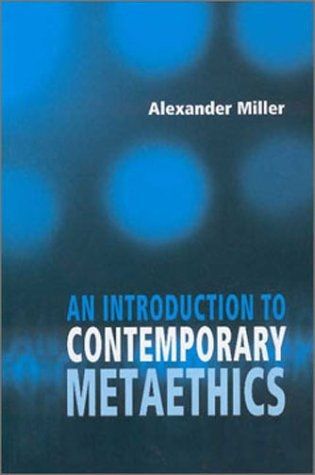
This introduction provides a highly readable critical overview of the main arguments and themes in twentieth-century and contemporary metaethics. It traces the development of contemporary debates in metaethics from their beginnings in the work of G. E. Moore up to the most recent arguments between naturalism and non-naturalism, cognitivism and non-cognitivism. * A highly readable critical overview of the main arguments and themes in twentieth century and contemporary metaethics. * Asks: Are there moral facts? Is there such a thing as moral truth? Is moral knowledge possible? * Traces the development of contemporary debates in metaethics from their beginnings in the work of G. E. Moore up to the most recent debates between naturalism and non-naturalism, cognitivism and noncognitivism. * Provides for the first time a critical survey of famous figures in twentieth century metaethics such as Moore, Ayer and Mackie together with in-depth discussions of contemporary philosophers such as Blackburn, Gibbard, Wright, Harman, Railton, Sturgeon, McDowell and Wiggins.
In 1942, J. Robert Oppenheimer accepted the leadership of the Manhattan Project at the Los Alamos Laboratory, which produced the first atomic bomb three years later. This book examines the ethics of Oppenheimer’s choice to take that job and our judgment of his acceptance, leading to the larger question of the meaning of moral judgment itself. Through an analysis of Oppenheimer’s choice, Richard Mason explores questions of responsibility, the justification for the pursuit of scientific curiosity, the purity of research, and many other topics of interest in scientific ethics. This unique look at one man’s choice brings out the necessary step from personal detail to abstract reflection–“it may be easy to praise or condemn Oppenheimer’s choice, but less easy to justify our praise or condemnation.
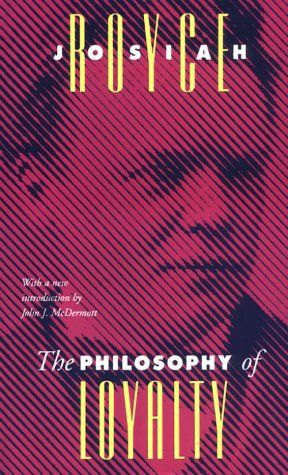
Josiah Royce (1855-1916), one of the outstanding classical American philosophers, is regarded by many as the foremost American idealist. A transitional book in the development of Royce’s thought, The Philosophy of Loyalty is a key to understanding his influence on the development of pragmatism. Royce’s basic argument is clear. Individual wills are a given, and social training is a natural aspect of community. But the two are not fully compatible, and conflicts naturally emerge. Loyalty to a cause unites many individuals into a community, but fanatical loyalty to causes often has inimical results. Long out of print and never before available in paperback, The Philosophy of Loyalty has many beneficial implications for understanding contemporary social passions and outlooks, especially for our own fragmented American culture. As Royce himself asserted nearly ninety years ago, in the preface of this book, “I am writing…not merely and not mainly for philosophers, but for all those who love…ideals, and also for those who love…their country – a country so ripe at present for idealism, and so confused, nevertheless, by the vastness and the complication of its social and political problems.” Royce speaks to these continuing concerns in a voice that is perceptive, learned, and sensitive to the human situation, and he offers powerful conceptual tools for our own troubled times.
Awakening Warrior argues for a revolution in the ethics of warfare for the American War Machine – those political and military institutions that engage the world with physical force. Timothy L. Challans focuses on the systemic, institutional level of morality rather than bemoaning the moral shortcomings of individuals. He asks: What are the limits of individual moral agency? What kind of responsibility do individuals have when considering institutional moral error? How is it that neutral or benign moral actions performed by individuals can have such catastrophic morally negative effects from a systemic perspective? Drawing upon and extending the ethical theories of Kant, Dewey, and Rawls, Challans makes the case for an original set of moral principles to guide ethical action on the battlefield.
ما از اخلاق چه انتظاری داریم؟ این سوال شاید تاحدودی برای عموم مردم و یا متخصصان این رشته قابل پاسخ باشد؛ اینکه خوب بودن را به ما بیاموزد و در تنظیم روابط فردی م...

جشن کتاب تهران به ایستگاه سی و یکم رسیده است. حال و احوال نشر کتاب خوب نیست و باید فرهنگدوستان را به خرید و هدیه دادن کتاب ترغیب نمود. خانه اخلاقپژوهان جوان ب...

بنیاد کتابهای اخلاق اسلامی عمدتا پالایش جان از آلودگیها و آراستن آن به زیباییها است. اندیشه محوری این قبیل کتابها آن است که انسان فعلی آنی نیست که باید باشد...

-
0 Comments