Notice: تابع WP_Block_Type_Registry::register به طورنادرست فراخوانی شد. نامهای نوع بلوک نباید حروف بزرگ داشته باشند. لطفاً برای اطلاعات بیشتر، اشکال زدایی در وردپرس را مشاهده کنید. (این پیام در نگارش 5.0.0 افزوده شده است.) in /home/ethicsho/public_html/wp-includes/functions.php on line 5313
Warning: Use of undefined constant TDC_PATH_LEGACY - assumed 'TDC_PATH_LEGACY' (this will throw an Error in a future version of PHP) in /home/ethicsho/public_html/wp-content/plugins/td-composer/td-composer.php on line 109
Warning: Use of undefined constant TDSP_THEME_PATH - assumed 'TDSP_THEME_PATH' (this will throw an Error in a future version of PHP) in /home/ethicsho/public_html/wp-content/plugins/td-composer/td-composer.php on line 113 بایگانیهای BJ1012 .W447 2001 - خانه اخلاق پژوهان جوان Notice: Trying to access array offset on value of type bool in /home/ethicsho/public_html/wp-content/plugins/wp-ulike/inc/general-functions.php on line 807
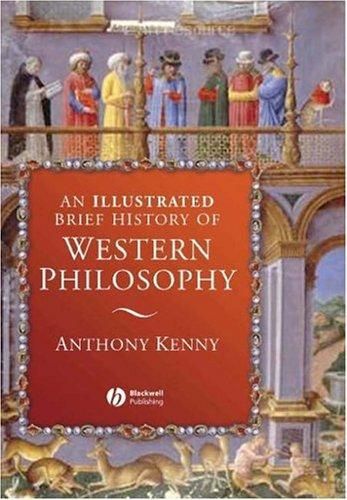
This illustrated edition of Sir Anthony Kenny’s acclaimed survey of Western philosophy offers the most concise and compelling story of the complete development of philosophy available. Spanning 2,500 years of thought, An Illustrated Brief History of Western Philosophy provides essential coverage of the most influential philosophers of the Western world, among them Socrates, Plato, Aristotle, Jesus, Augustine, Aquinas, Machiavelli, Descartes, Hobbes, Spinoza, Berkeley, Hume, Rousseau, Kant, Hegel, Marx, Mill, Nietzsche, Darwin, Freud, Frege, Russell, and Wittgenstein. Replete with over 60 illustrations – ranging from Dufresnoy’s The Death of Socrates, through to the title page of Thomas More’s Utopia, portraits of Hobbes and Rousseau, photographs of Charles Darwin and Bertrand Russell, Freud’s own sketch of the Ego and the Id, and Wittgenstein’s Austrian military identity card – this lucid and masterful work is ideal for anyone with an interest in Western thought.
“Andrew Sayer undertakes a fundamental critique of social science’s difficulties in acknowledging that people’s relation to the world is one of concern. As sentient beings, capable of flourishing and suffering, and particularly vulnerable to how others treat us, our view of the world is substantially evaluative. Yet modernist ways of thinking encourage the common but extraordinary belief that values are beyond reason, and merely subjective or matters of convention, with little or nothing to do with the kind of beings people are, the quality of their social relations, their material circumstances or well-being. The author shows how social theory and philosophy need to change to reflect the complexity of everyday ethical concerns and the importance people attach to dignity. He argues for a robustly critical social science that explains and evaluates social life from the standpoint of human flourishing”–
This innovative study of ethics in Meiji Japan (1868-1912) explores the intense struggle to define a common morality for the emerging nation-state. In the Social Darwinist atmosphere of the time, the Japanese state sought to quell uprisings and overcome social disruptions so as to produce national unity and defend its sovereignty against Western encroachment. Morality became a crucial means to attain these aims. Moral prescriptions for re-ordering the population came from all segments of society, including Buddhist, Christian, and Confucian apologists; literary figures and artists; advocates of natural rights; anarchists; and women defending nontraditional gender roles. Each envisioned a unity grounded in its own moral perspective. It was in this tumultuous atmosphere that the academic discipline of ethics (rinrigaku) emerged–not as a value-neutral, objective form of inquiry as its practitioners claimed, but a state-sponsored program with its own agenda. After examining the broad moral space of “civilization,” Richard Reitan turns to the dominant moral theories of early Meiji and the underlying epistemology that shaped and authorized them. He considers the fluidity of moral subjectivity (the constantly shifting nature of norms to which we are subject and how we apprehend, resist, or practice them) by juxtaposing rinrigaku texts with moral writings by religious apologists. By the beginning of the 1890s, moral philosophers in Japan were moving away from the empiricism and utilitarianism of the prior decade and beginning to place “spirit” at the center of ethical inquiry. This shift is explored through the works of two thinkers, Inoue Tetsujiro (1856-1944) and Nakashima Rikizo (1858-1918), the first chair of ethics at Tokyo Imperial University. Finally, Reitan takes a detailed look at the national morality movement (kokumin dotoku) and its close association with the state before concluding with an outline of some conceptual linkages between the Meiji and later periods.
“When we act, our reason is slave to our passions, said Hume. And the two questions, according to Kant, that a philosopher should address are, What can I know? and What am I to do? The essays collected by editor Edna Ullmann-Margalit in Reasoning Practically address the often elusive link between reason, or theory, and practice, or action.
Must good deeds be rewarded and wrongdoers punished? Would God be unjust if He failed to punish and reward? And what is it about good or evil actions and moral identity that might generate such necessities? These were some of the vital religious and philosophical questions that eighth- and ninth-century Mu’tazilite theologians and their sophisticated successors attempted to answer, giving rise to a distinctive ethical position and one of the most prominent and controversial intellectual trends in medieval Islam. The Mu’tazilites developed a view of ethics whose distinguishing features were its austere moral objectivism and the crucial role it assigned to reason in the knowledge of moral truths. Central to this ethical vision was the notion of moral desert, and of the good and evil consequences–reward or punishment–deserved through a person’s acts. Moral Agents and Their Desertsis the first book-length study of this central theme in Mu’tazilite ethics, and an attempt to grapple with the philosophical questions it raises. At the same time, it is a bid to question the ways in which modern readers, coming to medieval Islamic thought with a philosophical interest, seek to read and converse with Mu’tazilite theology.Moral Agents and Their Desertstracks the challenges and rewards involved in the pursuit of the right conversation at the seams between modern and medieval concerns.
ما از اخلاق چه انتظاری داریم؟ این سوال شاید تاحدودی برای عموم مردم و یا متخصصان این رشته قابل پاسخ باشد؛ اینکه خوب بودن را به ما بیاموزد و در تنظیم روابط فردی م...

جشن کتاب تهران به ایستگاه سی و یکم رسیده است. حال و احوال نشر کتاب خوب نیست و باید فرهنگدوستان را به خرید و هدیه دادن کتاب ترغیب نمود. خانه اخلاقپژوهان جوان ب...

بنیاد کتابهای اخلاق اسلامی عمدتا پالایش جان از آلودگیها و آراستن آن به زیباییها است. اندیشه محوری این قبیل کتابها آن است که انسان فعلی آنی نیست که باید باشد...

-
0 Comments