Notice: تابع WP_Block_Type_Registry::register به طورنادرست فراخوانی شد. نامهای نوع بلوک نباید حروف بزرگ داشته باشند. لطفاً برای اطلاعات بیشتر، اشکال زدایی در وردپرس را مشاهده کنید. (این پیام در نگارش 5.0.0 افزوده شده است.) in /home/ethicsho/public_html/wp-includes/functions.php on line 5313
Warning: Use of undefined constant TDC_PATH_LEGACY - assumed 'TDC_PATH_LEGACY' (this will throw an Error in a future version of PHP) in /home/ethicsho/public_html/wp-content/plugins/td-composer/td-composer.php on line 109
Warning: Use of undefined constant TDSP_THEME_PATH - assumed 'TDSP_THEME_PATH' (this will throw an Error in a future version of PHP) in /home/ethicsho/public_html/wp-content/plugins/td-composer/td-composer.php on line 113 بایگانیهای BJ1012 .R53 2002 - خانه اخلاق پژوهان جوان Notice: Trying to access array offset on value of type bool in /home/ethicsho/public_html/wp-content/plugins/wp-ulike/inc/general-functions.php on line 807
From Empedocles to Wittgenstein is a collection of fifteen historical essays in philosophy, written by Sir Anthony Kenny in the early years of the 21st century. In the main they are concerned with four of the great philosophers whom he most esteems, namely Plato, Aristotle, Aquinas, and Wittgenstein. The author is not only one of the most respected historians of philosophy, and possibly the widest-ranging, but also one of the most successful at writing on the subject for a broad readership. In this volume he presents scholarly explorations of some themes which caught his interest as he worked on his acclaimed four-volume New History of Western Philosophy.
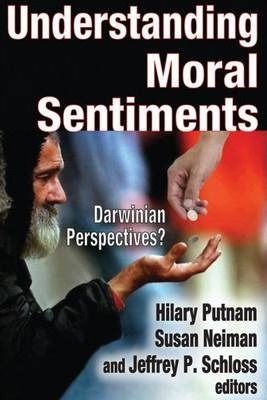
This volume brings together leading scholars to examine Darwinian perspectives on morality from widely ranging disciplines: evolutionary biology, anthropology, psychology, philosophy, and theology. They bring not only varied expertise, but also contrasting judgments about which, and to what extent, differing evolutionary accounts explain morality. They also consider the implications of these explanations for a range of religious and non-religious moral traditions. The book first surveys scientific understandings of morality. Chapters by Joan Silk and Christopher Boehm ask what primatology and anthropology tell us about moral origins. Daniel Batson and Stephen Pinker provide contrasting accounts of how evolution shapes moral psychology, and Jeffrey Schloss assesses a range of biological proposals for morality and altruism. Turning to philosophical issues, Martha Nussbaum argues that recognizing our animal nature does not threaten morality. Stephen Pope and Timothy Jackson explore how Darwinian accounts of moral goodness both enrich and require understandings outside the sciences. Hilary Putnam and Susan Neiman ask whether Darwin is truly useful for helping us to understand what morality actually is and how it functions. The book is a balanced effort to assess the scientific merits and philosophical significance of emerging Darwinian perspectives on morality. how Darwinian accounts of moral goodness both enrich and require understandings outside the sciences. Hilary Putnam and Susan Neiman ask whether Darwin is truly useful for helping us to understand what morality actually is and how it functions. The book is a balanced effort to assess the scientific merits and philosophical significance of emerging Darwinian perspectives on morality.
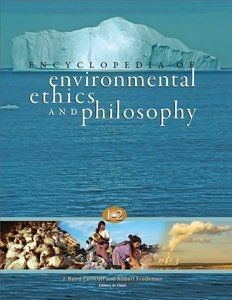
The field of environmental ethics is a new but now well-established sub-discipline of philosophy. Emerging in the mid-1970s, the field coalesced with the inaugural volume of the journal Environmental Ethics in 1979 and developed rapidly. By the turn of the century, most colleges and universities offered courses, if not major programs of study, in this important discipline. The Encyclopedia of Environmental Ethics and Philosophy addresses the needs of upper high school students, undergraduate researchers, teachers and professors, as well as general readers by examining the philosophical and ethical issues underlying contemporary and historical environmental issues, policies, and debates. More than 300 peer-reviewed articles cover concepts, institutions, topics, events and people, including global warming, animal rights, environmental movements, alternative energy, green chemistry, industrial ecology, and eco-sabotage. Encyclopedia of Environmental Ethics and Philosophy joins the suite of other MacMillan applied ethics titles: Encyclopedia of Bioethics and the Encyclopedia of Science, Technology, and Ethics. Additional features include 200 photographs and illustrations, thematic outline, annotated bibliography, and a comprehensive index.
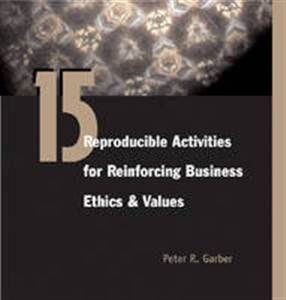
In today’s business climate, simply having an ethics policy in place isn’t enough. You must continually keep ethics up front and center to avoid the ethical violations‹and erosion of confidence‹seen in corporate America today. This book contains 15 easy-to-use activities that can be used individually or as a whole to reinforce your company’s ethics and values. And inspire employees to recommit to responsible business behavior. Individual employees, teams, and groups will participate in engaging role plays, discussions and case studies to: -Better understand the importance of ethics in all aspects of life – Explore their personal beliefs and values concerning ethics € Examine the role that ethics and values play in business Each activity: – Focuses on a unique concept or principle – Comes with helpful tips for presenting it – Includes debriefing points you can review with employees after they complete the activity Samples of real-life ethical situations addressed: * An employee who uses the copy machine for personal reasons. * A sales rep who makes promises to a potential customer about extra services that the company will provide to get their business. * A government purchasing agent who awards highway construction contracts to a firm that just happened to be building a new home for him. * A CEO of a large corporation who accepts a multi-million dollar salary incentive bonus for a year in which the company lost an unprecedented amount of money forcing layoffs of 30 percent of its employees.
ما از اخلاق چه انتظاری داریم؟ این سوال شاید تاحدودی برای عموم مردم و یا متخصصان این رشته قابل پاسخ باشد؛ اینکه خوب بودن را به ما بیاموزد و در تنظیم روابط فردی م...

جشن کتاب تهران به ایستگاه سی و یکم رسیده است. حال و احوال نشر کتاب خوب نیست و باید فرهنگدوستان را به خرید و هدیه دادن کتاب ترغیب نمود. خانه اخلاقپژوهان جوان ب...

بنیاد کتابهای اخلاق اسلامی عمدتا پالایش جان از آلودگیها و آراستن آن به زیباییها است. اندیشه محوری این قبیل کتابها آن است که انسان فعلی آنی نیست که باید باشد...

-
0 Comments