Notice: تابع WP_Block_Type_Registry::register به طورنادرست فراخوانی شد. نامهای نوع بلوک نباید حروف بزرگ داشته باشند. لطفاً برای اطلاعات بیشتر، اشکال زدایی در وردپرس را مشاهده کنید. (این پیام در نگارش 5.0.0 افزوده شده است.) in /home/ethicsho/public_html/wp-includes/functions.php on line 5313
Warning: Use of undefined constant TDC_PATH_LEGACY - assumed 'TDC_PATH_LEGACY' (this will throw an Error in a future version of PHP) in /home/ethicsho/public_html/wp-content/plugins/td-composer/td-composer.php on line 109
Warning: Use of undefined constant TDSP_THEME_PATH - assumed 'TDSP_THEME_PATH' (this will throw an Error in a future version of PHP) in /home/ethicsho/public_html/wp-content/plugins/td-composer/td-composer.php on line 113 بایگانیهای BJ1012 .P65 2012 - خانه اخلاق پژوهان جوان Notice: Trying to access array offset on value of type bool in /home/ethicsho/public_html/wp-content/plugins/wp-ulike/inc/general-functions.php on line 807
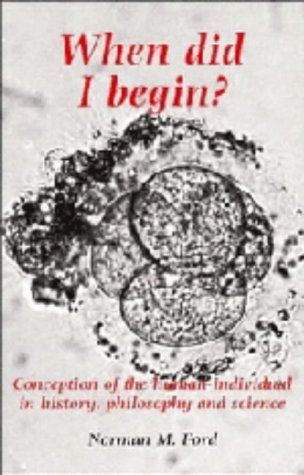
When Did I Begin? investigates the theoretical, moral and biological issues surrounding the debate over the beginning of human life. With the continuing controversy over the use of in vitro fertilization techniques and experimentation with human embryos, these issues have been forced into the arena of public debate. The answer to the question, āWhen did I begin?ā draws on both scientific evidence, and on the philosophical concepts of the presence of the human individaul. As a leading theologian and moral philosopher, thoroughly conversant with modern embryology, Norman Ford, a Salesian priest, is well qualified to bridge the gap between the biological and philosophical point of view. Dr Ford argues that a human individual could not begin before definitive individuation occurs with the appearance of the primative streak about two weeks after fertilisation. While he does not specifically address any moral issues regarding the treatment of human embryos, the author views reading of this book as an essential prerequisite for such moral considerations. The implications of Dr Fordās answer to the question posed in the title will be crucially important for fully evaluating such problems as embryo experimentation and contraception, for a range of readers from embryologists and physicians to moral philosophers and theologians. The book has already stimulated considerable interest and debate, and is now available in paperback for the first time.
Criminal proceedings in which people can lose life, liberty, or reputation tell us a great deal about the character of any society. In Japan, it is prosecutors who wield the greatest control over these values and who therefore reveal most clearly the character of the Japanese way of justice. In this book, David T. Johnson portrays Japanese prosecutors at work; the social, political, and legal contexts that enable and constrain their actions; and the content of the justice thereby delivered. Johnson is the first researcher, Japanese or foreign, to gain access to the frontline prosecutors who charge cases and the backstage prosecutors who manage and direct them. He shows that prosecutors in Japan frequently harmonize to imperlatives of justice that Americans often regard as irreconcilable: the need to individualize cases alike. However, their capacity to correct offenders and to obtain contrite, complete confessions from criminal suspects. Johnson argues that this extreme reliance on confessions occasionally leads to extreme efforts to extract them. Indeed, much of the most disturbing prosecutor behavior springs directly or indirectly from the system’s inordinate dependence on admissions of guilt. The major achievements of Japanese criminal justice are thus inextricably intertwined with its most notable defects, and efforts to fix the defects threaten to undermine the accomplishments. Clearly written and skillfully argued, this comparative analysis will be of interest to students of Japan, criminology, and law and society. It illuminates unexplored realms in Japan’s criminal justice system while challenging readers to examine their assumptions about how crime should be prosecuted in their own systems of criminal justice.
Kant and Applied Ethics makes an important contribution to Kant scholarship, illuminating the vital moral parameters of key ethical debates.Offers a critical analysis of Kant’s ethics, interrogating the theoretical bases of his theory and evaluating their strengths and weaknessesExamines the controversies surrounding the most important ethical discussions taking place today, including abortion, the death penalty, and same-sex marriageJoins innovative thinkers in contemporary Kantian scholarship, including Christine Korsgaard, Allen Wood, and Barbara Herman, in taking Kant’s philosophy in new and interesting directionsClarifies Kant’s legacy for applied ethics, helping us to understand how these debates have been structured historically and providing us with the philosophical tools to address them
This is a comprehensive study of the ethics of G. E. Moore, the most important English-speaking ethicist of the twentieth century. Mooreās ethical project, set out in his seminal text Principia Ethica, is to preserve common moral insight from scepticism and, in effect, persuade his readers to accept the objective character of goodness. Brian Hutchinson explores Mooreās arguments in detail and in the process relates the ethical thought to Mooreās anti-sceptical epistemology. Moore was, without perhaps fully realizing it, sceptical about the very enterprise of philosophy itself, and in this regard, as Brian Hutchinson reveals, was much closer in his thinking to Wittgenstein than has been previously realized. This book shows Mooreās ethical work to be much richer and more sophisticated than his critics have acknowledged.
ما از اخلاق چه انتظاری داریم؟ این سوال شاید تاحدودی برای عموم مردم و یا متخصصان این رشته قابل پاسخ باشد؛ اینکه خوب بودن را به ما بیاموزد و در تنظیم روابط فردی م...

جشن کتاب تهران به ایستگاه سی و یکم رسیده است. حال و احوال نشر کتاب خوب نیست و باید فرهنگدوستان را به خرید و هدیه دادن کتاب ترغیب نمود. خانه اخلاقپژوهان جوان ب...

بنیاد کتابهای اخلاق اسلامی عمدتا پالایش جان از آلودگیها و آراستن آن به زیباییها است. اندیشه محوری این قبیل کتابها آن است که انسان فعلی آنی نیست که باید باشد...

-
0 Comments